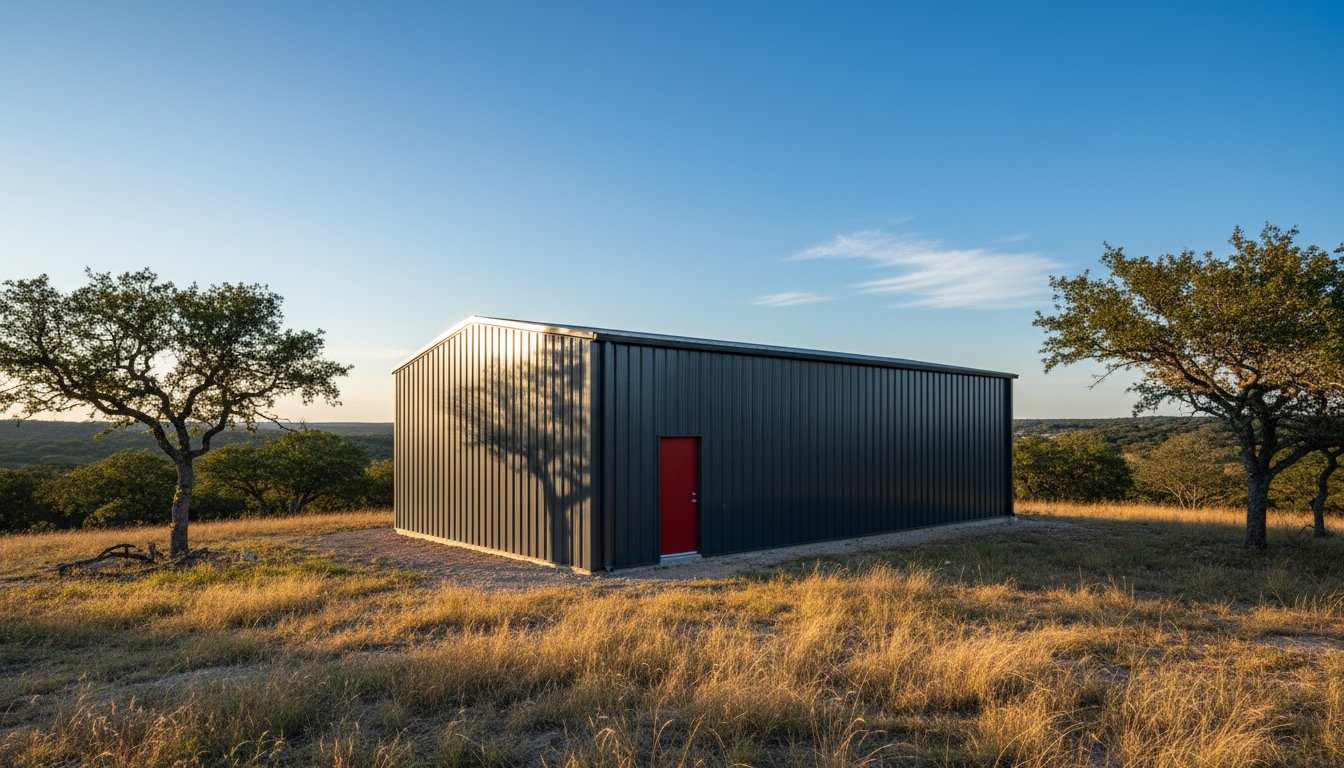
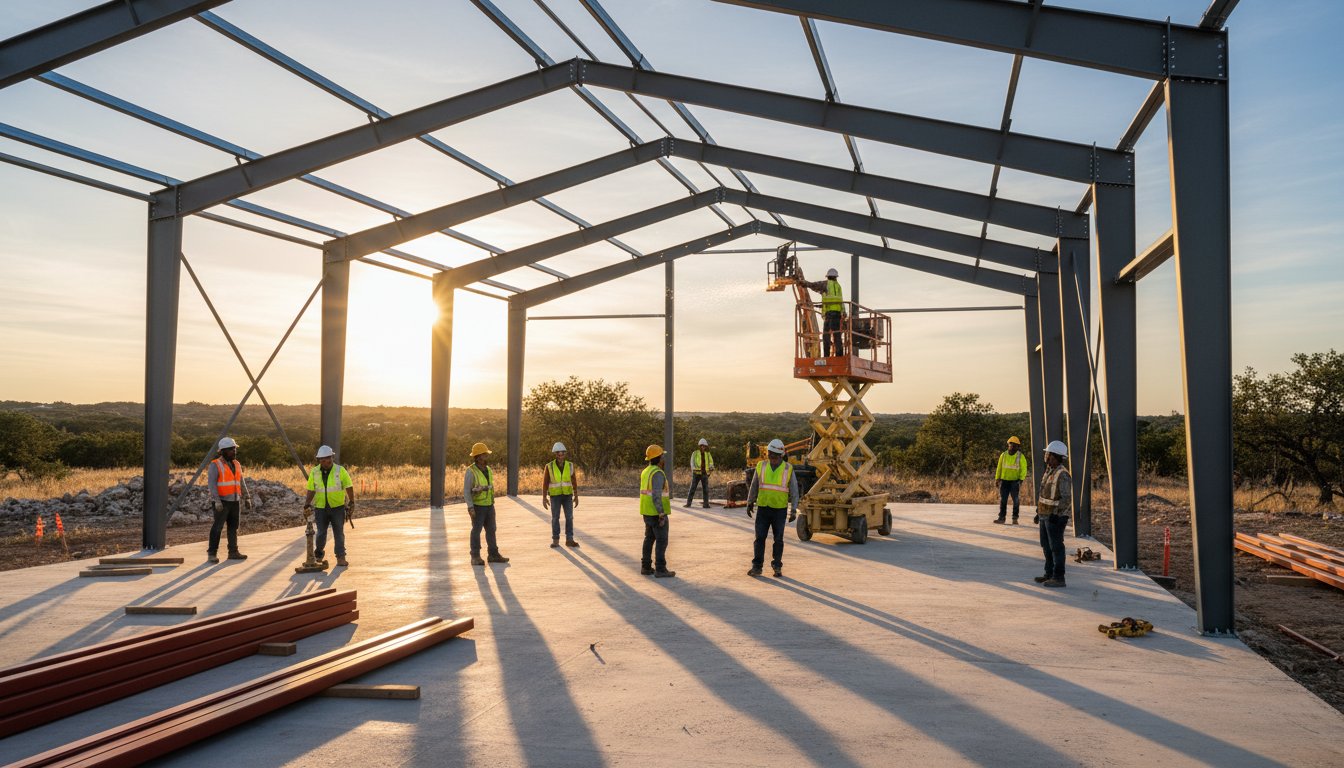
A single misaligned column during your metal building assembly can turn a weekend project into a structural liability when the Texas wind starts to howl. You already know that building in the Brazos Valley requires more than just a basic set of instructions. It demands respect for the local climate and a commitment to precision. At Bradberry Steel, we’ve spent over 25 years helping folks prepare for these challenges by providing the heavy-duty materials required for lasting results.
This guide provides a professional sequence for erecting a steel structure that stands firm against 90 mph wind loads while meeting the specific standards found in Dublin and Stephenville. You’ll learn exactly which specialized tools are non-negotiable and how to navigate the timeline of a successful build without missing a critical structural step. We are going to walk through the essential phases of construction, from the initial frame layout to the final trim. This overview ensures you have the confidence to finish a project that is as solid as the Texas ground it sits on.
Key Takeaways
- Understand why a level concrete slab is critical for structural integrity when building on the rocky soil common in Brownwood and Comanche.
- Master the chronological order of metal building assembly to ensure your primary and secondary steel members are erected with precision.
- Learn how to account for high wind loads in open plains like Eastland and manage the thermal expansion caused by Texas temperature swings.
- Discover the efficiency of bolt-together pre-engineered steel buildings compared to traditional weld-up methods for a faster project timeline.
- Follow a professional checklist for trimming out and final inspections to guarantee your structure looks as solid as it performs.
Preparing for Metal Building Assembly in Central Texas
Successful metal building assembly begins long before the first bolt is tightened. It is the systematic process of erecting primary steel members like main frames and secondary members such as purlins and girts. Bradberry Steel provides the engineered components for your project, but you manage the site and the labor. This hands-on approach gives you control over the timeline and the budget. You are the project manager responsible for every phase of the physical construction.
Logistics require careful planning for deliveries to rural areas like Dublin or Hico. A standard 53-foot flatbed trailer needs ample room to maneuver. If your site is off a narrow county road, identify a clear entry point at least 20 feet wide. Once the truck arrives, inventory is your first priority. Count every box of 1/2-inch bolts and every individual wall panel. Missing a single component can stall your progress for days. We ensure the materials leave our facility complete; your job is to verify they arrive that way.
Site Access and Offloading in Erath County
Erath County terrain varies from rocky hills to soft soil. Heavy delivery trucks can weigh over 80,000 pounds when fully loaded. Ensure your gravel driveway is packed tight to prevent the trailer from sinking. You will need a staging area near the slab. Use wooden blocks to keep steel components off the damp ground. This prevents moisture traps and keeps your materials clean. Renting a telehandler with a 6,000-pound lift capacity is the most efficient way to offload and move heavy bundles across a job site.
The Essential Tool List for Steel Erection
You cannot build a steel structure with a basic household toolbox. You need professional-grade equipment to handle a metal building assembly project safely. Spud wrenches and drift pins are essential for aligning bolt holes in the primary frames. For the fasteners, use 1/2-inch drive impact wrenches and dedicated screw guns. Avoid using standard drills for panels. A screw gun with an adjustable clutch prevents over-tightening the neoprene washers, which ensures a watertight seal. Safety is a major logistical concern in the Texas heat. When temperatures exceed 100 degrees, steel becomes hot to the touch. Wear heavy-duty gloves and provide shaded break areas for your crew.
If you are ready to start planning your layout, use our 3D design tool to visualize your project. You can also request a quote to get specific pricing for your steel package.
Foundation and Site Preparation Requirements
A successful metal building assembly starts long before the first steel column arrives on your property. The foundation is the most critical element of your project. Without a level, engineered concrete slab, the structural integrity of your building is at risk. In areas like Brownwood and Comanche, you will likely encounter rocky soil. This terrain requires careful excavation to ensure the slab does not shift or crack under the weight of the steel. You must also account for local building codes in Stephenville or Glen Rose. These municipalities often have specific requirements for slab thickness and reinforcement based on local wind loads and soil density.
Squaring and Chalking the Slab
Squaring the foundation is the single most important step in the entire process. If your slab is out of square by even a half-inch, your wall panels and roof sheets will not align properly. Use the 3-4-5 rule to achieve perfect 90-degree angles. Measure 3 feet along one edge and 4 feet along the perpendicular edge. The diagonal distance between those two points must be exactly 5 feet. Once squared, use permanent chalk to mark the base rail and column locations. You should verify all anchor bolt placements against your engineering drawings before the steel package is delivered to the site.
Managing Drainage and Elevation
Water is the enemy of any permanent structure. Proper site grading is essential to prevent water from pooling around the steel base. Ensure the ground slopes away from the slab at a minimum rate of 5 percent for the first 10 feet. This prevents erosion and foundation undermining during heavy Central Texas rainstorms. We also recommend installing a moisture barrier between the concrete and the steel base rails. This prevents capillary action from drawing ground moisture into the metal components. For a deeper look at these requirements, you can read our guide on understanding foundation needs for a steel building in Texas.
Starting with a precise foundation ensures your project stays on schedule and avoids costly corrections later. If you are ready to visualize your layout on your specific site, you can use our 3D design tool to plan your dimensions and structural needs accurately.
The Core Assembly Process: Step-by-Step
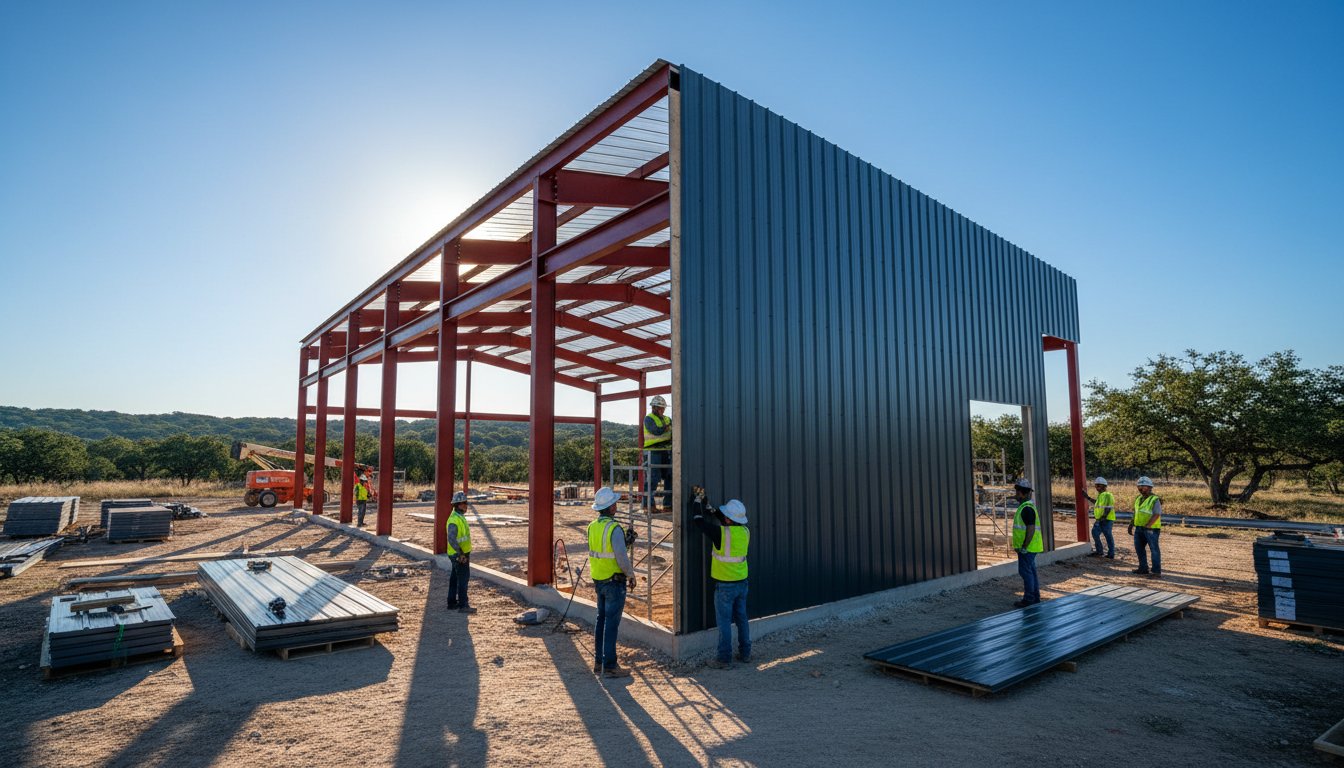
Erecting a steel structure is a systematic process that rewards patience and precision. Most modern kits utilize a skeleton first approach. This means the heavy structural members go up before any skin or secondary support is added. A pre-engineered metal building assembly offers a bolt-together ease that differs significantly from traditional weld-up methods. Weld-up projects require on-site cutting, specialized welding skills, and significant fabrication time. In contrast, bolt-together pre-engineered steel buildings arrive with factory-punched holes that align perfectly when your foundation is square. Temporary bracing is vital during these early stages. It holds the frame steady against wind and gravity until the secondary framing and panels tie the entire structure together.
Primary Framing and Truss Erection
The process begins with the first bay. You must set the columns and rafters for this initial section and ensure everything is plumb and level. If the first bay is off by even a fraction of an inch, the error will grow as you move down the line. Use a crane or telehandler to hoist heavy rafters into place. Once the rafters meet the columns, connect them using high-strength A325 bolts. You must tighten these bolts to the specific torque requirements defined in your engineering drawings. This ensures the joints handle the designed loads without shifting over time.
Secondary Framing: Girts and Purlins
Once the primary frames are standing, you install the secondary framing. This includes Z-purlins for the roof and C-girts for the walls. These members provide the necessary surface for attaching your exterior panels. Standard spacing for these components is typically 5 feet on center. This spacing provides the structural stability needed to withstand Texas wind loads. You also install framed openings for doors and windows at this stage. These frames must be square to ensure your accessories function correctly for decades.
Installing Wall and Roof Panels
The final phase of the metal building assembly involves the exterior skin. Start with the wall panels before moving to the roof. You must overlap panels correctly to create a weather-tight seal. Use self-drilling screws with neoprene washers to secure the metal. Do not over-tighten these fasteners; stripping the metal or crushing the washer leads to leaks and rust. Apply mastic tape at every lap and junction. This sealant is your primary defense against the heavy rain common in the Brazos Valley. If you need help visualizing your project before you start, you can use the 3D design tool at Bradberry Steel to map out your layout.
For expert guidance on selecting the right package for your property, reach out to the team at Bradberry Steel or visit our website to request a quote today.
Climate-Specific Considerations for Central Texas
Building in Central Texas requires a strategy that respects the local environment. Open plains in areas like Eastland County face high wind speeds that can reach 115 miles per hour during spring storms. Your metal building assembly must account for these forces from the very first bolt. Texas also sees extreme temperature swings of 40 degrees or more in a single day. This causes steel to expand and contract constantly. Without proper planning, this movement can strain fasteners and lead to moisture issues over time. You need a structure that handles the heat and the wind with equal strength.
Wind Bracing and Structural Integrity
Stability starts with a heavy-duty frame. In high-wind zones, builders use X-bracing or portal frames to maintain structural rigidity. X-bracing uses steel cables or rods to create a tension system that pulls the structure tight. Portal frames provide a more open layout while still resisting lateral forces. These systems transfer wind loads from the wall panels down through the columns and into the concrete foundation. Correct metal building assembly ensures that these loads are distributed evenly across the slab. Using high-quality, galvanized fasteners with EPDM washers is non-negotiable. These components keep the entire system secure when the wind picks up and prevent the panels from shearing or vibrating loose.
Ventilation and Heat Management
Heat is a constant challenge for any Texas structure. Ridge vents and eave vents create a natural chimney effect that pulls hot air out of the roof peak. This constant airflow keeps the interior manageable during the peak of August. Reflective coatings on metal panels can bounce away up to 70 percent of solar radiation, which significantly lowers cooling costs for shops and barns. In humid regions like Erath County, proper insulation is vital for preventing condensation. Moisture forms when warm air hits a cold metal surface; a high-quality vapor barrier stops this process before it starts. Integrating insulation during the sheeting phase ensures long-term comfort and protects your equipment from rust or mildew.
Central Texas is also notorious for sudden, heavy hail storms. Choosing durable residential metal roofs provides a layer of protection that traditional shingles simply cannot match. Steel panels rated for Class 4 impact resistance can withstand hail stones up to two inches in diameter without compromising the structural integrity of the home or shop. This durability makes steel a superior choice for the unpredictable Texas climate. Bradberry Steel provides the heavy-duty materials designed to stand up to these local conditions for decades.
Final Inspection and Project Completion
A successful metal building assembly concludes with a disciplined final inspection. This walk-through ensures the structural integrity and longevity of your investment. You should start at the foundation and work your way up to the ridge cap. Verify that every structural bolt is tightened to the correct torque specifications. It is also vital to check the weather seals on every fastener. A common mistake is over-tightening screws; this crushes the neoprene washer and leads to leaks during the first Central Texas thunderstorm.
Use this checklist during your walk-through:
- Remove all metal shavings and “swarf” from the roof and gutters to prevent premature rust spots.
- Check that all sealant tape and caulk joints are continuous and all gaps are filled.
- Verify the plumb of all door frames and window openings.
- Clear any construction debris from the base trim to allow for proper drainage away from the slab.
Long-term maintenance is the key to protecting your building in Dublin or Weatherford. While steel is a low-maintenance material, it requires occasional attention. You should inspect the fasteners once a year to ensure they remain tight. Keep the perimeter of the building clear of high weeds and dirt buildup to prevent moisture from sitting against the base trim. This simple routine preserves the steel and keeps the structure looking new for decades.
The Finishing Touches
Trimming out the building is where your hard work pays off visually. Installing corner trim and rake trim provides a professional finish that hides the raw edges of the wall and roof panels. Gutters should be installed to direct water at least 5 feet away from your slab. This prevents soil shifting and foundation issues, which are common concerns for Texas property owners. If you notice any scratches on the panels from the assembly process, apply paint from your touch-up kit immediately. This prevents oxidation and maintains the aesthetic of the building. Finally, test every door and window several times to ensure they operate smoothly without catching on the frame.
Why Choose a Bradberry Steel Package?
Bradberry Steel has spent 25 years providing high-quality kits to builders across the Brazos Valley. Our pre-engineered packages are designed with precision, which simplifies the metal building assembly process for DIY owners and contractors alike. We focus on providing durable materials that stand up to the local climate. You can use our 3D design tool to visualize your structure before the first piece of steel is fabricated. This tool allows you to see how different trim colors and layouts will look on your property. When you are ready to move forward with your next project, submit a Bradberry Steel quote request to get started. We take pride in being a dependable partner for your Texas building needs.
Build Your Future on Texas Steel
Successful metal building assembly in Central Texas depends on meticulous site preparation and high-quality materials. A level foundation prevents structural stress; components engineered for local wind loads ensure long-term stability. Choosing a kit that accounts for the intense heat and weather patterns of the region is essential for any durable project. Our precision-engineered kits are designed to fit together seamlessly, which helps your crew move through the assembly process with confidence and speed.
Bradberry Steel has provided reliable solutions for over 25 years. As a locally owned and operated business in Dublin, TX, we focus on delivering steel that stands up to the toughest environments. We specialize in providing the materials and expert guidance you need to get your project off the ground. While we don’t offer contracting or site work services, we take pride in supplying the structural backbone for your ranch, home, or business. Steel remains the most cost-effective and low-maintenance choice for our region. Your vision deserves a structure built on Texas integrity and decades of proven experience.
Start designing your custom steel building with our 3D tool today!
Frequently Asked Questions
Do I need a crane for metal building assembly?
You will likely need a crane or a heavy-duty telehandler for a standard metal building assembly involving large structural frames. While smaller carports or sheds might be manageable with a manual lift, any building with an eave height exceeding 12 feet requires mechanical lifting. Renting a 20-ton crane for a single day ensures the primary rigid frames are set safely and precisely without risking injury or structural damage.
How long does it typically take to assemble a 40×60 steel building?
A crew of 4 experienced people can typically complete the shell of a 2,400 square foot building in 10 to 14 days. This timeline assumes the concrete slab is already cured and the weather remains clear. DIY projects often take 50 percent longer because of the learning curve involved in reading blueprints and handling heavy steel components. Proper staging of materials on-site can save you 2 days of labor during the erection process.
Can I assemble a weld-up building without professional welding experience?
You shouldn’t attempt a weld-up building without certified welding skills because structural integrity depends on the quality of every joint. For DIY projects in Central Texas, bolt-together kits are the superior choice. These kits feature pre-punched holes and precision-cut components that simplify the metal building assembly process. Bradberry Steel provides these engineered packages to ensure a secure fit without the need for specialized field welding equipment.
What kind of foundation is best for a steel building in Central Texas?
A reinforced concrete slab with a 12-inch thickened edge is the standard for most steel buildings in the Brazos Valley. Central Texas soil often contains high clay content, which expands and contracts with moisture levels. An engineered slab with a minimum of 3,000 PSI concrete and integrated rebar helps prevent shifting over time. This foundation provides a stable base that carries the heavy point loads of the steel columns effectively.
Is it cheaper to assemble a metal building kit myself?
You can save between 20 percent and 30 percent on the total project cost by handling the erection yourself. Eliminating professional labor fees is a major financial advantage for many Texas landowners and ranchers. However, you must factor in the cost of tool rentals and your own time. If the assembly takes 3 weeks of your personal time, calculate that against the cost of a professional crew to see the true value.
How do I ensure my building meets local Texas wind load codes?
You ensure compliance by ordering a building engineered specifically for the wind speeds in your specific county. Most areas in Central Texas require structures to withstand 115 mph winds, while coastal regions demand much higher ratings. When you source a kit from Bradberry Steel, the engineering documents will specify these load requirements. Always verify the current International Building Code standards with your local building department before you start construction.
What happens if I receive a damaged part in my building kit?
You must inspect every component upon delivery and note any discrepancies or damage on the driver’s bill of lading. If a structural member is bent or a sheet is scratched, take clear photos immediately. Reporting these issues within 48 hours of delivery is standard practice in the steel industry. Bradberry Steel works closely with customers to resolve shipping issues and provide the necessary replacement parts to keep your project on schedule.
Do I need a permit for a steel building in Erath County?
You generally need a development permit for any permanent structure in Erath County, especially if it exceeds 200 square feet. Requirements vary depending on whether your property is within Stephenville city limits or in an unincorporated area. You should contact the Erath County Environmental Health and Development department to confirm specific setback rules and permit fees. Securing these approvals before delivery prevents costly fines and project delays.
Ready to start your next project? Use our 3D design tool to visualize your structure or request a quote from Bradberry Steel today.
Disclaimer
Bradberry Steel is a steel supply and metal building package company based in Dublin, Texas. We do not provide installation, site preparation, foundation work, or general contracting services. All building projects should be reviewed by a qualified local contractor and may require permits depending on your county or municipality. Contact Bradberry Steel for product guidance and material quotes.