

A USDA loan may fund a barndominium build, but eligibility depends on the borrower, property, plans, and lender requirements. Knowing how to get financing for a barndominium kit means looking beyond the kit itself: lenders review the full project budget, land, builder arrangements, and whether the finished structure qualifies as a home.
It’s reasonable to expect a rural home loan to work like financing for a conventional house, but barndominiums can raise extra questions about living space, shop space, appraisal, and construction. Eligible USDA construction loans can offer $0 down, though the project still has to meet program and lender requirements.
This guide explains how land equity may count toward a down payment, which documents and builder details can support an application, and why owner-builder plans may complicate approval. It also covers USDA options and common causes of delays, so you can prepare before discussing your project with a lender.
Key Takeaways
- Find out how land equity may help meet a construction loan’s down payment requirement.
- Understand why builder experience and owner-builder plans can affect loan approval.
- Learn what lenders review when assessing USDA eligibility, the appraisal, and title work.
- Spot common paperwork, budget, and property issues that can slow financing.
Can I use my land equity as a down payment for a barndominium construction loan?
Often, land equity can help cover a construction loan down payment, but the lender must accept it. Conventional construction-to-permanent loans typically require 15% to 25% down, while portfolio and private lenders typically require 20% to 30%.
Assess Land Equity
Before applying, gather the land’s current value, purchase records, and mortgage balance. Lenders use the property’s value and any debt against it to assess available equity. If you still owe money on the land, that balance affects how much equity may count toward the project.
For example, $150,000 in land equity represents 18.75% of an $800,000 barndominium project. If you plan to buy land and build, ask whether the construction loan can include both costs in one financing plan. The lender will assess the combined project and the land’s equity, rather than treating the kit as the full project.
Separate tax savings from usable equity. According to the Texas Comptroller of Public Accounts, Texas school districts must provide a $140,000 residence homestead exemption. Texas homeowners who are 65 or older or disabled receive an additional $60,000 homestead exemption, according to the Texas Comptroller of Public Accounts. These exemptions affect property taxes, not the cash available for a down payment.
Apply Equity Toward the Down Payment
Ask the lender how it will count land equity toward the required down payment before choosing a financing structure, because lender rules differ. Build a complete construction budget that includes the kit, site work, foundation, labor, utilities, and interior finishes. The kit alone does not represent the total project cost.
Next, assemble income and asset documents. A lender may request tax returns, bank statements, employment verification, debt details, and statements showing available funds. Credit history, income stability, existing obligations, and property value all inform the loan review. Land equity may reduce the cash needed upfront, but it does not replace the lender’s assessment of your ability to repay.
Compare the required down payment with the equity the lender will recognize. A lender may value the land differently from its purchase price, especially if you bought it years ago or a lien remains. Confirm how the loan transitions from construction financing to a permanent mortgage, and document land ownership and debt clearly.
Builder qualifications and owner-builder lending
- Ask the lender how it qualifies the builder before signing a construction contract. Conventional lenders typically require builders to have at least 2 years of experience. They may also request license details where state law requires them, insurance information, references, and examples of completed projects. This review helps the lender assess who will manage construction and whether the project can reach completion.
- Clarify owner-builder rules early. Lenders may be cautious when buyers act as their own general contractor because they need to assess construction management and completion risk. Ask whether the lender accepts owner-builder projects and what experience or documents it requires. Land equity may support the financing, but it does not replace builder qualifications or a credible work-management plan.
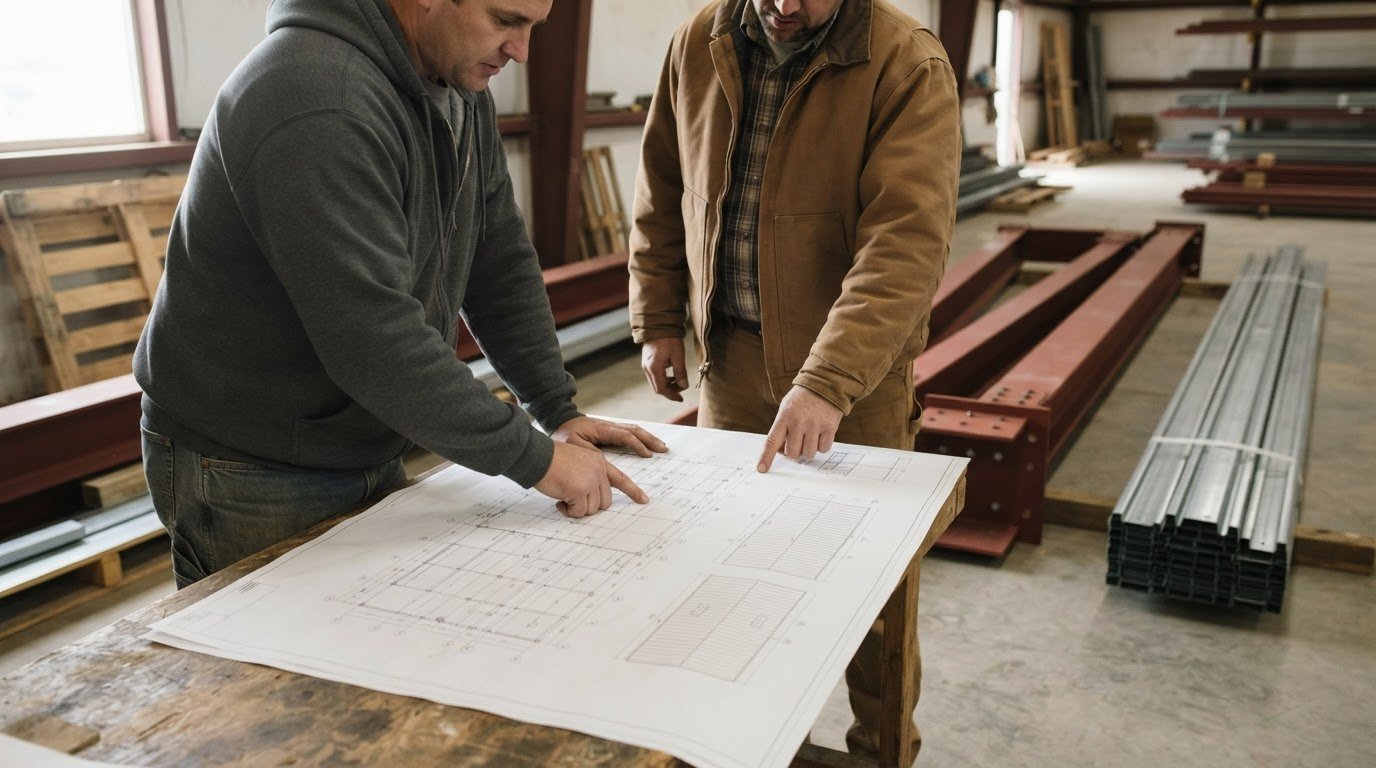
- Prepare a lender-ready project file with professional plans, a kit or material package quote, the builder’s estimate or contract, a complete finish-out budget, and a construction timeline. A lender may also request a draw schedule, references, and the builder’s insurance details. Clearly distinguish living space from shop or garage space so the lender understands the home’s intended use.
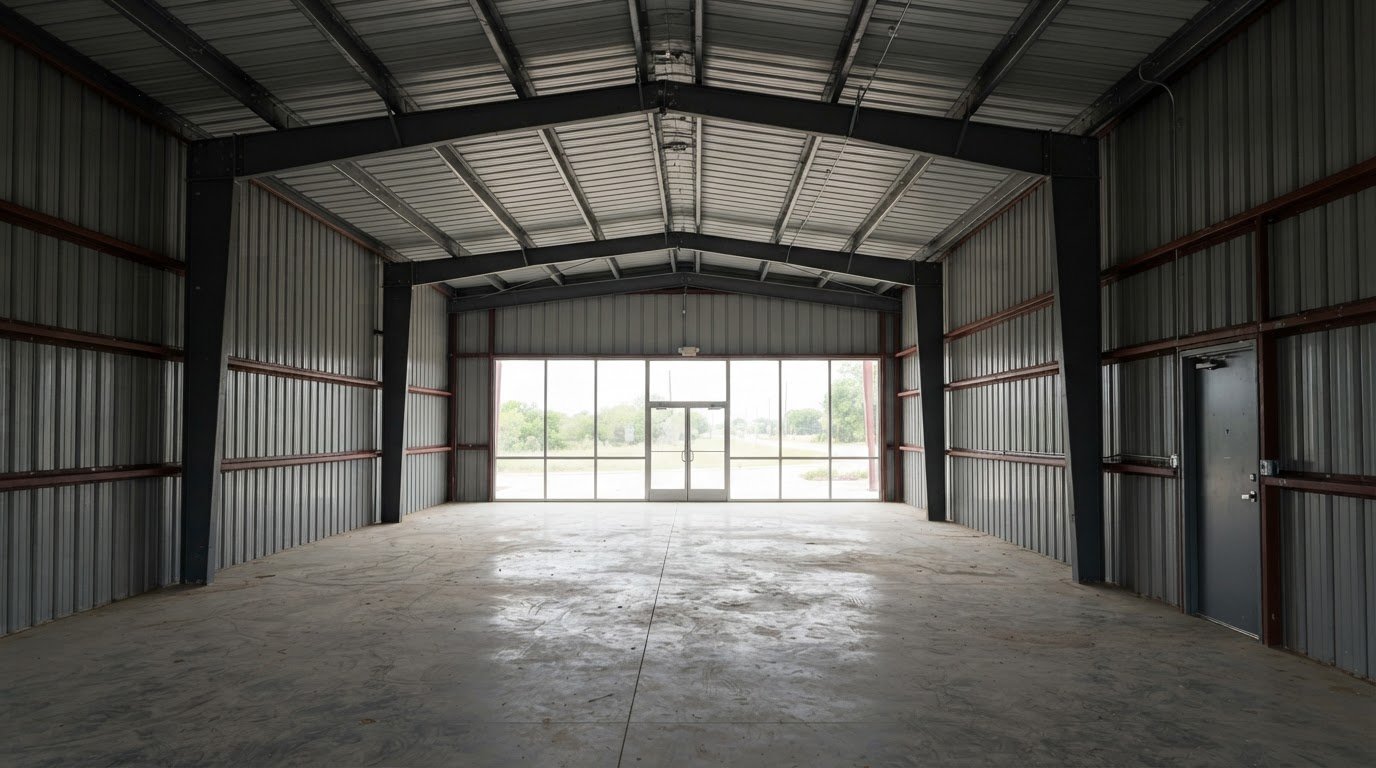
- Show how the property can support the proposed build. Gather details about zoning, road access, floodplain status, utilities, and water or sewer arrangements. The lender may assess whether the barndominium qualifies as a residential home or an agricultural building. If it will be a home, the plans should address local residential code requirements.
- Include permits and inspections in the timeline. A lender may expect the schedule to cover permitting, site work, the foundation, kit erection, mechanical work, finishes, inspections, and the certificate of occupancy. Missing steps can make the completion plan harder to assess and delay approval of a construction loan that later converts to permanent financing.
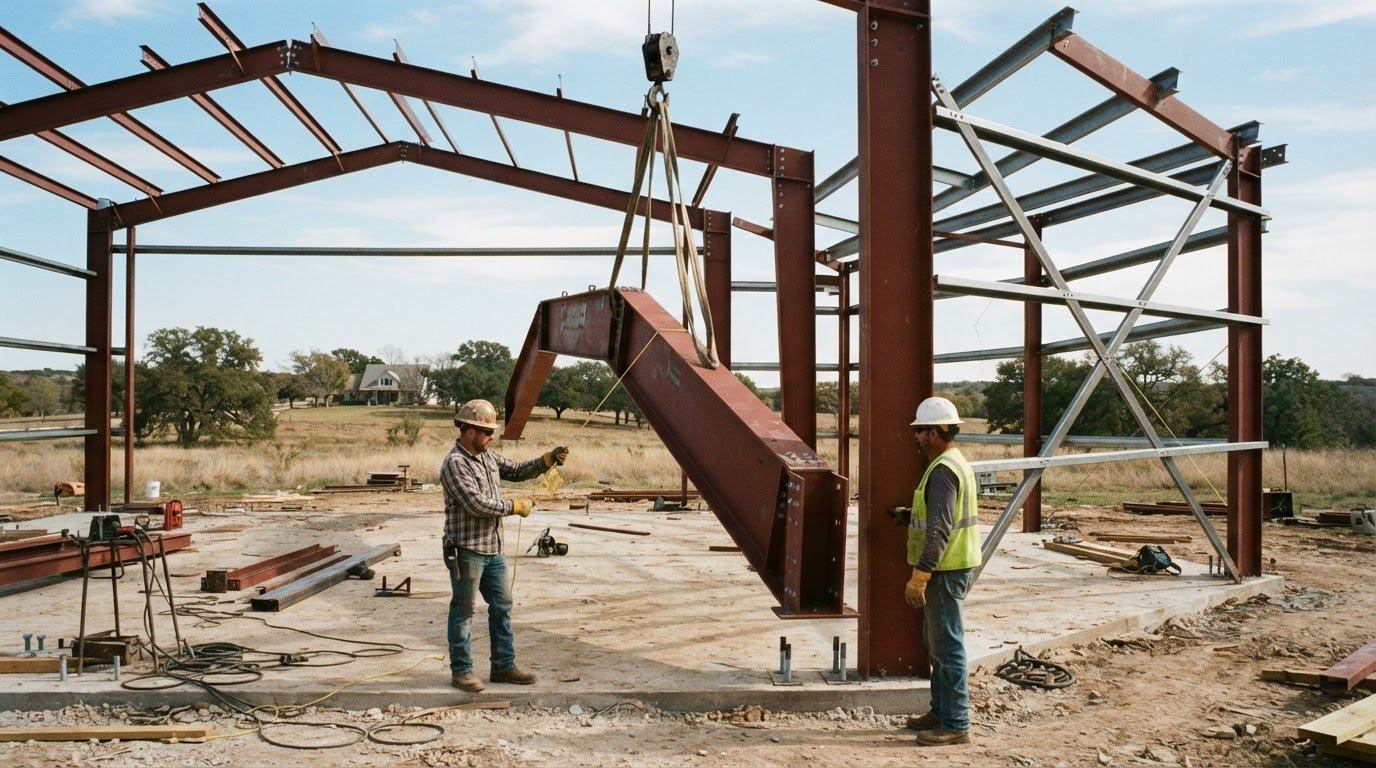
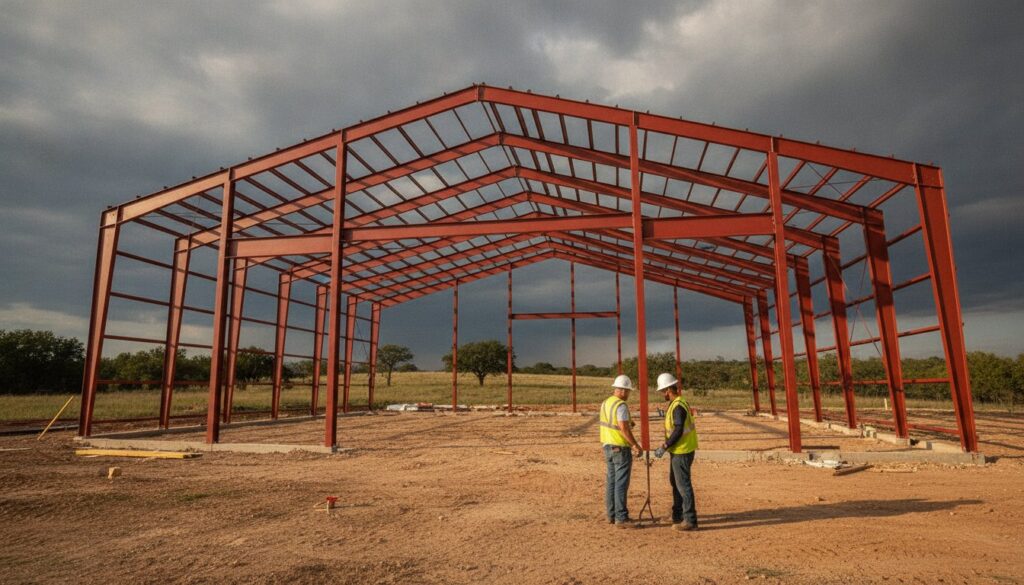
- Use a clear kit package quote to show what materials are included. A pre-engineered steel building package can help define the building materials in the project file, while separate estimates account for remaining work and finish-out.
Can I use a USDA loan to build a barndominium?
Yes, an eligible USDA construction loan can finance a barndominium build and may require $0 down. Construction-to-permanent loans may also be available through conventional, FHA, or VA programs, depending on program rules and lender approval.
- Compare loan structures before choosing a lender. Understanding how to get financing for a barndominium kit starts with comparing interest rates, fees, construction draw rules, and what happens to the loan after the build. A one-time-close construction-to-permanent loan combines construction financing and the permanent mortgage in one closing. Portfolio lenders may also consider barndominium projects.
- Match the application to your financial situation. Lenders may consider an applicant’s credit history and debt burden when reviewing a conventional barndominium loan. Construction-to-permanent conventional loans typically cite a 680 minimum score, while USDA construction-to-permanent loans typically cite 640. Lenders also review income stability and debts.
- Gather complete financial and project documentation. Prepare two recent years of tax returns and W-2s, bank statements, income records, and debt information. Include professional plans, the kit quote, a builder estimate or contract, finish-out budget, and land details. Clear plans help explain the living space and any shop area.
- Ask lenders how they underwrite, appraise, and complete title work. After prequalification, the lender provides any additional document requirements. Once received, the application moves to underwriting, and appraisal and title work are ordered. Fannie Mae guidance says unique housing can qualify when an appraiser has enough information for a reliable value, under identifier B4-1.3-05. Plans, finished space, construction quality, and comparable homes can inform that assessment.
- Consider the tradeoffs of financing only the kit. A personal loan or manufacturer financing may cover materials without paying for the full build. Separate payments can complicate your overall debt picture, and the terms may not align with construction draws or a permanent mortgage. To understand how to get financing for a barndominium kit, compare the full repayment structure of each option.
Common causes of financing delays
- Complete the plans and budget before applying for a construction loan. Missing room layouts, incomplete cost estimates, or unclear project totals may leave the lender without enough information to assess the application. Match each budget line to a project need, such as the building package, site work, utilities, or interior finish. Clear figures help keep the residential plan consistent.
- Define exactly what the kit package includes. List the covered materials and identify work or supplies budgeted separately. If the lender cannot tell what the package pays for, it may be harder to compare the estimate with the complete construction plan. Keep the quote, project budget, and builder’s contract aligned as the package develops.
- Submit complete builder details with the application. A missing estimate, contract, insurance record, timeline, or draw schedule can delay lender review. Make sure every document describes the same scope of work. For example, the contract and budget should use matching descriptions for the structure and its planned living space.
- Resolve property questions early in the loan process. Zoning, permits, road access, utilities, and water or sewer arrangements may raise concerns about the site. Gather relevant property details and include them with the plans. If county approval is part of the schedule, show where it fits before construction begins.
- Give the appraiser enough detail to assess the completed home. Incomplete plans or unclear divisions between living and shop space can complicate the appraisal. Identify the intended residential use, finished areas, and construction details in the project documents. Title work may also take longer if property records need clarification.
- Include insurance information and keep the file current. Missing coverage details can delay underwriting, while changes to the package or project scope can create mismatches across estimates and lender records. Organize the final documents as one consistent set. Once the steel package scope is ready, request a quote for your building package to support your project planning.
Bradberry Steel
Bradberry Steel can help define the steel package for your barndominium plans. Turn to the team when you need a clear material scope for your project documents and lender discussions. Its steel building systems support residential, agricultural, and commercial projects, with pre-engineered and weld-up options. A well-defined package separates building materials from costs such as site work, foundation, labor, and interior finish.
Steel is a durable, cost-effective, low-maintenance building option suited to the Texas climate. Bradberry Steel supplies steel building packages and coordinates project materials, while financing approval and construction arrangements remain separate parts of the project.
Contact Bradberry Steel to discuss the steel package for your plans.
Set Your Barndominium Plans in Motion
Your next step is to connect your financing plan with a clear description of the building you intend to complete. Keep the scope easy to follow so everyone involved understands what the steel materials cover and what falls outside the package. Planning how to get financing for a barndominium kit is more straightforward when you organize the building details before moving ahead.
Bradberry Steel can clarify the steel scope and provide project guidance as you develop your plans. Use that information to distinguish the building package from other project costs. A clear plan gives you a practical starting point for discussing how the build will come together.
Contact Bradberry Steel about your barndominium to discuss your project. Take the next step with a solid plan and build toward a home that fits your needs.
Frequently Asked Questions
What Credit and Financial Documents Will Lenders Request?
Lenders may ask for tax returns, W-2s, bank statements, employment records, debt details, and asset statements. Make the paperwork easier to review by keeping account ownership and dates clear, and explaining large deposits that contribute to project funds. Use consistent income figures across the application and supporting records. A clean, organized file can reduce follow-up questions during underwriting.
What credit score do you need to finance a barndominium?
There is no single credit score requirement for every barndominium loan. Loan programs and lenders set different standards and consider more than the score alone. Review your credit report before applying and dispute any errors. Lenders also weigh repayment history, current debts, income, and the proposed project when evaluating an application.
Why do lenders struggle with barndominium appraisals?
Unusual layouts can leave appraisers with few closely comparable properties. Site access can matter too: access from a public road may affect a property’s appraisal value. Plan for the appraisal process to take 3 to 5 weeks, and provide clear property information promptly if requested. A delay in receiving needed details can hold up the lender’s valuation work.
What down payment and credit score are required for a barndominium construction loan?
Requirements depend on the loan program and lender, so there is no single down payment or credit score that applies to every borrower. If you own the land, ask how the lender calculates its value and existing debt when assessing available equity. Explain whether the plans include shop space, since that may affect how the lender structures the loan.
How do lenders value a barndominium kit and determine the loan amount?
A kit quote documents the materials, but does not establish the value of the completed property by itself. The appraiser needs enough information to develop a reliable valuation. For a custom layout, clearly label living and shop areas and include property access details. These specifics help explain how the planned building fits the site.
What costs must be included in a barndominium financing budget beyond the kit price?
Account for financing and coverage costs as well as construction expenses. A construction interest reserve typically equals 6% to 8% of the build contract. Ask how the lender handles interest during construction, and discuss builder’s risk, contractor, and homeowners coverage with the lender and insurance provider. Clarify which policies apply during construction and after the home is complete.
Disclaimer
Bradberry Steel is a steel supply and metal building package company based in Dublin, Texas. We do not provide installation, site preparation, foundation work, or general contracting services. All building projects should be reviewed by a qualified local contractor and may require permits depending on your county or municipality. Contact Bradberry Steel for product guidance and material quotes.