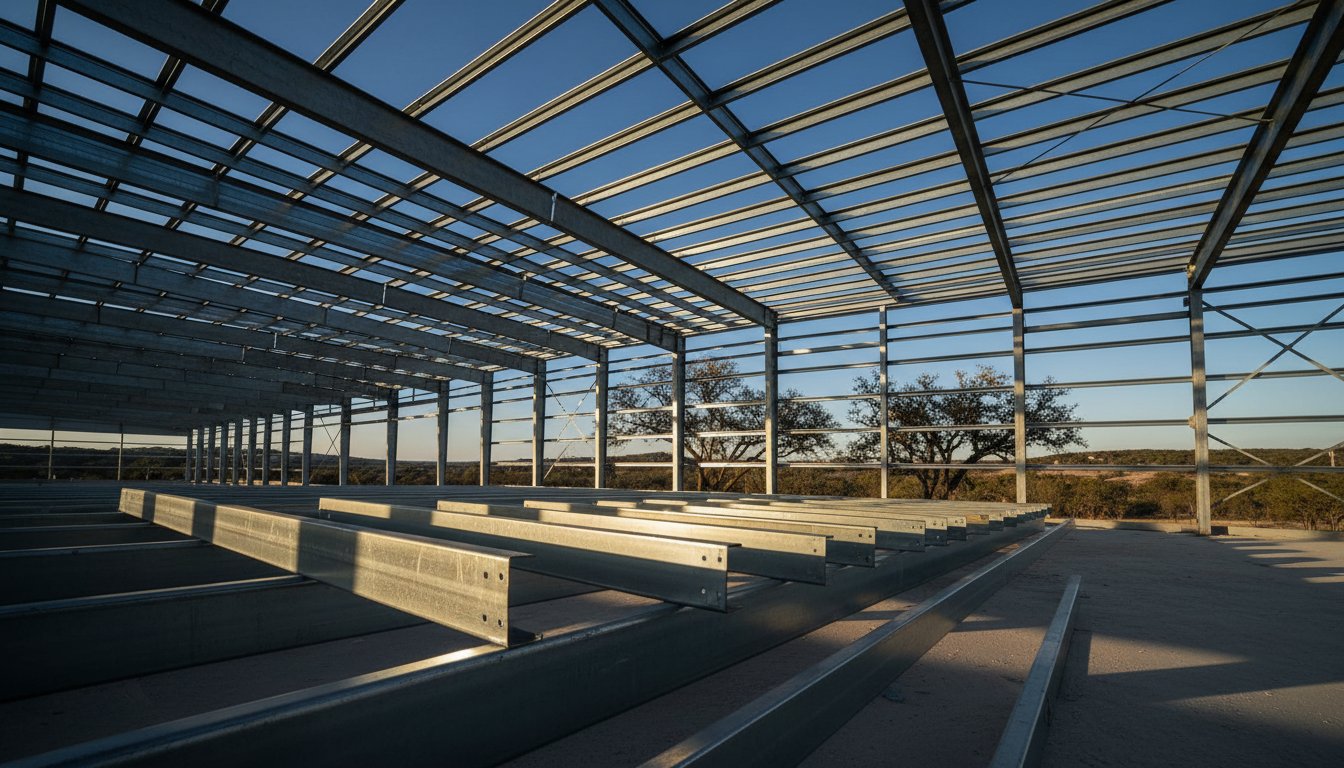
A building’s survival in the gusty corridors of Central Texas often comes down to the secondary framing, and choosing the wrong component means risking a structural failure when the next 90-mph wind gust hits. You already know that every bolt and lap counts when you’re erecting a heavy-duty shop or warehouse in Dublin. It’s frustrating to sort through technical jargon only to find that a supplier doesn’t stock the specific z purlin dimensions required for a 50-foot clear span project. We understand that local contractors need parts that meet rigorous engineering standards without the headache of long-distance shipping delays.
You’ll learn exactly why the z purlin is the superior choice for continuous span construction and how to select the right thickness to meet Erath County building requirements. We’ll break down the mechanical advantages of nested laps and provide a clear roadmap for sourcing high-quality steel right here in Dublin. This guide delivers the technical specs and local insights you need to ensure your next build stands as solid as a Texas oak. We’ve spent years refining our fabrication process to ensure every piece of steel that leaves our yard is ready for the demands of the Brazos Valley landscape.
Key Takeaways
- Understand why the “Zee” shape is the essential structural backbone for secondary framing systems in the Texas heat.
- Discover how nesting and overlapping z purlin components creates a continuous beam effect for superior structural strength.
- Learn the performance differences between Z and C shapes to ensure you choose the right component for every frame and opening.
- Master the selection of steel gauges and heights required to withstand the demanding wind and weather loads of Central Texas.
- Identify the key markers of high-quality fabrication and precision when sourcing steel from local Dublin suppliers.
Understanding Z Purlins: The Structural Backbone of Texas Metal Buildings
A z purlin is a cold-formed steel member that serves as a horizontal structural component within a roof or wall system. Its name comes from its unique “Zee” shape, which features two flanges of different widths. This design isn’t just for looks; it allows one purlin to lap or nest inside the next at the support points. This overlapping capability creates a continuous beam effect across the structure, which can increase the load-carrying capacity by as much as 20 percent compared to simple-span systems. In the context of secondary framing, these members act as the critical link between the heavy primary red iron and the exterior metal panels.
Dublin builders rely on the z purlin to create a rigid grid that supports the building’s skin. Without these components, the exterior sheeting would have nothing to bite into, leaving the structure vulnerable to the elements. These members are engineered to handle both downward gravity loads from rain or snow and upward uplift loads from high winds. By providing a flat, stable surface for fastening, they ensure the finished building remains weather-tight and structurally sound for decades.
The Role of Secondary Framing in Steel Structures
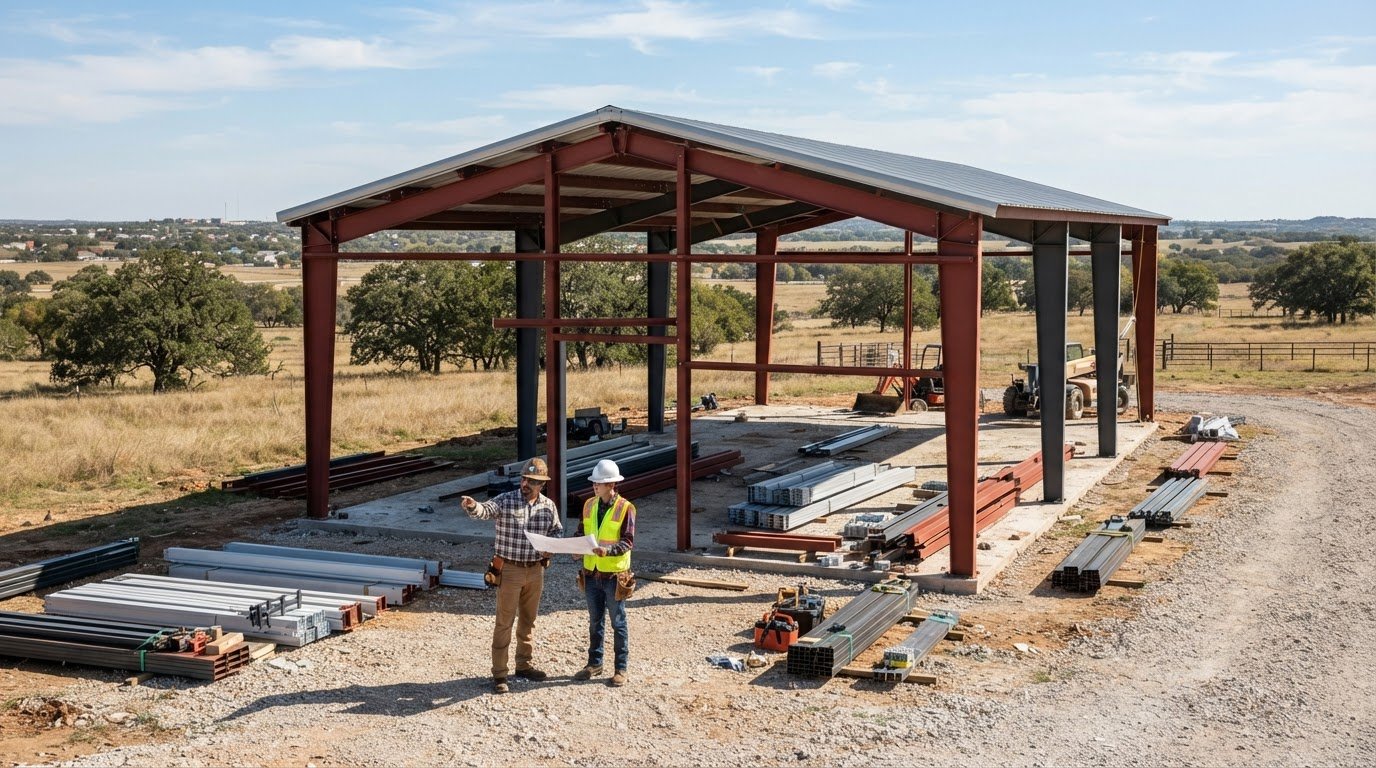
Secondary framing components transfer environmental loads from the roof deck directly to the primary steel frame. For projects in Dublin and the surrounding Brazos Valley, structural integrity depends on precise spacing. Most local contractors set these members at 5-foot intervals to comply with 2024 building safety standards. This spacing prevents the metal roof panels from sagging or oil-canning between supports. While the primary red iron forms the massive skeleton of the shop or warehouse, the Structural Backbone of Metal Buildings is found in these secondary members that tie everything together. They provide the necessary surface area for insulation and interior liners, making them indispensable for climate-controlled workspaces.
Why Steel Purlins Outperform Wood in the Texas Climate
Central Texas builders choose steel over wood because wood simply can’t handle the local climate long term. In the high humidity of the Brazos Valley, a standard wood beam can warp, rot, or develop mold within 12 years of installation. Steel doesn’t have these weaknesses. It won’t twist or shrink over time, which means you won’t deal with the popped screws or leaking roof seams that plague wood-framed buildings. Termites cause more than $5 billion in property damage across the country every year, but they can’t touch a steel frame. This makes steel the only logical choice for agricultural buildings in Dublin and Central Texas where feed and moisture are always present.
Fire resistance is another major factor for rural property owners. Steel is non-combustible, which means it won’t provide fuel for a fire. This characteristic can lead to insurance premium discounts of 15 percent or more in certain Texas counties. While the initial cost of steel might be higher than low-grade lumber, the long-term savings are clear. You won’t spend money on chemical treatments, frequent inspections, or structural repairs. A steel building stays straight and true, protecting your equipment and livestock without the constant maintenance that wood requires.
The Overlapping Advantage: How Z Purlins Increase Structural Strength
The Z shape is a masterclass in structural engineering. It’s not just a piece of cold-formed steel; it’s the backbone of a building that’s meant to stand for decades against the unpredictable Texas weather. Unlike C-channels that sit end-to-end, a z purlin is designed specifically for the lap. This geometry allows the pieces to nest together over the main frames, transforming individual components into a single, unified structural member. This isn’t about making assembly easier for a crew on a job site in Dublin or the Brazos Valley. It’s about physics and the pursuit of a more rigid, dependable structure.
When you overlap steel members, you create a “continuous beam” effect. In a simple span system, each purlin carries the load independently between two rafters. If that purlin flexes, it does so in isolation. By nesting these shapes, the load is shared across multiple spans. This continuity changes the way the building handles stress. It moves the point of maximum tension away from the center of the span and distributes it more evenly. The result is a roof system that feels solid underfoot and stays true over time. We’ve seen this design hold its integrity through high-wind events where lesser systems might have buckled. It’s the kind of precision that separates a temporary shed from a professional-grade steel facility.
The Mechanics of Purlin Lapping
The secret to this system lies in the flanges. One flange is manufactured slightly wider than the other, typically by 1/8 to 1/4 of an inch. This minor difference allows the narrow flange of one purlin to slide perfectly inside the wider flange of the next. On most professional builds, these sections overlap by 12 to 36 inches directly over the main frame. This lapped joint creates a double thickness of steel at the highest point of stress. This extra material significantly reduces deflection and increases the overall stiffness of the roof deck. Technical data found in the AISI Design Guide for Purlin Roof Framing confirms that these continuous systems outperform simple spans in almost every structural metric, especially regarding load resistance and rotational stability.
Structural Efficiency and Material Savings
Efficiency is where the Z shape really pays off for the developer. Because the continuous beam design is inherently stronger, it allows us to use thinner gauges without sacrificing safety. You can often achieve the same structural performance with 14-gauge or 16-gauge steel that would require much heavier materials in a non-lapped configuration. This efficiency can reduce the total weight of a steel package by 15% to 20%. For large structures like aircraft hangars or commercial storage facilities in the Brazos Valley, that’s a massive reduction in material costs. It also enables longer spans between main frames, often reaching 25 or 30 feet. If you’re looking to maximize your square footage while keeping costs under control, you can consult with our team to find the right gauge for your project. We don’t believe in over-engineering for the sake of it; we believe in using the right geometry to build the smartest way possible.
This design isn’t just a modern convenience. It’s a proven method that has become the industry standard for high-performance metal buildings across Central Texas. When you choose nested purlins, you’re choosing a system that values material integrity and long-term stability. It’s the difference between a building that just gets by and one that’s built to last for generations.
Z Purlins vs. C Purlins: Choosing the Right Component for Your Project
Selecting the right structural member determines the long-term integrity of your Dublin job site. While C and Z purlins look similar to the untrained eye, their roles in a steel building differ significantly. The primary distinction lies in their geometry and how they handle load distribution across a roof system. A C purlin is shaped like the letter C, featuring equal flanges that make it ideal for independent spans. In contrast, a z purlin is designed with one flange slightly wider than the other, allowing two pieces to “nest” or overlap at the supports.
This nesting capability is a game changer for structural performance. When you overlap these components over a mainframe, you create a continuous beam effect. This continuity can increase the load-bearing capacity of the roof by 20% compared to simple, non-overlapping spans. It also reduces deflection in the center of the bay, which is critical when you’re dealing with the heavy rain or occasional ice loads we see in Central Texas.
When to Choose Z Purlins for Your Texas Build
For large-scale commercial warehouses and industrial storage facilities, the z purlin is the industry standard. These components are essential for pre-engineered steel buildings where efficiency and material savings are priorities. Because they nest, you can use thinner gauge steel to achieve the same strength as a heavier C channel.
Z purlins excel in buildings with spans exceeding 25 feet. They allow for wide, open interiors without the need for excessive interior columns. Contractors in the Brazos Valley prefer them for multi-span systems because they simplify the bolting process at the rafters. When your project requires a roof that covers 10,000 square feet or more, the structural continuity provided by Z-shaped members ensures the frame remains rigid under high wind pressures.
When C Purlins are the Better Fit
C purlins, or C channels, are the workhorses of the building perimeter. They’re the preferred choice for door headers, window framing, and eave struts. Because they have a flat back, they’re much easier to mount against flush surfaces like sidewall columns or girts. You’ll frequently see them used in weld-up buildings across Erath County. Their symmetrical shape makes them straightforward to align and weld without the complexity of overlapping joints.
While they lack the nesting benefits of their Z-shaped counterparts, C purlins offer superior stability for simple, single-span applications. They’re often used for:
- Framing out 12×12 roll-up doors in farm shops.
- Creating sturdy base channels where the wall meets the slab.
- Building end walls where the purlin doesn’t need to continue past the rafter.
Integrating both types into a single structural plan is common practice. A well-engineered building might utilize Z purlins for the main roof spans to maximize strength-to-weight ratios while using C purlins for the end walls and openings to simplify trim installation. Matching the component to the specific mechanical requirement ensures your build is both cost-effective and structurally sound. Bradberry Steel provides both profiles in various gauges, including 14-gauge and 12-gauge options, to meet the specific engineering demands of your Texas project.
Sizing and Gauge Selection for Central Texas Wind and Weather Loads
Getting the sizing right isn’t just about making the pieces fit; it’s about ensuring the structural integrity of your build against the Texas elements. In Dublin and the surrounding Brazos Valley, specific environmental pressures dictate whether you need a 4 inch, 6 inch, or 8 inch profile. The height of the z purlin directly impacts its stiffness and its ability to span the distance between your main frames. For a standard 20-foot bay, a 6-inch purlin might suffice, but once you stretch that span to 25 feet or deal with heavy roof loads, the 8-inch option becomes the industry standard to prevent sagging.
Steel gauge is equally critical for the longevity of your project. It’s a simple rule: the lower the gauge number, the thicker the steel. We typically work with three primary thicknesses:
- 12 Gauge: Measuring approximately 0.1046 inches, this is the heavy-duty choice for commercial spans.
- 14 Gauge: At 0.0747 inches, this is the versatile middle ground for most agricultural shops.
- 16 Gauge: Measuring 0.0598 inches, it’s a lighter option suited for shorter spans or residential accents.
Choosing the wrong gauge for your specific frame spacing can lead to structural failure under stress. We recommend matching the gauge to the expected weight of your roofing material and the local environmental demands.
Wind Load Considerations for Central Texas
Erath and Comanche counties are prone to intense straight-line winds that often reach 115 mph during spring storm seasons. Your purlins act as the backbone for your metal sheeting. If they aren’t sized to handle these uplift forces, the entire roof system is at risk. For exposed rural sites where there’s no windbreak, opting for a 12-gauge steel provides a necessary margin of safety. You’ve got to consult with a supplier who understands the 2021 International Building Code standards. We ensure every piece of steel leaving our yard meets the specific safety requirements for the local climate.
Common Dimensions for Residential and Agricultural Use
Most large-scale agricultural barns and commercial storage facilities in Central Texas utilize the 8-inch z purlin. This size offers the depth needed to resist deflection over long distances, especially when frames are spaced 25 feet apart. For smaller residential steel products like detached garages or carports, 4 or 6-inch purlins are often more appropriate for the scale of the structure. Reading a specification sheet is the best way to confirm you’re getting the right fit. These sheets list the flange width, the lip length, and the exact decimal thickness. If the numbers don’t match your engineering requirements, the building won’t stand the test of time.
Ready to secure the right materials for your next project? Contact Bradberry Steel today for expert advice on sizing and gauge selection for your specific site.
Sourcing High-Quality Z Purlins in Dublin and the Surrounding Counties
Construction in Central Texas isn’t just about bolting beams together. It’s about respecting the land and the weather patterns that define our region. The shifting clay soil in Erath County requires a structure that can handle movement without compromising its integrity. Bradberry Steel understands these local challenges because we live and work here. We’ve supplied steel for projects within a 150-mile radius of Dublin for years, ensuring every z purlin we sell meets the rigorous demands of the Texas climate. Our team coordinates delivery logistics so your components arrive exactly when your slab is ready. We don’t believe in letting materials sit in the mud or cluttering a job site for weeks.
When you’re looking at a steel quote, the details determine your long-term return on investment. You need to verify the finish, the gauge, and the precision of the fabrication before signing any contract. We provide 12-gauge and 14-gauge options that offer a minimum yield of 55,000 PSI, which is essential for maintaining structural rigidity during the high-wind events common in the Brazos Valley. Don’t settle for “standard” steel that lacks a specified mill certification. Our red oxide primer is applied with a consistent thickness to prevent early rust, a vital feature given the humidity and 40-inch average annual rainfall seen in parts of Central Texas. Precision is our signature. Our CNC-controlled punching means your bolts will slide into place without the need for a reamer or a torch, saving your crew hours of frustration.
The Bradberry Steel Quality Standard
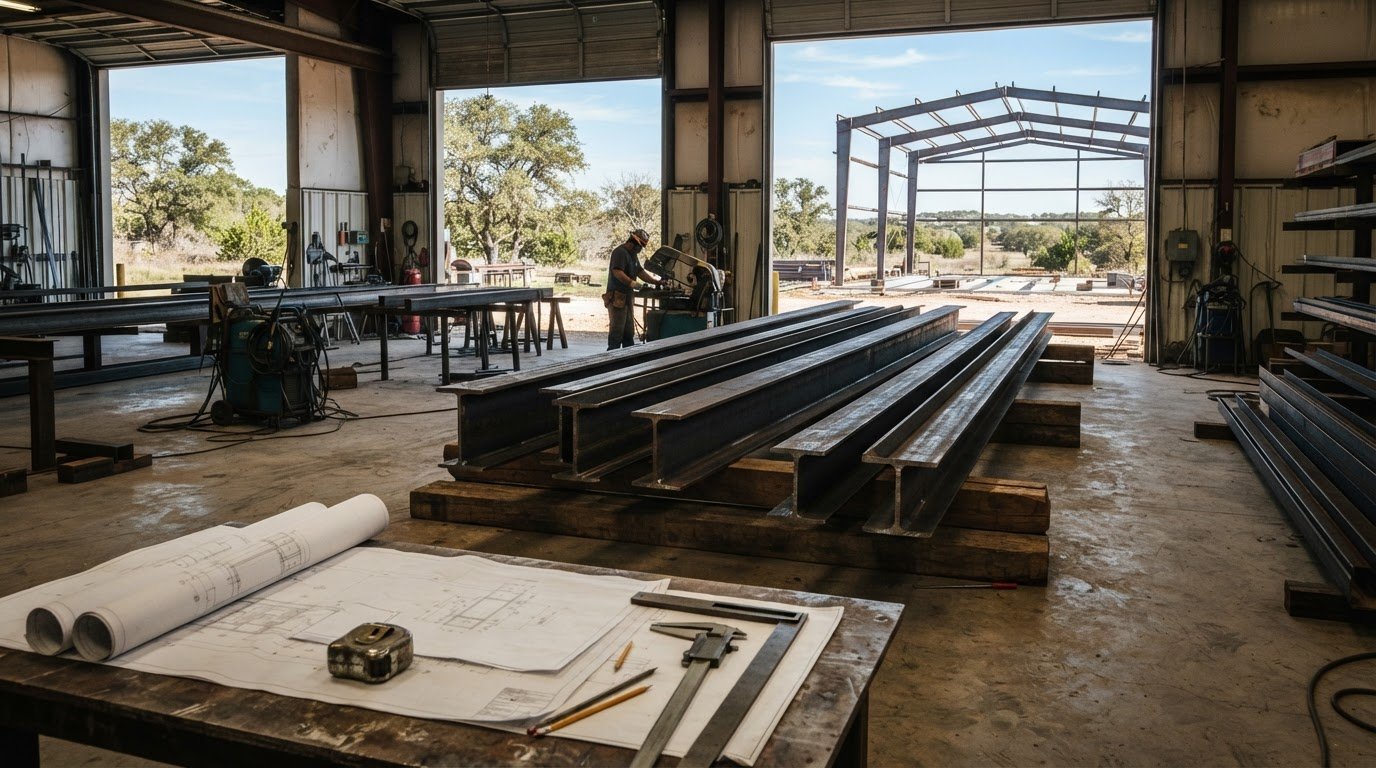
We focus on precision fabrication for Dublin and Stephenville builders who can’t afford delays. We provide structural components that fit the first time on the job site. Most contractors report a 22% increase in erection speed when using our pre-punched material packages. We support local contractors with reliable material bundles that include every clip and fastener required for the secondary framing. We take pride in the fact that our steel forms the skeletons of the most durable shops, barns, and warehouses in the region. Our reputation is built on the physical strength of the structures we help create.
Requesting Your Quote and Designing Your Project
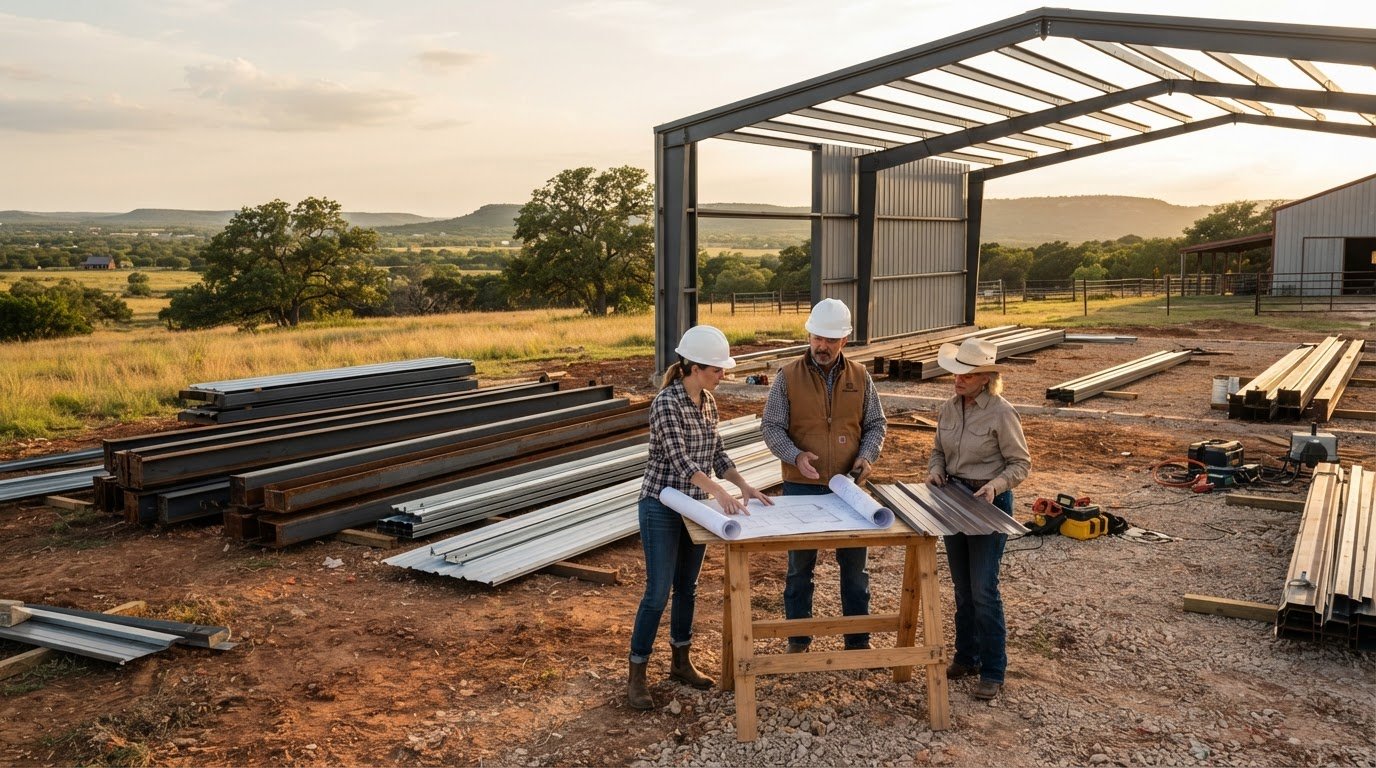
You can begin the process by using our 3D design tool to visualize the bay spacing and roof pitch of your structure. This tool helps you see how each z purlin integrates into the primary frame and allows for adjustments before production begins. To get a hard number for your budget, submit a quote request through our website. Our team needs your building’s zip code and dimensions to calculate the correct wind and snow loads for your specific location. You’re also welcome to stop by our Dublin office to walk through your blueprints with a technician who understands the trade. We make the complex process of steel procurement straightforward and dependable.
Working with a local partner means you get more than just a delivery. You get a team that knows the difference between a residential shop in Stephenville and a commercial facility in Comanche. We ensure your material package is optimized for the local environment, from the thickness of the steel to the durability of the coating. This local focus acts as a safeguard for your investment, ensuring your building stands tall for decades. If you’re ready to start your next project with a supplier that values hard work and precision, we’re ready to get to work for you.
Build a Structure That Stands the Test of Texas Time
Choosing the right z purlin isn’t just about meeting a spec sheet; it’s about ensuring your building survives the next 50 years of Central Texas weather. You’ve learned how the overlapping design creates continuous spans that significantly increase structural capacity compared to traditional framing. Selecting the correct gauge is critical for handling the high wind loads we see across Erath County and the surrounding Brazos Valley. When you prioritize precision engineering, you eliminate the guesswork on the job site.
At Bradberry Steel, we bring over 25 years of Texas steel building expertise to every order. We’re a family-owned and operated shop right here in Dublin, TX, dedicated to providing components that fit perfectly the first time. Our team focuses on fabrication accuracy so your crew can focus on a fast, safe erection process. We don’t believe in cutting corners when it comes to structural integrity. You deserve materials as hardworking as you are.
Whether you’re planning a commercial warehouse or considering steel workshops and garages in Dublin and Central Texas, the right secondary framing is essential for long-term durability. Request a custom quote for your Z purlins and steel building components today. Let’s get to work on a project that’s built to last.
Frequently Asked Questions
Are Z purlins stronger than C purlins for a metal building roof?
Z purlins offer superior structural efficiency because they can be lapped over supports to create a continuous beam. This lapping technique effectively doubles the steel thickness at high-stress points over the frames. While a single C and Z of the same gauge have similar individual strength, the continuous span capability of the z purlin makes it the preferred choice for larger Texas clear-span buildings.
What is the standard spacing for Z purlins in a Texas barn?
Standard spacing for Z purlins is 5 feet on center for most agricultural and commercial builds in Central Texas. This 60-inch interval aligns with common 26-gauge and 29-gauge R-panel load charts. If you’re building in a high-wind zone or using heavy insulation, your engineer might require a tighter 4-foot spacing to meet local building codes and safety requirements.
Do I need galvanized or red oxide Z purlins for my project?
Choose galvanized Z purlins if your building will face high humidity or corrosive environments like livestock barns. The zinc coating provides superior rust protection compared to red oxide. For dry storage or enclosed shops where cost is a factor, red oxide primer serves as a reliable, budget-friendly base coat that prevents corrosion during the construction phase and throughout the life of the building.
How much overlap is required when lapping Z purlins?
A standard overlap of 12 to 24 inches is required depending on the structural load and span length of your building. This lapping creates a continuous beam effect that increases the roof’s load-bearing capacity by 20 percent. Always follow the specific detailing provided in your engineered blueprints to ensure the bolt holes align perfectly across the 2.5-inch or 3.5-inch flanges during the erection process.
Can I use Z purlins for the wall girts in my steel building?
You can use Z purlins for wall girts, though C-channels are more common for simple framed openings. Z-sections excel in wall applications where long, continuous runs are necessary to minimize material waste. Using a consistent z purlin profile throughout the roof and walls simplifies your inventory and ensures your 14-gauge or 16-gauge fasteners remain uniform across the entire structure for a cleaner finish.
What gauge steel is most common for Z purlins in Central Texas?
14-gauge and 16-gauge steel are the industry standards for Z purlins in the Dublin and Stephenville areas. A 14-gauge purlin provides the necessary rigidity for spans up to 25 feet, while 16-gauge is often sufficient for shorter 20-foot spans. Selecting the right thickness ensures your roof handles the 20-pound per square foot live load requirements common in Erath and Comanche counties.
Does Bradberry Steel deliver Z purlins to Stephenville or Comanche?
Bradberry Steel provides direct delivery to job sites in Stephenville, Comanche, and across the entire Brazos Valley. We operate a fleet of heavy-duty trucks to ensure your 20-foot or 30-foot purlins arrive straight and undamaged. Most local deliveries are scheduled within 48 to 72 hours of order confirmation to keep your construction timeline on track without any unnecessary delays at the site.
How do I calculate how many Z purlins I need for my roof?
Divide the total length of the roof slope by the spacing interval and add one for the eave. For a 25-foot slope with 5-foot spacing, you need 6 runs per side. Multiply the number of runs by the building length, accounting for the 12-inch laps at every frame. This formula ensures you order enough steel to cover the entire square footage without running short during installation.
Disclaimer
Bradberry Steel is a steel supply and metal building package company based in Dublin, Texas. We do not provide installation, site preparation, foundation work, or general contracting services. All building projects should be reviewed by a qualified local contractor and may require permits depending on your county or municipality. Contact Bradberry Steel for product guidance and material quotes.