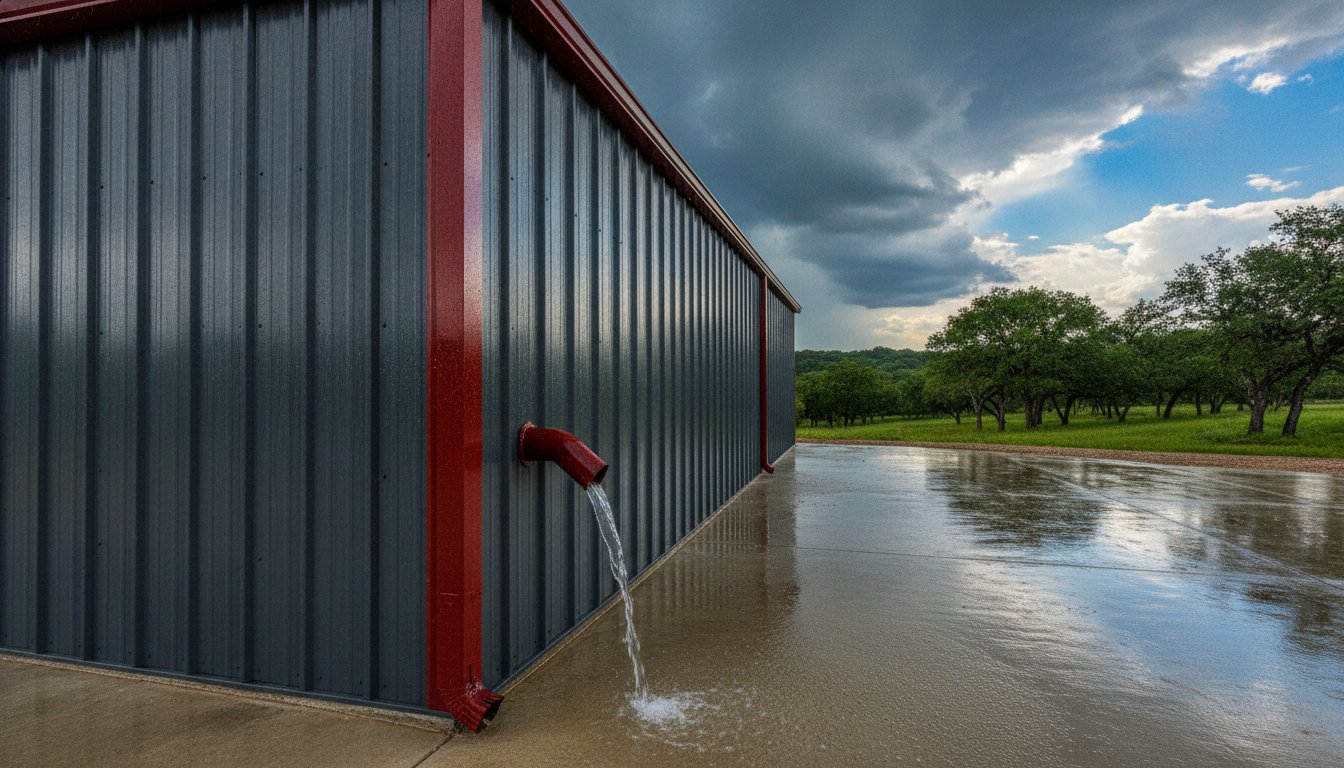
Imagine walking toward your shop during a Central Texas thunderstorm only to be met by a heavy wall of water at the entrance and a growing pool of mud around your foundation. This waterfall effect is more than a nuisance; it’s a sign that your structure is at risk. While the strength of your panels is vital, high-quality steel building gutters are the unsung heroes that protect your investment from the ground up. Many owners realize too late that pooling water leads to foundation shifting and ruined landscaping.
We understand that choosing between industrial and residential styles can feel confusing, especially when you want a professional finish that matches your building’s color. This article will show you how to select the right gutter system to safeguard your foundation and enhance durability against our unpredictable Texas climate. We’ll look at proper sizing for heavy rainfall and the specific components you need for a dry, protected site. At Bradberry Steel, we provide the expert guidance and quality components you need to ensure your metal building package is built to last for decades.
Key Takeaways
- Learn how proper water management prevents foundation shifting and protects the base of your metal panels from long term damage.
- Compare industrial box styles and residential K-style options to find the best steel building gutters for your specific structure.
- Understand why choosing heavier 26-gauge steel provides the durability needed to withstand Central Texas wind and hail.
- Discover the best methods for calculating eave length and downspout placement to handle heavy seasonal rainfall.
- See how Bradberry Steel uses over 25 years of local expertise to help you design a complete and weather-tight building package.
Why Steel Building Gutters are Essential in Central Texas
Steel building gutters serve as the primary water management system for any metal structure. Because metal roofs are non-porous and often cover large surface areas, they shed water much faster than traditional shingle roofs. During a typical Central Texas downpour, hundreds of gallons of water can rush off the eaves in minutes. Without a dedicated system to catch and divert this flow, you face the “waterfall effect.” This occurs when a sheet of water pours directly off the roof line, pounding the ground at the base of your building with significant force. This constant pressure can strip away paint and protective coatings on your lower wall panels over time.
Properly installed gutters do more than just keep you dry when you walk through the door. They prevent soil erosion around your concrete slab by directing water to specific drainage points. This rain gutter overview highlights how these systems are designed to protect the structural integrity of a building. Beyond the functional benefits, gutters provide a clean, professional finish to your eaves. They hide the raw edges of the roof panels and create a polished look that matches the overall color scheme of your project.
Protecting Your Foundation from Clay Soil Expansion
Central Texas is famous for its “black gumbo” and other highly reactive clay soils. These soils act like a sponge; they expand significantly when wet and contract as they dry out. If you don’t use steel building gutters, water pools directly against your foundation. This localized moisture causes the soil under the edge of the slab to swell while the soil further underneath remains dry. This uneven pressure is a leading cause of foundation cracking and settling in our region. By moving water at least five to ten feet away from the building, you maintain consistent moisture levels and protect your concrete work.
Preventing Premature Corrosion and Rust
Keeping the base of your building dry is the simplest way to prevent rust. When water falls from the roof and hits the ground, it creates a backsplash. This backsplash carries minerals, dirt, and salts from the soil back up onto your wall panels. Because the base of the building often sits in the shade, this moisture stays trapped against the metal for longer periods. Over several seasons, this leads to premature corrosion at the bottom of the panels. This protection is vital for all structures, including shops, barns, and residential metal roofs. At Bradberry Steel, we emphasize these details to ensure your investment stands up to the Texas elements for decades. We can help you coordinate the right trim and gutter components to keep your site dry and your steel protected.
Comparing Gutter Styles for Metal Buildings
Selecting the right style for your steel building gutters depends on both the function of the structure and the specific roof panel profile you choose. Not all gutters fit every panel type. If you are using PBR (Purlin Bearing Rib) panels, your drainage needs will differ from someone using a standing seam or R-panel system. Industrial buildings often require a rugged approach, while residential projects prioritize a blend of performance and curb appeal. Understanding these differences ensures you don’t end up with a system that leaks or looks out of place.
The industry generally relies on four main styles for metal structures. Sculptured eave gutters are popular because they integrate directly into the building trim for a seamless, finished look. If you are adding drainage to an older shop or a specific architectural design, hang-on gutters offer a versatile solution. All of these systems must be planned carefully to meet International Building Code standards for roof drainage and structural safety. Choosing the wrong style can lead to water backing up under the roof panels, which causes long-term damage to the insulation and framing.
Industrial Box Gutters for PBR Panels
Box gutters are the heavy-duty standard for pre-engineered steel buildings. They feature a wide, rectangular profile designed to capture the massive volume of water shedding off large roof spans. These systems are typically manufactured from 26-gauge steel, which is significantly stronger than the light-duty aluminum found on many homes. This extra thickness is necessary to withstand the weight of heavy rainfall and high Texas winds. The “sculptured” box gutter is especially effective for PBR panels because it sits flush against the deep ribs of the metal, creating a weather-tight seal that prevents water from blowing back into the building eave.
K-Style Gutters for Residential Steel
When you are planning a steel framed home or a barndominium, K-style gutters are often the preferred choice. They feature a decorative curve that mimics traditional crown molding, helping your metal residence look at home in any Central Texas neighborhood. While 5-inch gutters are common in residential construction, we always recommend 6-inch gutters for steel buildings. A 6-inch K-style gutter holds about 67 percent more water than a 5-inch version. This extra capacity is vital for handling the intense downpours common in our region. If you are unsure which profile fits your aesthetic, you can use our 3D design tool to visualize how different trim and gutter colors will look on your finished structure.
Material Specs: Gauges and Coatings for Longevity
The longevity of your steel building gutters depends entirely on the quality of the materials used. In Central Texas, we deal with intense solar heat, high-speed winds, and large hail. These conditions demand a material that won’t buckle or rust after a few seasons. While some suppliers use 29-gauge steel to save on costs, Bradberry Steel recommends 26-gauge steel for all gutter components. This heavier gauge provides the structural stiffness needed to remain straight along long eave lines and resist denting during hail storms. Thinner materials often sag under the weight of heavy rainfall, which leads to standing water and eventual leaks.
Beyond the thickness of the metal, the protective coatings determine how well the system fights off corrosion. Galvalume is the industry standard for a reason. It uses a patented alloy of zinc and aluminum to create a barrier that is far superior to traditional galvanized steel. When combined with modern roof drainage design standards, these materials ensure that water moves away from the structure without degrading the metal itself. This protection is especially important for agricultural buildings where humidity and environmental factors can accelerate rust at the eave line.
Siliconized Modified Polyester (SMP) Coatings
Texas sun is brutal on paint. Standard finishes often chalk or fade within five years, leaving your building looking aged and neglected. We utilize Siliconized Modified Polyester (SMP) paint systems to ensure your gutters maintain their color for decades. Siliconized Modified Polyester (SMP) is a high-performance coating that resists chalking and fading by using a specialized resin that stands up to UV radiation. You can browse the Bradberry Steel Color Guide to find colors that reflect heat and match your trim perfectly. These finishes keep your building looking professional while providing an extra layer of defense against the elements.
Pest Prevention and Sealing
A common mistake in gutter installation is leaving gaps where the gutter meets the roof panels. These small openings are prime real estate for birds and wasps to build nests. We emphasize the use of closures and high-grade sealants behind the gutter to create a weather-tight seal. This prevents pests from entering the attic space or damaging your insulation layer. You should also consider the role of base trim or a “Rat Guard” at the bottom of your wall panels. While steel building gutters manage water at the top, a tight seal from eave to base is what truly keeps rodents and insects out of your structure. A disciplined approach to these details ensures your building remains a clean, functional workspace for years to come.
Planning and Sizing Your Gutter System
Proper planning ensures your steel building gutters perform under pressure during heavy Texas storms. The first step is calculating the total linear footage required. This involves measuring the full length of the eaves where water sheds from the roof. You must also account for the roof pitch. A steeper roof increases the speed at which water enters the gutter, which often necessitates a larger gutter capacity or additional downspouts to prevent overflow. It’s about matching the volume of water to the size of the drainage channel.
Aesthetics are just as vital as function in a professional build. You should coordinate your gutter colors with your wall panels and structural steel components to create a unified appearance. A well matched system looks like a natural extension of the building rather than an afterthought. This attention to detail protects your property value and ensures your structure looks as good as it performs.
Downspout Placement and Discharge
Downspouts act as the exhaust system for your roof drainage. A standard rule of thumb is to place a downspout every 20 to 30 feet along the eave length. This frequency prevents water from backing up and spilling over the front of the gutter during intense downpours. You should also plan the discharge points carefully. Use splash blocks or underground tile to move water at least 10 feet away from the concrete slab. Avoid placing downspouts near high traffic building entrances where puddles or ice can create hazards.
Ordering Your Gutter Package
Accuracy during the ordering phase prevents delays on the job site. Ensure your material list includes all necessary fasteners and internal hangers to secure the system. One of the best ways to ensure compatibility is to order your gutters as part of a complete weld-up building kit. This ensures that every piece of trim and every screw matches in both color and material quality. Providing a detailed building layout to your supplier helps prevent shortages and ensures an accurate quote for your project.
If you are ready to design your structure and ensure it has the right drainage, you can request a quote for a complete building package today.
Supply and Design Support from Bradberry Steel
Bradberry Steel stands as the dependable authority for steel projects across Dublin, Stephenville, and the surrounding counties. With over 25 years of experience, we have seen how the Texas climate tests every eave and fastener. Our team focuses on providing the physical strength and technical precision required to protect your investment. We don’t believe in hyperbolic promises; instead, we rely on a steady delivery of high-quality materials and honest guidance. This regional roots approach makes us a neighborly partner for anyone looking to build a structure that lasts for generations.
The value of a complete material package cannot be overstated. Ordering your components piecemeal often leads to gaps in the eave line or mismatched color batches. When you choose a full package from us, every piece of trim and all your steel building gutters are designed to fit your specific structure perfectly. This consistency creates the professional finish that defines a high-quality build. It also simplifies the process for your crew, as every component integrates seamlessly with the structural frame and roof panels.
Local Expertise for Central Texas Projects
We help ranchers in Comanche and Brownwood protect their equipment and livestock with rugged steel solutions. Our team understands that a barn or shop in Central Texas needs a weather-tight system that stands up to seasonal extremes. For more tips on managing your project, you can visit our blog or read our comprehensive metal buildings in Texas supply guide. We are committed to providing the materials that build a lasting legacy on your land.
Visualize Your Building Today
Planning a project is easier when you can see the finished result. We encourage you to use our 3D Design Tool to visualize how different gutter colors and trim options coordinate with your wall panels. This tool allows you to experiment with various configurations before you commit to an order. Once you have a vision, requesting a quote for a custom steel building package is a straightforward and purposeful process. Contact our team in Dublin to start planning a weather-tight steel structure that is built to endure.
Secure Your Investment with Professional Drainage
Choosing high-quality steel building gutters is a critical decision for the long-term health of your structure. By managing water runoff effectively, you prevent foundation shifting in reactive clay soils and stop premature rust on your wall panels. Selecting the right 26-gauge materials and coordinating your design ensures that your building remains both functional and visually appealing for decades. At Bradberry Steel, we bring over 25 years of Texas steel experience to every project we guide. As a family-owned and operated business in Dublin, we take pride in helping our neighbors build structures that stand up to the toughest weather conditions.
Our team provides expert design coordination to ensure every component of your metal building package works together seamlessly. You can Request a Quote for Your Steel Building Package or use our online tools to start planning your project. We are here to provide the dependable materials and straightforward advice you need to build with confidence. Let’s get started on a durable solution that protects your property and your legacy.
Frequently Asked Questions
Are gutters necessary for a metal building in Texas?
Gutters are essential for any metal building in Texas to manage heavy seasonal rainfall. Without them, water sheds off the large roof surface and pools at the base of the structure. This causes Central Texas clay soils to expand and contract, which leads to foundation cracking and shifting. Properly installed systems also protect your wall panels from backsplash and ground-level corrosion by moving water away from the slab.
What is the best gutter style for a PBR panel roof?
The sculptured box gutter is the industrial standard for PBR panel roofs. This style is designed to sit flush against the deep ribs of the panel, creating a weather-tight seal that prevents water from blowing back into the eaves. Box gutters have a higher volume capacity than residential styles. This makes them ideal for the wide roof spans found on shops, barns, and commercial storage facilities across the region.
Should my gutters match the roof or the wall color?
Most owners choose to match their gutters to the wall color or the eave trim for a seamless look. Matching the wall color helps the downspouts blend in, while matching the trim creates a crisp, framed appearance. You can use our 3D design tool to visualize both options before ordering. This coordination provides a professional finish that enhances the curb appeal of your residential or agricultural project.
What size downspouts do I need for a large steel shop?
Large steel shops require oversized downspouts to handle the massive volume of water collected by the roof. We typically recommend 3×4 inch or 4×5 inch downspouts for industrial applications. These larger sizes have a significantly greater cross-sectional area than standard residential versions. This extra capacity prevents steel building gutters from backing up and overflowing during the intense thunderstorms common in Central Texas.
How do I prevent leaves from clogging my metal building gutters?
Installing high-quality gutter guards is the most effective way to prevent debris from clogging your system. These screens allow water to enter while keeping out leaves and twigs that can block downspouts. You should also perform a visual inspection twice a year, especially if your building is near large oak or pecan trees. Keeping the channels clear ensures that water always moves away from your foundation as intended.
Can I add gutters to an existing weld-up building?
You can absolutely add steel building gutters to an existing weld-up building using hang-on brackets. This is a common upgrade for owners who notice foundation issues or entrance flooding after their initial build. While it’s easier to include them in the original material package, modern gutter systems are versatile enough for retrofit. Adding them later still provides the same protection against soil erosion and panel corrosion.
What gauge of steel is used for industrial gutters?
Industrial gutters are manufactured from 26-gauge steel to provide maximum durability. This heavier metal is much stronger than the 29-gauge steel or thin aluminum often used in budget kits. The extra thickness is necessary to resist denting from hail and to remain straight over long eave distances. Using 26-gauge material ensures the system won’t sag or buckle under the weight of heavy rainwater or high winds.
Do steel building gutters require special maintenance?
These systems are designed for low maintenance, but they aren’t completely maintenance-free. You should check the fasteners and sealants once a year to ensure everything remains tight and leak-free. Because our gutters use Siliconized Modified Polyester coatings, they resist fading and chalking without the need for repainting. A simple rinse with a garden hose is usually enough to keep them looking clean and professional for many years.
Disclaimer
Bradberry Steel is a steel supply and metal building package company based in Dublin, Texas. We do not provide installation, site preparation, foundation work, or general contracting services. All building projects should be reviewed by a qualified local contractor and may require permits depending on your county or municipality. Contact Bradberry Steel for product guidance and material quotes.