The cheaper option isn’t always the smarter one. When Texas ranchers, contractors, and business owners start comparing pre-engineered vs weld-up steel buildings in Texas, the initial price tag often drives the conversation. But the real decision runs deeper than that.
That instinct to focus on upfront cost makes sense. Steel buildings are a serious investment, and nobody wants to overpay. But choosing the wrong building type for your land, your use case, and your local climate can cost you far more down the road in repairs, limitations, and regrets.
This guide cuts through the confusion. You’ll learn exactly how pre-engineered and weld-up steel buildings differ in structure, performance, and long-term value. You’ll understand what Texas heat, high winds, and shifting soil conditions mean for your choice. And by the end, you’ll have a clear picture of which building type fits your project best. With over 25 years of steel supply experience serving Central Texas, Bradberry Steel has helped ranchers, developers, and business owners ask the right questions before they commit. Here’s what you need to know.
Key Takeaways
- Understanding the structural differences between pre-engineered vs weld-up steel buildings in Texas is the first step toward choosing a building that performs well for decades in the local climate.
- Pre-engineered buildings are factory-designed for faster assembly, while weld-up buildings are built on-site and offer greater flexibility for custom layouts and specific project demands.
- Upfront cost tells only part of the story. Long-term maintenance requirements, structural longevity, and site conditions all factor into the true cost of each building type.
- Texas heat, high winds, and shifting soil conditions create unique challenges that should directly influence which building method you choose before you commit to a purchase.
- Matching your building type to your specific land use, project goals, and local regulations is the clearest path to a steel structure that holds its value over time.
Understanding Pre-Engineered Steel Buildings
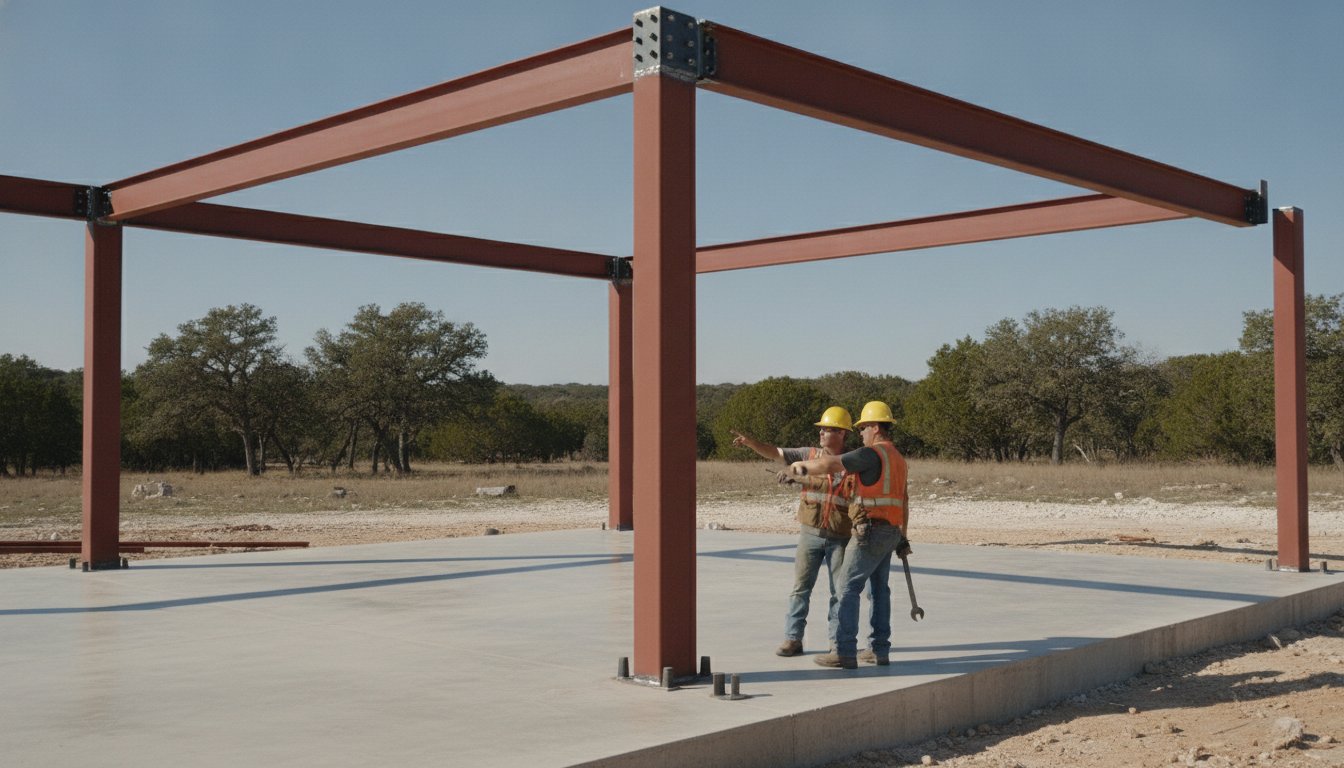
A pre-engineered steel building is exactly what the name suggests. The structural components are designed and fabricated at a factory, then shipped to your site for assembly. Primary frames, secondary framing, roof panels, and wall systems arrive cut to specification and ready to bolt together. There’s no guesswork on-site. The engineering work is done before the first piece of steel hits your land.
For anyone comparing pre-engineered vs weld-up steel buildings in Texas, this factory-first approach is the defining characteristic. It compresses construction timelines considerably because crews aren’t fabricating and fitting custom pieces in the field. Less time on-site means lower labor costs and a faster path to a functional building.
What many articles skip over is how Texas conditions interact with this building type. Intense UV exposure, triple-digit summer heat, and the occasional severe storm put real stress on any structure. Pre-engineered buildings use factory-applied coatings and precisely engineered connections that hold up well under those conditions, provided the system is specified correctly for local wind and load requirements. That last part matters. A system designed for mild Midwest conditions isn’t automatically the right fit for Central Texas.
If you want a deeper look at the structural logic behind these systems, the Wikipedia entry on pre-engineered building systems covers the core components and design methodology clearly.
Benefits of Pre-Engineered Steel Buildings
The practical advantages stack up quickly for most Texas projects:
- Predictable costs. Factory fabrication reduces material waste and keeps pricing more consistent than field-built alternatives.
- Faster timelines. Pre-cut, pre-drilled components mean assembly moves efficiently once the foundation is set.
- Low maintenance. Factory finishes resist rust and weathering far longer than field-applied coatings.
- Design flexibility. Clear-span interior layouts are achievable across a wide range of building sizes, giving you usable space without interior columns getting in the way.
These buildings also scale well. Whether you’re putting up a small workshop or a large commercial facility, the same engineered approach applies. Bradberry Steel supplies pre-engineered steel building packages tailored to Central Texas projects, with material specifications matched to local climate demands.
Common Applications in Texas
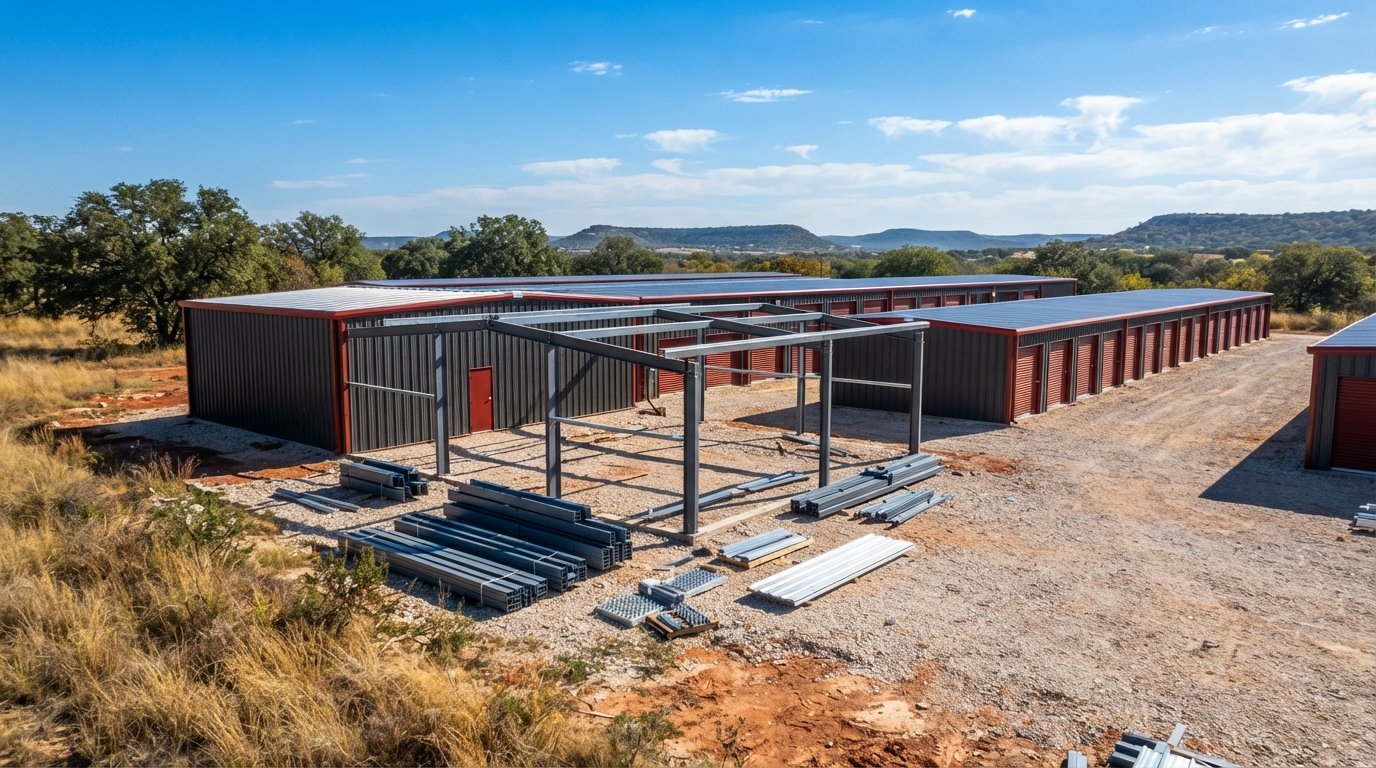
Pre-engineered steel buildings serve a wide range of uses across the state. Residential workshops and garages are a natural fit. So are commercial storage facilities, where clear-span layouts maximize usable square footage. Agricultural operations rely on them for equipment storage, hay barns, and livestock shelters that hold up against Texas weather year after year. Aircraft hangars represent another strong application, where wide, unobstructed spans are a hard requirement rather than a preference.
Zoning rules and local building codes vary across Texas counties, so confirming requirements before you commit to a building size or configuration is always the right first move.
Exploring Weld-Up Steel Buildings
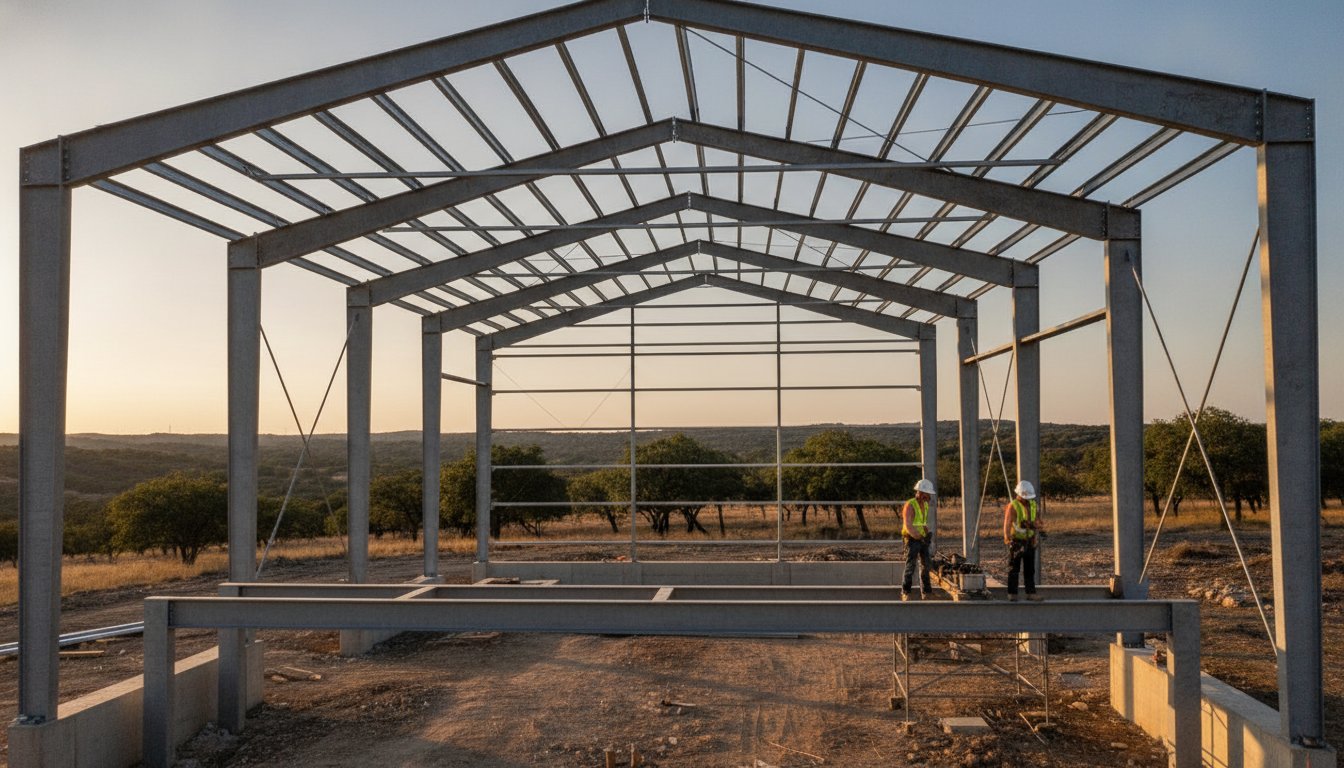
Weld-up steel buildings represent a traditional, hands-on approach to construction that remains a staple across the Texas landscape. In this method, raw steel components like C-purlins, square tubing, and red iron beams are delivered to your property as individual pieces. A skilled crew then measures, cuts, and welds every joint together on-site to form the structural frame. When comparing pre-engineered vs weld-up steel buildings in Texas, the weld-up option is often the choice for those who want a structure built to their exact, sometimes evolving, specifications right where it stands.
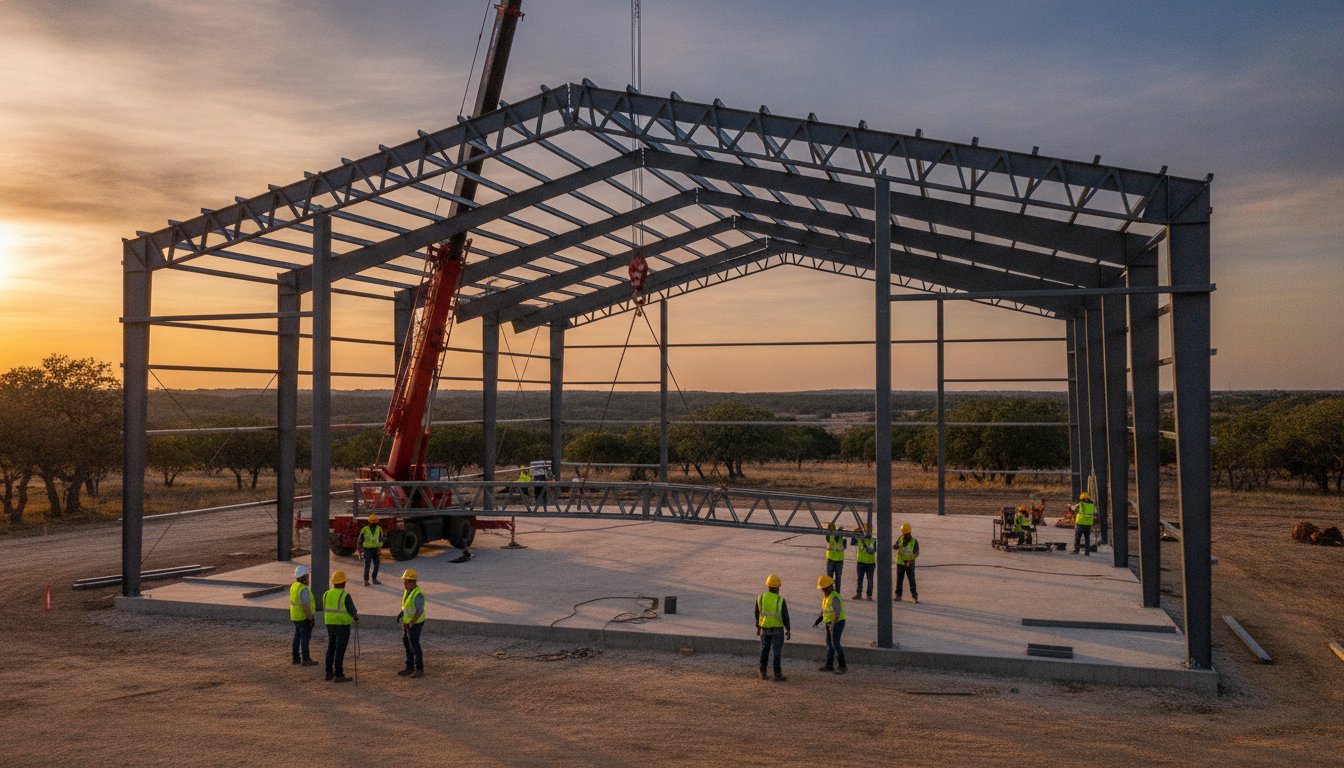
This process is labor-intensive and requires a high level of on-site expertise. It’s essentially building from scratch using steel instead of wood. Because every connection is fused in the field, construction timelines are typically longer than those for bolt-together kits. Weather also plays a significant role. High winds or rain can halt welding work for days, which is a common reality for projects in Central Texas. Adhering to steel erection safety standards is vital during this phase to ensure the job site remains secure while heavy beams are positioned and fused together.
While the timeline is longer, the result is a structure that feels permanent and incredibly rigid. Many ranchers and business owners prefer this method because it allows for modifications during the build. If you decide a window needs to move six inches or a door frame needs to be taller after the slab is poured, a weld-up design allows for those adjustments. Bradberry Steel provides the high-quality raw materials and weld-up building components needed to ensure your project starts with a foundation of strength.
Advantages of Weld-Up Construction
The primary advantage of weld-up construction is its sheer durability. A properly welded frame is exceptionally strong and capable of withstanding the severe weather conditions common in our region. These buildings offer:
- Total customization. You aren’t limited by factory templates or pre-set dimensions.
- Structural integrity. Continuous welded joints can offer superior rigidity in areas with shifting soil.
- On-site flexibility. Changes can be made during the construction process without waiting for new factory parts.
Ideal Use Cases in Texas
Weld-up buildings are the workhorses of the Texas countryside. They are ideal for heavy-duty industrial warehouses and large agricultural structures where non-standard load-bearing capacities are required. If you plan on hanging heavy hoists from the rafters or building a specialized workshop with unique dimensions, the weld-up method provides the necessary muscle. They are also frequently used for specialized aircraft hangars and storage units where the owner wants a specific, rugged aesthetic that matches existing structures on the property.
If you’re trying to visualize how a custom layout might fit your needs, you can use our 3D design tool to start planning your ideal steel structure today.
Comparative Cost Analysis: Pre-Engineered vs Weld-Up
Price is where most conversations start, but it’s rarely where the real decision lives. When you’re weighing pre-engineered vs weld-up steel buildings in Texas, the upfront numbers tell only part of the story. The full picture requires looking at what each building type costs you over its entire lifespan, not just on delivery day.
Pre-engineered buildings generally carry a lower initial price point. Factory fabrication reduces material waste, and the streamlined assembly process cuts down on labor hours considerably. Fewer days on-site means lower crew costs, and that savings gets passed down to the buyer. For ranchers and business owners working within a defined budget, that predictability is genuinely valuable.
Weld-up construction typically costs more upfront. You’re paying for skilled welding labor, longer build timelines, and the on-site expertise required to fabricate a frame from raw components. That investment, however, can translate into a structure with exceptional rigidity and longevity, particularly on properties with challenging soil conditions or heavy operational demands.
Short-Term vs Long-Term Costs
Total cost of ownership is the metric that separates a smart purchase from a regrettable one. Pre-engineered buildings use factory-applied coatings and precision-fitted components that tend to hold up well with minimal maintenance, especially when the system is specified correctly for Texas heat and wind loads. Weld-up structures, when built with quality materials and proper welding technique, are extraordinarily durable and may require less structural intervention over decades of heavy use.
Consider these factors when calculating long-term value:
- Maintenance schedules. Factory finishes on pre-engineered panels typically require less frequent recoating than field-applied treatments on weld-up frames.
- Repair costs. Pre-engineered components are standardized, which can simplify replacement. Custom weld-up repairs require skilled labor and may take longer to source.
- Resale value. Both building types hold value well in the Texas market, but a well-documented pre-engineered system with verified engineering specs can be easier to appraise and transfer during a property sale.
Financing and Incentives in Texas
Steel buildings used for commercial purposes may qualify for Section 179 tax deductions, which allow businesses to deduct the full purchase price of qualifying equipment and structures in the year of purchase rather than depreciating them over time. That’s a meaningful financial lever for contractors, developers, and agricultural operators. Consult a qualified tax professional to confirm eligibility based on your specific use case.
Energy-efficient building configurations may also qualify for state or local incentives, particularly when paired with reflective roofing systems that reduce cooling loads during Texas summers. Local utility providers and county economic development offices are the right starting points for exploring what’s currently available in your area.
For commercial projects, financing is often structured differently than residential builds, with lenders evaluating the structure as a capital asset. Both building types can support that kind of financing, but having clear material specifications and engineering documentation strengthens your position with lenders. Bradberry Steel provides detailed building packages that give buyers exactly that kind of documentation from the start. You can request a quote to get a clear picture of material costs before you commit to a direction.
Maintenance Considerations for Steel Buildings
A building that’s cheap to put up but expensive to keep standing isn’t a good deal. Maintenance is where the long-term costs of any structure reveal themselves, and when comparing pre-engineered vs weld-up steel buildings in Texas, the two approaches carry meaningfully different upkeep demands. Understanding those differences before you build saves real money and real headaches later.
Texas climate is hard on structures. Prolonged UV exposure degrades coatings faster than in milder regions. Humidity in the eastern part of the state accelerates rust formation. Hailstorms dent panels. Thermal cycling from extreme heat to cooler nights stresses fasteners and sealants over time. Neither building type is immune to these forces, but each responds to them differently.
Routine Upkeep for Pre-Engineered Buildings
Pre-engineered buildings generally demand less hands-on maintenance, largely because the factory-applied coatings and precision-engineered connections start from a higher baseline. That doesn’t mean zero maintenance. It means the schedule is more predictable and the tasks are more straightforward.
Key upkeep practices include:
- Annual visual inspections. Walk the perimeter and check for surface rust, panel dents, and any fasteners that show signs of loosening or corrosion.
- Gutter and drainage checks. Blocked gutters allow water to pond against the base of wall panels, which accelerates rust at the bottom edge. Clear them every season, especially after fall leaf drop.
- Sealant inspection. Caulking around doors, windows, and roof penetrations degrades over time. Inspect annually and replace any cracked or separated sealant before water finds a path inside.
- Touch-up painting. Factory finishes hold up well, but any scratched or chipped areas should be addressed promptly to prevent rust from spreading beneath the coating.
Weld-Up Building Maintenance Practices
Weld-up structures are built to last, but the field-welded joints and on-site applied coatings require closer attention over time. Weld quality varies by crew and conditions, so monitoring structural connections is a non-negotiable part of ownership.
- Weld integrity checks. Have a qualified inspector assess welds periodically, particularly in high-stress areas like ridge connections and corner posts. Any cracking or separation should be addressed immediately.
- Coating reapplication. Field-applied primers and paints don’t match the durability of factory finishes. Budget for recoating on a more frequent cycle, especially on surfaces with direct sun exposure.
- Weather-related wear. After major storms, inspect for any structural movement, fastener pull-through, or panel damage. Heavy-use facilities benefit from professional assessments every few years.
Across both building types, the single most effective maintenance strategy is simply staying consistent. Small issues caught early cost far less to fix than deferred problems that compound over seasons. The Texas climate doesn’t give structures a long grace period when maintenance slips.
Bradberry Steel supplies building packages built with materials rated for regional conditions, which gives your structure a stronger starting point before the first Texas summer tests it. Reach out to the Bradberry Steel team to discuss which material specifications make the most sense for your specific site and use case.
Making the Right Choice for Your Project
Every project is different. The rancher in Lampasas putting up a 5,000-square-foot equipment barn has different priorities than the contractor in Waco building a commercial storage facility. Choosing between pre-engineered vs weld-up steel buildings in Texas isn’t a question with one universal answer. It’s a question with your answer, shaped by your land, your timeline, your budget, and what you plan to do inside that building for the next several decades.
Start with the basics before anything else. What’s your intended use? A clear-span layout for vehicle storage has different structural demands than a heavy-load industrial workspace. What does your soil look like? Expansive clay common across Central Texas behaves very differently than the rocky Hill Country terrain. And what do local county regulations require in terms of wind load ratings and foundation specifications? Those aren’t details to sort out after you’ve committed to a building type.
A few questions worth answering before you move forward:
- How soon do you need the building operational? Pre-engineered systems move faster from delivery to functional structure.
- Do you need non-standard dimensions or load configurations? Weld-up construction handles those demands more naturally.
- What’s your long-term maintenance capacity? Be honest about how much attention you can realistically give the structure each year.
- Are there existing structures on the property the new building needs to match aesthetically? Weld-up methods offer more flexibility there.
Consulting with Experts
Twenty-five years of supplying steel buildings across Central Texas gives the Bradberry Steel team a practical understanding of what works in this climate and what doesn’t. That experience translates into guidance that’s specific to your project, not generic advice that could apply anywhere. If you’re still working through your layout, the 3D design tool lets you visualize your structure before you commit to materials. It’s a straightforward way to test configurations and get a clearer picture of your finished building.
Next Steps in the Building Process
Once your use case and site conditions are clear, the path forward gets straightforward. Confirm local zoning and building code requirements with your county before finalizing dimensions. Then work through your material specifications and building package with a supplier who understands what Texas conditions actually demand from a steel structure.
Bradberry Steel supplies complete building packages for both pre-engineered and weld-up projects, with materials specified for regional performance. Request a quote to get a clear picture of your options, or reach out directly to talk through your project with a team that’s been doing this work in Texas for a long time. The right building starts with the right conversation.
Build Something That Lasts on Texas Ground
Choosing between pre-engineered vs weld-up steel buildings in Texas comes down to three things: your timeline, your site conditions, and what you need that building to do for the next several decades. Pre-engineered systems deliver speed and predictability. Weld-up construction delivers custom strength and on-site flexibility. Neither is universally better. The right choice is the one that fits your land and your operation.
What doesn’t change between either option is the importance of starting with quality materials specified for Texas conditions. That’s where 25 years of regional steel experience makes a real difference. Bradberry Steel supplies durable red iron building packages built to perform in the heat, wind, and shifting soil conditions that define this part of the country. The guidance you get reflects what actually works here, not generic advice borrowed from somewhere else.
You’ve got the knowledge. Now take the next step. Request a quote for your steel building project and get a clear picture of your options from a team that’s been building alongside Texas landowners for a long time.
Frequently Asked Questions About Pre-Engineered vs Weld-Up Steel Buildings in Texas
What are the main differences between pre-engineered and weld-up steel buildings?
Pre-engineered buildings are factory-fabricated and shipped to your site as a complete kit of pre-cut, pre-drilled components that bolt together during assembly. Weld-up buildings are constructed from raw steel components that a skilled crew cuts, fits, and welds together directly on your property. The core trade-off is speed and predictability versus on-site flexibility and custom structural configurations.
Pre-engineered systems follow a defined engineering blueprint that’s set before fabrication begins. Weld-up construction allows modifications during the build itself, which suits projects with non-standard dimensions or evolving requirements.
Which type of steel building is more cost-effective in the long run?
Neither type is universally more cost-effective. Pre-engineered buildings typically carry lower upfront costs due to reduced labor hours and factory efficiency. Weld-up construction costs more initially but can deliver exceptional structural longevity, particularly under heavy operational demands or on challenging soil conditions common across Central Texas.
Long-term value depends on your maintenance commitment, how hard the building is used, and whether the materials were specified correctly for your local climate from the start. A properly built structure of either type holds its value well in the Texas market.
How does Texas weather affect the choice between these building types?
Texas conditions, including triple-digit heat, severe hailstorms, high winds, and expansive clay soils, create real structural demands that should directly shape your decision when comparing pre-engineered vs weld-up steel buildings in Texas. Pre-engineered systems rely on factory-applied coatings that resist UV degradation well, but they must be specified for local wind and load requirements rather than generic national standards.
Weld-up construction can be advantageous on sites with shifting or unstable soil because continuous welded joints offer exceptional rigidity. However, welding work is weather-dependent, and Texas storms can delay field fabrication for days at a time.
What maintenance do I need to consider for each type of steel building?
Pre-engineered buildings require annual visual inspections for surface rust, fastener corrosion, and sealant degradation around doors and roof penetrations. Factory finishes hold up well but need prompt touch-up wherever the coating is scratched or chipped. Gutters and drainage systems need seasonal clearing to prevent water from pooling against wall panels.
Weld-up structures demand closer attention to weld integrity over time, especially at high-stress connection points like ridge joints and corner posts. Field-applied coatings don’t match the durability of factory finishes, so budget for more frequent recoating cycles, particularly on surfaces with direct sun exposure throughout long Texas summers.
Are there any local building codes I need to be aware of?
Yes, and they vary significantly across Texas counties. Requirements for wind load ratings, foundation specifications, and setback distances differ depending on your location, whether you’re in a rural unincorporated area or within a city’s extraterritorial jurisdiction. Some counties also have specific agricultural exemption rules that affect what permits are required.
Always confirm zoning and building code requirements with your local county authority before finalizing your building dimensions or configuration. Don’t assume that what was permitted on a neighboring property automatically applies to yours.
Can I customize the design of a pre-engineered steel building?
Yes, within the parameters of the engineered system. Pre-engineered buildings offer meaningful flexibility in dimensions, door and window placement, roof pitch, and interior clear-span layouts. What they don’t accommodate as easily are mid-build changes or highly irregular load configurations that fall outside standard engineering templates.
If your project involves non-standard dimensions or specific structural requirements, a weld-up approach gives you more room to adapt during construction. For projects that fit within conventional size ranges, a pre-engineered system delivers strong design flexibility without sacrificing speed or cost predictability.
What financing options are available for purchasing a steel building?
Steel buildings used for commercial purposes may qualify for Section 179 tax deductions, allowing businesses to deduct the full purchase price in the year of acquisition rather than depreciating it over time. That’s a meaningful financial tool for contractors, agricultural operators, and business owners. Consult a qualified tax professional to confirm eligibility based on your specific use case and structure type.
For commercial projects, lenders typically evaluate a steel building as a capital asset. Having clear material specifications and engineering documentation from your supplier strengthens your position during that process. Check with your local lender and county economic development office for any regional incentives currently available in your area.
How can I ensure my steel building is structurally sound for Texas conditions?
Start with materials specified for regional performance rather than generic national standards. That means wind load ratings appropriate for your county, coatings rated for prolonged UV exposure, and foundation recommendations suited to your specific soil type. Working with a supplier who understands what Texas conditions actually demand from a steel structure is the clearest path to a building that performs for decades.
For pre-engineered vs weld-up steel buildings in Texas, structural soundness also depends on proper installation by qualified crews and consistent maintenance after the building is complete. Bradberry Steel supplies building packages with material specifications matched to Central Texas climate demands, giving your project a strong foundation before the first Texas summer tests it. Request a quote to discuss your project requirements with a team that’s been supplying steel across this region for over 25 years.
Disclaimer
Bradberry Steel is a steel supply and metal building package company based in Dublin, Texas. We do not provide installation, site preparation, foundation work, or general contracting services. All building projects should be reviewed by a qualified local contractor and may require permits depending on your county or municipality. Contact Bradberry Steel for product guidance and material quotes.