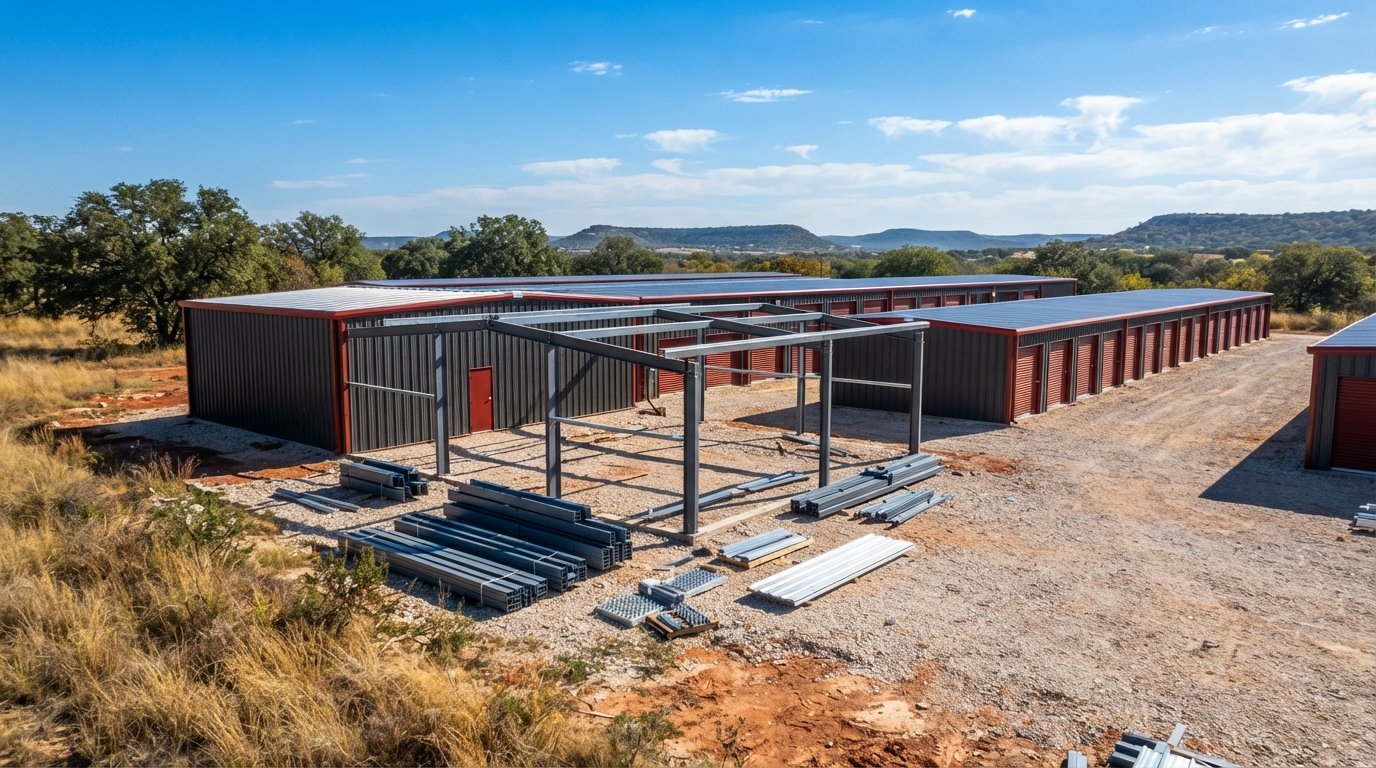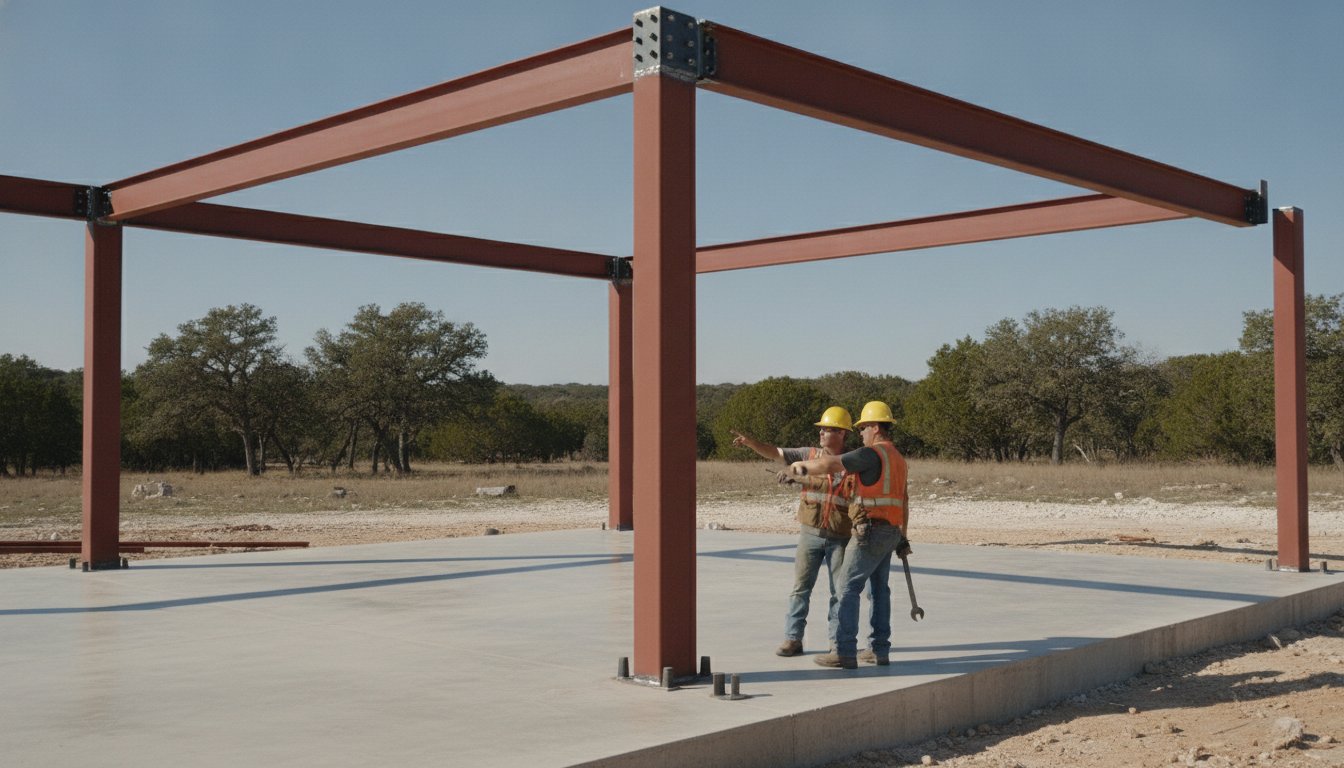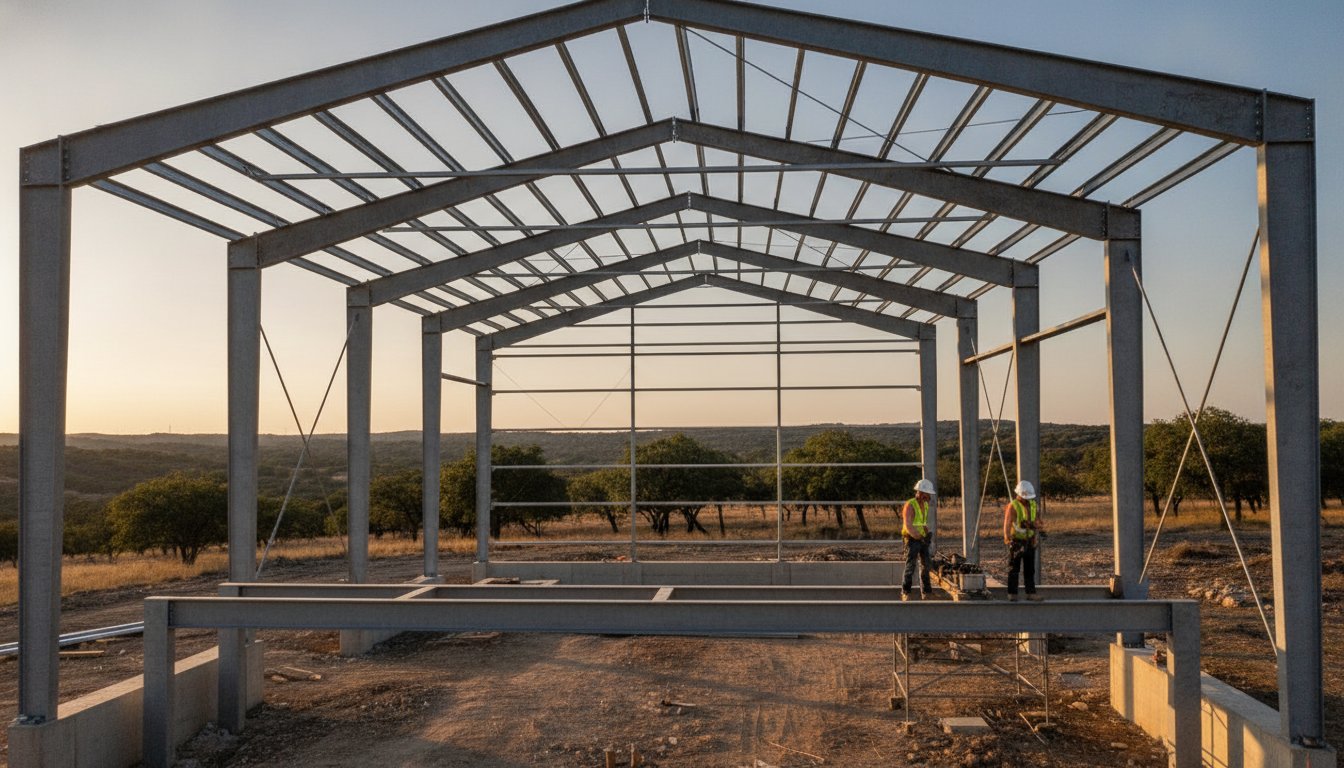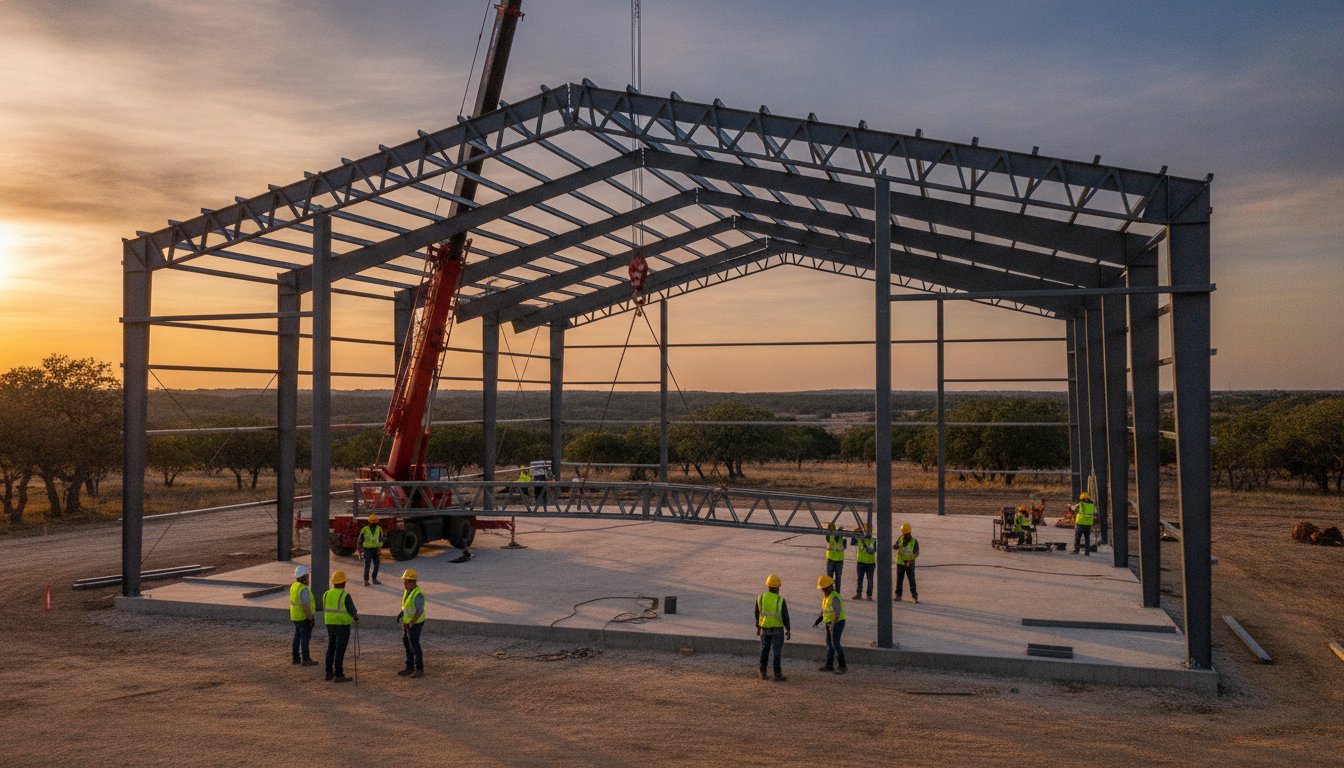
A structure is only as reliable as the steel that holds it together when a Central Texas supercell rolls across the horizon. Most folks in our region understand that a barn or workshop isn’t just a temporary fix; it’s an investment in their land and their legacy. You want a building that stands firm against high winds and heavy use without questioning the integrity of the frame every time the weather turns. It’s a valid concern, especially with the 2021 International Building Code standards now in effect across the state.
Choosing between different materials can feel overwhelming when you’re looking at various agricultural steel building kits and wondering which one actually delivers on its promises. This guide explains why red iron steel is the gold standard for structural strength and how to source the right materials for your specific Texas project. We’ll break down exactly what comes in a professional kit, clarify the technical differences in steel types, and show you how to plan a project that lasts for generations. You’ll gain a clear understanding of how to move from a design concept to a delivered kit that handles the unique demands of our regional climate.
Key Takeaways
- Understand the structural advantages of red iron I-beams and red oxide coating for preventing rust and ensuring long-term stability.
- Compare red iron to cold-formed options to see if agricultural steel building kits with wide clear spans are the best choice for your specific acreage.
- Identify the essential components included in a professional kit, including primary structural framing and secondary supports like purlins and girts.
- Learn how these kits are engineered to withstand the unique wind and snow load demands of the Central Texas climate.
- Explore how the Bradberry Steel 3D design tool can help you plan your project and coordinate your material supply with local experts.
What Are Red Iron Building Kits and Why Do They Matter?
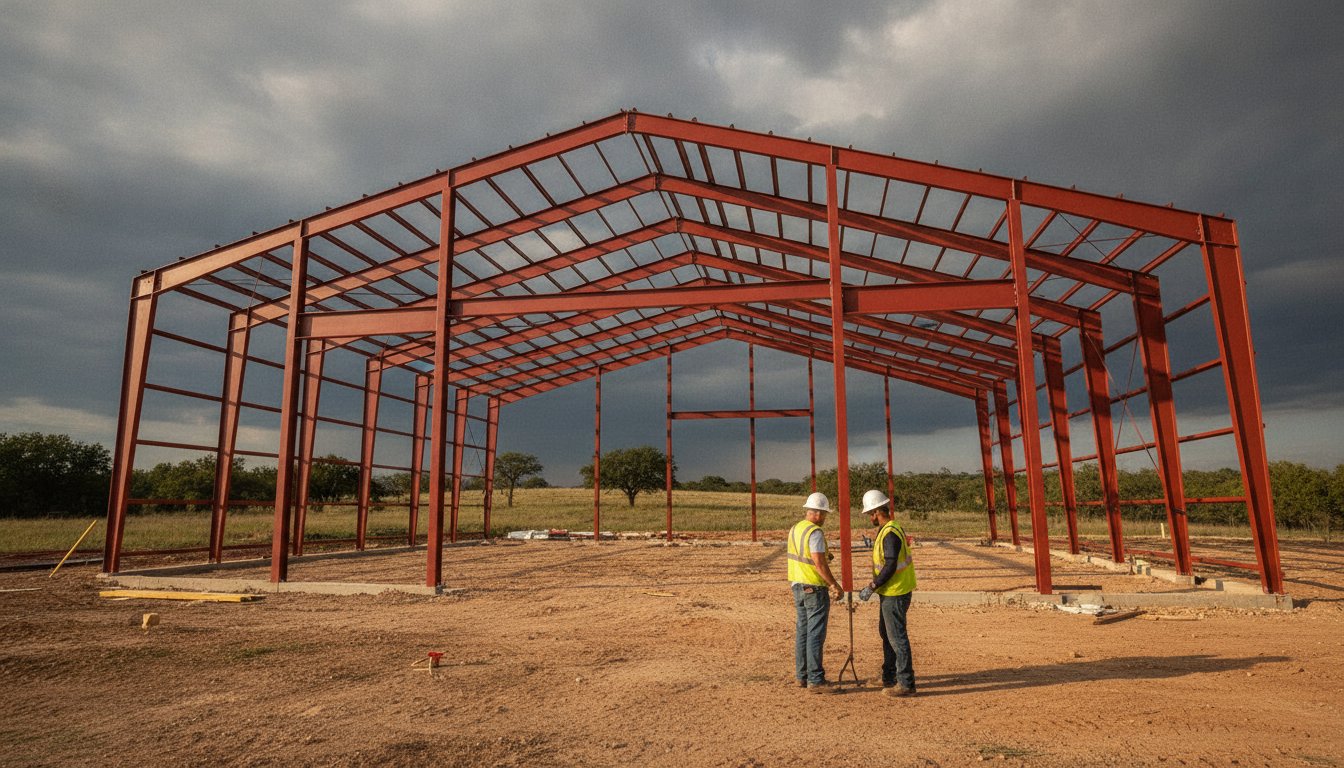
Red iron is the industry standard for heavy-duty construction across the state. The name comes from the distinct red oxide primer applied to the metal during the manufacturing process. This coating serves a critical purpose by preventing rust and corrosion while the materials are transported and staged at your job site. When you invest in agricultural steel building kits, you are choosing a system built on Structural steel I-beams rather than the lighter C-channels found in smaller utility sheds. This difference in material grade is what separates a lifetime structure from a temporary one.
The primary appeal of red iron is its rigid frame design. This engineering approach allows for massive clear span interiors. Because the strength is built into the perimeter frame and the heavy I-beam rafters, you don’t need interior support columns. This creates wide-open floor plans that are essential for moving large equipment or storing bulk materials. Architects and engineers specify red iron for commercial and industrial projects because it offers a level of durability that lighter materials simply cannot match. It is a building solution that stays square and stable for decades.
The Anatomy of a Rigid Frame Structure
A rigid frame structure relies on the inherent strength of tapered I-beams. These beams are engineered to be thicker and wider at the points where the building experiences the most stress, such as the eave where the wall meets the roof. This is a significant departure from cold-formed components. Cold-formed steel is shaped from thin sheets of metal at room temperature; it is lighter and easier to move by hand, but it lacks the sheer mass of structural steel. The density of red iron provides the lateral stability needed to stand up to the high winds common in Central Texas. The red oxide finish protects this investment from the moment it leaves the mill until the final trim is installed.
Common Uses for Red Iron Kits in Texas
Landowners in our region use red iron for projects that require maximum space and minimal maintenance. For many, agricultural steel building kits are the preferred choice for hay barns and livestock shelters. The ability to park a combine or store hundreds of round bales without working around support posts is a major operational advantage. Beyond the farm, red iron is the backbone of commercial storage facilities and warehouses. It also provides the structural integrity required for aircraft hangars, where wide door openings and high ceilings are non-negotiable. Whether you are building a workshop or a large-scale commercial hub, red iron offers the versatility to fit the job. Bradberry Steel provides the expertise to help you select the right pre-engineered steel buildings for your specific location and use case.
Red Iron vs. Cold-Formed Steel: Making the Right Choice
Deciding between red iron and cold-formed steel is often a matter of scale and intended use. Red iron is a structural grade material that uses heavy I-beams to create a rigid frame. Cold-formed steel consists of lighter gauge components shaped from thin sheets of metal at room temperature. While cold-formed kits are often lighter and more manageable for a DIY homeowner to assemble, they lack the sheer mass and structural capacity of red iron. For many agricultural steel building kits, the choice comes down to how much weight the building must carry and how wide the interior needs to be.
Rigid frame buildings generally offer a higher return on investment. Because they are considered permanent, industrial-grade structures, they tend to increase property value more than lighter tubular buildings. Engineering requirements frequently dictate the use of red iron once a building exceeds a certain width or height. This is because the structural integrity must meet specific International Building Code (IBC) standards for steel to ensure safety during extreme Texas weather events.
Clear Span vs. Interior Support Columns
The biggest advantage of red iron is the ability to achieve a massive clear span. If you need 60, 80, or even 100 feet of width without a single interior post, red iron is the only viable option. Cold-formed steel is limited in this regard. As these lighter buildings get wider, they often require interior support columns to prevent the roof from sagging. For a workshop where you need to move vehicles or a barn where you are stacking hay, those columns are often in the way. Choosing a rigid frame ensures your floor plan remains completely unobstructed.
Longevity and Maintenance Requirements
Structural I-beams are built to last for generations with minimal upkeep. The thickness of the steel provides a natural resistance to heavy wind loads and seismic activity that light gauge steel cannot match. While cold-formed steel has its place for smaller backyard sheds, it is more susceptible to damage from impacts or extreme pressure. Most pre-engineered steel buildings made from red iron are designed to handle the specific environmental stressors of Central Texas for decades. When selecting agricultural steel building kits for long-term farm use, the durability of the frame is the most important factor. If you are unsure which frame style fits your acreage, you can start your project plan with our 3D design tool to visualize the scale of your building.
What Is Included in a Professional Red Iron Building Kit?
When the delivery truck arrives at your Central Texas job site, you shouldn’t have to guess what is on the trailer. A professional kit is a complete structural system where every piece is accounted for from the start. High-quality agricultural steel building kits include every component required to assemble the structural shell. This begins with the primary framing, which consists of heavy-duty structural I-beams. These beams arrive pre-cut and pre-punched to match the engineering drawings exactly, ensuring a precise fit without the need for on-site modifications.
Supporting these main frames is the secondary framing. This includes Z-purlins for the roof and C-girts for the walls. These members create the grid where your exterior panels will attach. Because the components are pre-engineered, you won’t spend time field-cutting or welding. This efficiency is a hallmark of the red iron system and allows for a much faster assembly timeline than traditional weld-up methods. Every piece is designed to work together as a unified whole.
Structural Components and Fasteners
Structural integrity depends on the quality of the connections between the beams. Every kit includes high-strength structural bolts specifically designed for a secure, bolt-together assembly. These aren’t standard hardware store bolts; they are engineered to handle the specific tension and shear forces the building will face during high winds. You will also receive the base angle, which serves as the critical junction between your wall panels and the concrete foundation. One of the core benefits of steel framing is this level of industrial precision. The kit also provides the necessary trim for eaves, ridges, and corners to ensure a finished look. This complete package eliminates the need for mid-project runs to the supply yard for missing hardware.
Cladding and Finishing Options
The exterior panels provide the final layer of protection against the harsh Texas sun and unpredictable storms. Professional kits come with high-quality metal roof and wall panels, typically available in 26-gauge or 29-gauge steel. Choosing a thicker gauge often provides better resistance to hail and impact damage. These panels are available in numerous finishes to suit your aesthetic preferences. You can consult our color guide for steel buildings to select the right trim and wall combinations for your ranch or business. To keep the interior dry and pest-free, kits include closure strips and weather stripping. These components seal the gaps where the panels meet the ridge caps and eaves, ensuring your agricultural steel building kits perform as intended for generations.
The Benefits of Red Iron for the Central Texas Climate
Central Texas weather is famously unpredictable. From straight-line winds to scorching droughts, your building has to survive more than just a typical season. Red iron kits are specifically designed for these high wind zones. The sheer mass of structural I-beams provides a natural anchor and lateral stability that light-gauge buildings often lack. In places like Erath County, we engineer these agricultural steel building kits to meet specific local wind and snow load requirements. This is not a one-size-fits-all approach; it is about building for the ground you stand on and the storms you know are coming.
Safety in our region also means considering fire resistance. Steel is non-combustible, which provides a massive advantage in drought-prone Texas landscapes. When a brush fire threatens your property, a steel barn offers a level of protection that wood structures cannot match. Additionally, steel is completely resilient against pests. Termites and carpenter ants are a constant plague for traditional wood barns in our area, but they have no interest in structural steel. This eliminates the need for expensive chemical treatments and protects your investment for generations.
Engineering for Texas Wind Loads
Rigid frames are designed to distribute intense wind pressure directly from the roof and walls down into the foundation. Because every connection is pre-engineered and bolted, the building acts as a single, unified unit. This structural continuity is why pre-engineered buildings are significantly safer during severe weather events than site-built wood frames. When you look at the options for metal buildings in Texas, you will see that red iron is the preferred choice for anyone needing a structure that won’t rack or lean when the wind starts to howl across the prairie.
Durability in Reactive Texas Soils
The geography around Dublin and Stephenville is known for reactive clay soils. These soils expand and contract significantly based on moisture levels, which can put immense stress on any structure. While a solid foundation is the first line of defense, the structural integrity of red iron helps the building maintain its shape even during minor soil shifts. Unlike wood, which can warp or crack under these pressures, structural steel maintains its precision. This durability ensures that your doors continue to swing freely and your roof remains leak-free regardless of the season. To get started on a structure built for our local conditions, you can request a quote today to see how a custom red iron kit fits your property.
Designing Your Custom Red Iron Building with Bradberry Steel
Starting a major project shouldn’t be a guessing game. Many landowners in Central Texas want to manage their own construction process but need the assurance that the materials they buy are up to the task. Our supply-only model puts you in the driver’s seat. You get the professional-grade agricultural steel building kits you need without being forced into a specific contractor’s schedule or limited by a company’s labor availability. This approach empowers you to hire your own trusted local crew or manage the build yourself using our pre-engineered components.
The transition from a design concept to a delivered kit is a structured process. It begins with a clear vision of how the building will serve your property. Whether you are housing a fleet of tractors or creating a secure workshop, the design must account for every functional requirement before the steel leaves the mill. This careful planning ensures that when the truck arrives at your Texas job site, every I-beam and fastener is exactly where it needs to be for a smooth assembly.
Using the 3D Design Tool
Visualization is the first step toward a successful build. Our 3D design tool allows you to build your structure virtually before a single beam is fabricated. You can adjust the length, width, and eave height to fit the specific footprint of your land. It’s also simple to experiment with different roof pitches to see how they change the building’s profile and interior clearance. The tool gives you the flexibility to customize your layout in real time:
- Place roll-up doors exactly where you need them for heavy equipment access.
- Add walk doors and windows to maximize natural light and cross-ventilation.
- Test different color combinations for the walls and trim to match existing structures.
The Bradberry Supply Advantage
Working with a local, family-owned business means you have over 25 years of Texas steel expertise at your disposal. We focus on providing high-quality structural components and the technical guidance needed to ensure your kit meets your specific use case. We don’t just ship parts; we act as a neighborly partner for contractors and homeowners throughout the region. We coordinate the logistics to ensure your agricultural steel building kits arrive ready for a bolt-together assembly. This dedication to precision helps you avoid the delays often associated with generic, out-of-state suppliers. When you are ready to move from a digital design to a physical structure, you can request a quote to get accurate pricing for your project materials.
Build Your Legacy with Structural Steel
Investing in a red iron structure means choosing a building that will stand for generations. You now understand how structural I-beams provide the clear span space and lateral stability required for the unique demands of our region. These kits offer a level of industrial precision that lighter materials simply cannot match. Whether you are protecting high-value equipment or housing livestock, our agricultural steel building kits are engineered specifically for Central Texas wind and weather.
Bradberry Steel brings over 25 years of Texas steel experience to every project. We are a family owned and operated business in Dublin, TX, focused on delivering high-quality materials that empower you to manage your own build. We provide the structural components and technical guidance while you maintain control over your labor and timeline. You can design your custom red iron building today with our 3D tool to see exactly how your vision fits on your property. Take the first step toward a structure that is as solid and enduring as the land it sits on.
Frequently Asked Questions
What is the difference between red iron and a weld-up building?
Red iron kits are pre-engineered systems where every component is cut and punched at the factory for a bolt-together assembly. Weld-up buildings require on-site cutting and welding of raw steel components. Red iron provides a more precise fit and structural consistency. This makes it a preferred choice for large agricultural steel building kits in Dublin and Stephenville where speed and strength are top priorities.
Can a homeowner assemble a red iron building kit without professional help?
Many homeowners in Central Texas manage their own assembly because the components are designed to bolt together. You will need mechanical skills and heavy equipment like a crane or telehandler to lift the structural I-beams safely. While the process is straightforward, the weight of the materials requires careful planning. Bradberry Steel provides the material package, and you choose the crew that fits your project.
How long does it take to receive a red iron kit after ordering?
The total timeline from order to delivery typically ranges from 14 to 26 weeks. This includes 4 to 6 weeks for engineering and drawings followed by 10 to 20 weeks for fabrication. These lead times are standard for the industry in 2026. Planning ahead ensures your materials arrive at your job site in Comanche or Brownwood when your foundation is ready and the weather is clear.
Are red iron buildings more expensive than wood-framed structures?
Initial material costs for steel can be higher than traditional lumber. However, steel is a more cost-effective choice over time because it requires significantly less maintenance. Steel buildings don’t suffer from rot, warping, or termite damage. In the Texas climate, these durability factors often lead to lower insurance premiums and a higher resale value for your property compared to wood-framed barns or workshops.
Do red iron building kits come with engineering stamps for permits?
No, Bradberry Steel does not provide engineering stamps or permitting services. We focus exclusively on the supply of high-quality structural steel and design coordination. You will need to work with a local engineer or your county planning office in Erath or Eastland County to obtain the necessary stamps and permits for your specific project before construction begins. This ensures your building meets all local safety codes.
What kind of foundation is required for a red iron building?
A professionally engineered concrete slab is the standard foundation for red iron structures. The heavy I-beam frames require specific anchor bolt placements that must be set into the concrete with extreme precision. We provide the anchor bolt plans so your concrete contractor can prepare the site correctly. A solid foundation is critical for maintaining the structural integrity of the building during Central Texas soil shifts.
How does red iron steel hold up against rust in Texas?
The red iron name comes from the red oxide primer applied at the mill. This primer is specifically engineered to prevent rust while the steel is being transported and staged at your location. Once the building is enclosed with high-quality metal wall and roof panels, the structural frame is protected from the elements. This dual-layer protection ensures your building remains stable and rust-free for decades of use.
Can I add insulation to a red iron building kit later?
Yes, you can install insulation after the structural shell is complete. The secondary framing, including the Z-purlins and C-girts, provides the necessary attachment points for various insulation types. While Bradberry Steel does not sell insulation as a standalone product, we design our agricultural steel building kits to accommodate standard insulation thicknesses. This allows you to improve the energy efficiency of your workshop or barn at any time.
Disclaimer
Bradberry Steel is a steel supply and metal building package company based in Dublin, Texas. We do not provide installation, site preparation, foundation work, or general contracting services. All building projects should be reviewed by a qualified local contractor and may require permits depending on your county or municipality. Contact Bradberry Steel for product guidance and material quotes.