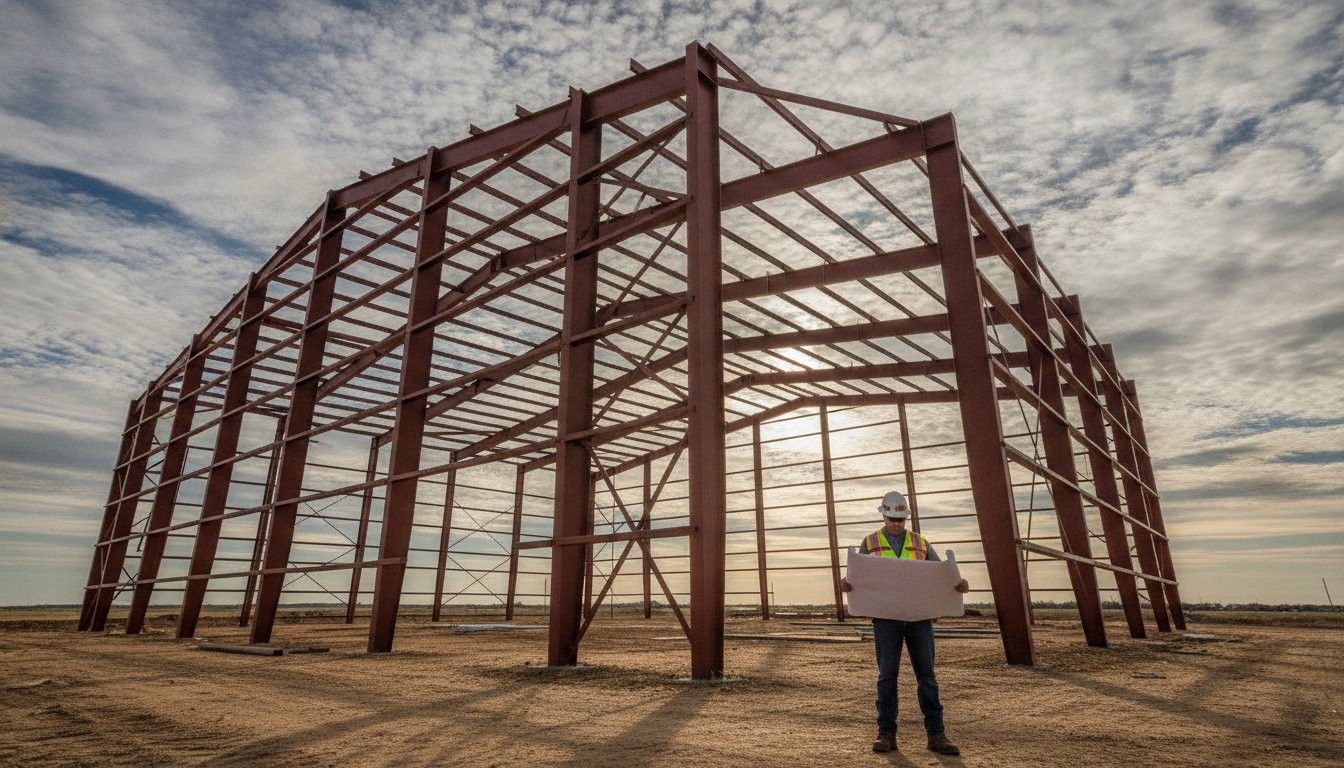
A metal building that isn’t engineered for the specific wind speeds of the Texas plains is a liability waiting for a storm. You shouldn’t have to guess if your shop or barn will survive the next line of severe weather moving through Erath County. Many property owners feel overwhelmed by the technical shift between IBC and ASCE standards; others worry that a standard kit won’t meet local safety codes. It is a common concern, especially when you are investing hard-earned money into high wind rated steel buildings North Texas that need to last for generations.
This guide provides the clarity you need to choose a structural package with confidence. You will learn the specific 105 to 115 mph wind speed requirements for our region and how the 2026 building code updates affect your project. We will also look at the permitting process in rural areas to help you move from a dirt pad to a finished structure without unnecessary delays. At Bradberry Steel, we believe that understanding the physics of your building is the best way to ensure peace of mind. We are here to help you navigate these technical requirements so your next project stands as strong as the Texas heritage it supports.
Key Takeaways
- Learn how North Texas geography influences wind pressure and why specific engineering is required for taller structures.
- Identify the standard 105 to 115 mph wind speed requirements needed to secure high wind rated steel buildings North Texas projects require for long-term safety.
- Discover how red iron structural steel and braced bays provide the lateral stability necessary to withstand extreme storm forces.
- Understand the differences in building codes and permitting requirements between city limits and unincorporated land in Erath County.
- Compare pre-engineered kits and weld-up buildings to determine which structural package offers the best durability for your property.
Understanding Wind Load Requirements for North Texas Metal Buildings
Wind load is the technical term for the physical force that wind applies to a structure. In North Texas, this force is a constant factor in construction. Our regional geography features wide, open plains that allow wind to gather momentum without the natural windbreaks found in heavily forested areas. This makes high wind rated steel buildings North Texas projects essential for anyone building in counties like Erath or Comanche. Understanding wind engineering principles helps owners realize that wind does not just push against a wall. It creates lateral loads that try to tilt the building and uplift forces that attempt to peel the roof away from the frame.
Steel is naturally suited for these atmospheric challenges. Unlike wood, which can splinter under extreme tension, steel has the ductility to absorb energy and the weight to stay anchored. The International Building Code (IBC) provides the framework for these requirements. As of 2026, the adoption of the 2024 IBC ensures that structures are designed to withstand the specific pressures common in our corner of the state. These standards are not suggestions; they are the baseline for structural survival in a region prone to volatile weather patterns.
Basic Wind Speed vs. Wind Pressure
A wind speed rating of 115 mph tells only half the story. Wind pressure is the actual weight of that air measured in pounds per square foot (psf). A steady breeze might be manageable, but a sudden 115 mph gust creates a massive spike in pressure. As a building gets taller, the wind speed increases because there is less friction from the ground. This is why a tall warehouse requires different engineering than a low-profile workshop. For those looking for the highest level of precision, pre-engineered steel buildings are designed to account for these specific height and shape variables.
The Consequences of Ignoring Wind Load Standards
Cutting corners on wind ratings is a gamble with your investment. If a building is not rated for the 105 to 115 mph speeds common in North Texas, it risks total structural collapse during a severe thunderstorm or a nearby tornado. Beyond the physical danger, there are financial risks. Insurance companies often deny claims for buildings that do not meet current code. Selecting high wind rated steel buildings North Texas residents can trust ensures long-term stability and easier approval during the inspection phase. While Erath County may have fewer residential restrictions in unincorporated areas, building within city limits often requires strict compliance to secure a permit.
Wind Speed Ratings and Risk Categories in North Texas
Building in North Texas requires a clear understanding of regional wind maps. For most inland counties like Erath, Hood, and Somervell, the ultimate design wind speed for standard structures ranges from 105 to 115 mph. These numbers aren’t pulled from thin air. They’re based on ASCE 7-16 maps, which analyze decades of weather data to predict maximum gust speeds. While the industry is moving toward the ASCE 7-22 standard, many local jurisdictions still reference the 7-16 figures. When you invest in high wind rated steel buildings North Texas residents can rely on, you’re preparing for the straight-line winds and microbursts that define our spring and fall storm seasons.
The structural design doesn’t stop at the wind speed. Engineers must also classify the building by its intended use and its physical surroundings. This ensures the frame is neither under-built for safety nor over-built for your budget. If you’re starting a new project, you can use our 3D design tool to visualize how different sizes and shapes might fit your specific site. This helps you move from a concept to a concrete plan with confidence.
Risk Categories Explained for Texas Property Owners
Risk categories determine how much importance is placed on a building’s survival based on the risk to human life.
- Category I: These are typically agricultural buildings, storage sheds, or small weld-up buildings with low human occupancy.
- Category II: This is the standard for most residential homes, workshops, and commercial retail spaces. Most high wind rated steel buildings North Texas property owners purchase fall into this group.
- Category III and IV: These include high-occupancy buildings like schools or essential facilities like hospitals and fire stations that must remain operational after a storm.
Exposure Categories: Is Your Lot Protected or Open?
Your specific lot location dictates the Exposure Category. This accounts for how much the wind is broken up by obstacles before it hits your walls.
- Exposure B: This applies to urban and suburban areas. Buildings, trees, and other structures act as windbreaks, reducing the direct force on your steel frame.
- Exposure C: This is the most common setting for North Texas ranch land. It describes open terrain with scattered obstructions. Wind can pick up significant speed across a pasture before striking a building.
- Exposure D: This is reserved for flat, unobstructed areas near large bodies of water. It’s less common in the middle of Erath County but critical for lakeside properties.
Understanding these variables is critical for meeting Texas windstorm insurance requirements and ensuring your structure is legally compliant. Regional weather patterns often bring rapid changes in pressure. A building rated for 115 mph provides the margin of safety needed when a North Texas blue norther or a severe squall line rolls through. Bradberry Steel provides the expertise to help you identify which category fits your land and your goals.
Engineering Features That Enhance Structural Integrity Against High Winds
The strength of a building is found in its bones. For high wind rated steel buildings North Texas owners require, those bones are usually red iron structural steel. This material provides the necessary rigidity to prevent the frame from twisting or bending when a storm hits. Unlike wood, which can warp or rot over time, steel remains dimensionally stable. This is a primary reason why pre-engineered steel buildings offer superior wind performance. They’re designed from the ground up to handle specific environmental loads defined by the International Residential Code. Every column and rafter is sized to withstand the exact pressures of our region.
Lateral stability is managed through portal frames and braced bays. Portal frames allow for large openings, like garage doors, while still maintaining the building’s ability to resist sideways pressure. Braced bays use X-bracing to transfer wind loads down to the foundation. This system ensures the building doesn’t lean under the weight of 115 mph gusts. Heavy-duty purlins and girts act as the secondary skeleton, supporting the exterior panels and transferring wind pressure to the main frames. To understand how these parts work together, you can read our guide on Understanding Structural Steel Components.
The Importance of Proper Fastening and Connections
The frame is only as strong as its weakest connection. High-strength bolts and screws are the unsung heroes of wind resistance. They prevent panel blow-offs by keeping the metal skin firmly attached to the purlins and girts. Stitch screws are used to secure metal roofing panels to each other, creating a unified surface that resists lifting. In weld-up buildings, this requires expert precision. A poor weld or a missed fastener can create a failure point that the wind will eventually find.
Roof Pitch and Wind Dynamics
Roof pitch plays a massive role in how wind interacts with your structure. When wind hits a building, it creates a vacuum effect on the leeward side and over the roof. This is called uplift. A very steep pitch might shed rain well, but it can act like a sail, catching more wind and increasing the pressure on the frame. Conversely, a very flat roof can experience intense suction forces. Finding the right balance is key to durability. You can see examples of how different designs handle these forces by looking at our residential metal roofs.
Choosing the right structural package is the first step in protecting your property. Whether you are building a workshop or a large agricultural facility, high wind rated steel buildings North Texas weather won’t compromise are built on these engineering fundamentals. If you’re ready to see how these features look on your own project, you can start with our 3D design tool to customize your layout.
Navigating Local Compliance and Permits in Erath County
Building a structure in Erath County requires knowing exactly where your property lines fall. Regulations in Stephenville differ significantly from those in Dublin or Granbury. If your lot sits within city limits, you’ll likely need a permit that proves your design meets the 2024 International Building Code. However, for those building in unincorporated county land, the requirements are often less restrictive regarding residential inspections. This doesn’t mean you should lower your standards. You still need high wind rated steel buildings North Texas weather can’t push over. Even without a county permit for the frame itself, you must still account for septic system permits and floodplain management through the county’s Land Development Department.
Finding the exact wind load for your specific address is the first step in a successful build. Most inland North Texas areas require a rating between 105 and 115 mph. Site-specific engineering ensures your building’s frame, fastening, and foundation plan work together for your specific soil and wind exposure. This level of planning prevents your project from being stalled by local authorities or rejected by insurance providers. For a deeper look at regional requirements and supply options, check out our guide on Metal Buildings in Texas.
Building in Dublin and Stephenville
Local building departments in Dublin and Stephenville have specific expectations for metal structures. They want to see that your building is engineered for the correct risk category and wind exposure. It’s vital to contact these offices before you place your order to confirm local setbacks and height restrictions. While Bradberry Steel is your primary resource for high-quality steel supply and project guidance, we don’t offer permitting, site preparation, or contracting services. We provide the structural package you need to satisfy local inspectors and ensure a long-lasting build.
Working with Third-Party Engineers
For many commercial projects or complex residential builds, a professional engineer (PE) stamp is required. This stamp is a legal guarantee that the building design is safe for its intended location and use. When you work with an engineer, you must provide the correct design criteria, including wind speed and exposure category. Providing this data early helps your supplier deliver a package that meets every safety standard. You can find more planning resources and technical tips on the Bradberry Steel blog. If you’re ready to see how a code-compliant structure fits your budget, you can request a quote today to get started.
Selecting a High Wind Rated Steel Building Package for Your Property
Choosing the right structural package is the final step in turning your project into a permanent fixture on the Texas landscape. High quality materials are the foundation of any safe structure. When you invest in high wind rated steel buildings North Texas property owners can trust, you’re buying more than just metal; you’re buying peace of mind. Bradberry Steel helps you coordinate these design requirements to ensure your building meets the necessary 115 mph wind standards for our region. We focus on providing the structural integrity required to protect your equipment, livestock, or family.
Pre-Engineered vs. Weld-Up: Wind Load Considerations
Pre-engineered steel buildings often move through the permitting process faster because they come with comprehensive engineering documentation. These kits are manufactured to exact tolerances in a controlled environment. On the other hand, weld-up buildings offer unmatched flexibility for custom layouts on North Texas ranches. While weld-up projects allow for on-site adjustments, you must ensure your material package includes all the heavy-duty purlins and girts required to maintain structural integrity. Both options can be engineered for high winds, but the pre-engineered route typically offers a more streamlined path for code compliance.
Bradberry Steel serves as a primary resource for these material packages. We provide the technical guidance and the steel supply, but we don’t offer installation, contracting, or foundation work. This clear division of labor allows you to secure the best materials in the region and then work with a local crew of your choice to execute the build. It’s a professional approach that ensures every dollar spent goes toward the strength of the structure itself.
Getting Started with Your Project
To get an accurate quote, you should have your building dimensions, site location, and intended use ready. Knowing whether you’re building in an open pasture or a suburban neighborhood helps determine the correct exposure category for your steel package. You can visualize your project using our 3D design tool. This software allows you to see the scale and configuration of your building before the first delivery truck arrives on your property.
Prioritizing safety over the lowest possible price is the hallmark of a disciplined builder. A building rated for 115 mph winds has a higher long-term value than a budget kit that might buckle in a standard Texas thunderstorm. We’re here to serve as your dependable partner, providing the heavy-duty materials required for a project that lasts. If you’re ready to move forward, you can request a quote to see how we can help secure your next project.
Secure Your Investment Against North Texas Winds
Building for the Texas plains requires a focus on structural integrity and code compliance. You now understand how 105 to 115 mph wind ratings and risk categories protect your property from extreme weather. By choosing rugged red iron structural components and precision pre-engineered building packages, you ensure your structure stays standing when the storms roll through. It’s about more than meeting a code; it’s about protecting your legacy with materials that don’t quit.
Bradberry Steel brings over 25 years of Texas steel expertise to every project. We specialize in providing the heavy-duty materials needed for high wind rated steel buildings North Texas weather won’t compromise. While we don’t handle the construction or permitting, we provide the expert guidance and high-quality supply required for a successful build. It’s time to move from the planning stage to a permanent solution on your land. Request a custom quote for your North Texas steel building project and start building with confidence today.
Frequently Asked Questions
What is the standard wind speed rating for metal buildings in North Texas?
The standard wind speed rating for most inland North Texas counties typically ranges from 105 to 115 mph. This design speed is based on historical weather data and accounts for the ultimate wind speeds a building might face during its lifespan. It’s the baseline for ensuring high wind rated steel buildings North Texas projects remain structurally sound through severe weather seasons.
Do I need a building permit for a metal building in Erath County?
Erath County does not currently require building permits for residential structures in unincorporated areas. However, you must still obtain permits for septic systems and any construction within FEMA-recognized flood zones. If your project is within the city limits of Dublin or Stephenville, you’ll likely need a building permit and must meet specific local codes before starting your project.
What is the difference between IBC 2018 and ASCE 7-16?
Can a weld-up building meet high wind load requirements?
Yes, a weld-up building can meet high wind load requirements if it’s designed with the proper structural steel components and expert precision. While weld-up buildings offer custom flexibility, they lack the pre-certified engineering documentation that comes with pre-engineered kits. You must ensure the builder uses heavy-duty purlins and correct bracing to reach the desired wind rating for your specific location.
How does roof pitch affect the wind load of my steel building?
Roof pitch changes how wind flows over your building and creates varying levels of uplift pressure. Steeper pitches act like sails and catch more wind, while flatter roofs experience higher suction forces on the leeward side. A balanced pitch is usually the most efficient way to manage these forces without requiring excessive structural reinforcement or specialized fastening systems.
What is an exposure category and how do I know mine?
An exposure category is a classification based on the terrain and obstructions surrounding your building site. Exposure B applies to urban areas with many windbreaks, while Exposure C describes the open ranch land common in North Texas. You can determine your category by looking at the density of trees and structures within a 1,500 foot radius of your proposed building pad.
Does Bradberry Steel provide engineering stamps for permits?
Bradberry Steel provides high-quality material packages and structural drawings, but we don’t provide engineering stamps or permitting services. You’ll need to work with a third-party professional engineer if your local jurisdiction requires a certified stamp for your project. We provide the technical data your engineer needs to review the structural package for compliance.
Will a metal building withstand a North Texas tornado?
Standard high-performance steel buildings are designed for extreme straight-line winds, but no residential structure is guaranteed to survive a direct hit from a powerful tornado. However, a building rated for 115 mph or higher offers better protection against the flying debris and high-velocity winds found on the edges of a storm. Investing in high wind rated steel buildings North Texas residents can rely on provides a higher margin of safety than wood-framed structures.
Disclaimer
Bradberry Steel is a steel supply and metal building package company based in Dublin, Texas. We do not provide installation, site preparation, foundation work, or general contracting services. All building projects should be reviewed by a qualified local contractor and may require permits depending on your county or municipality. Contact Bradberry Steel for product guidance and material quotes.