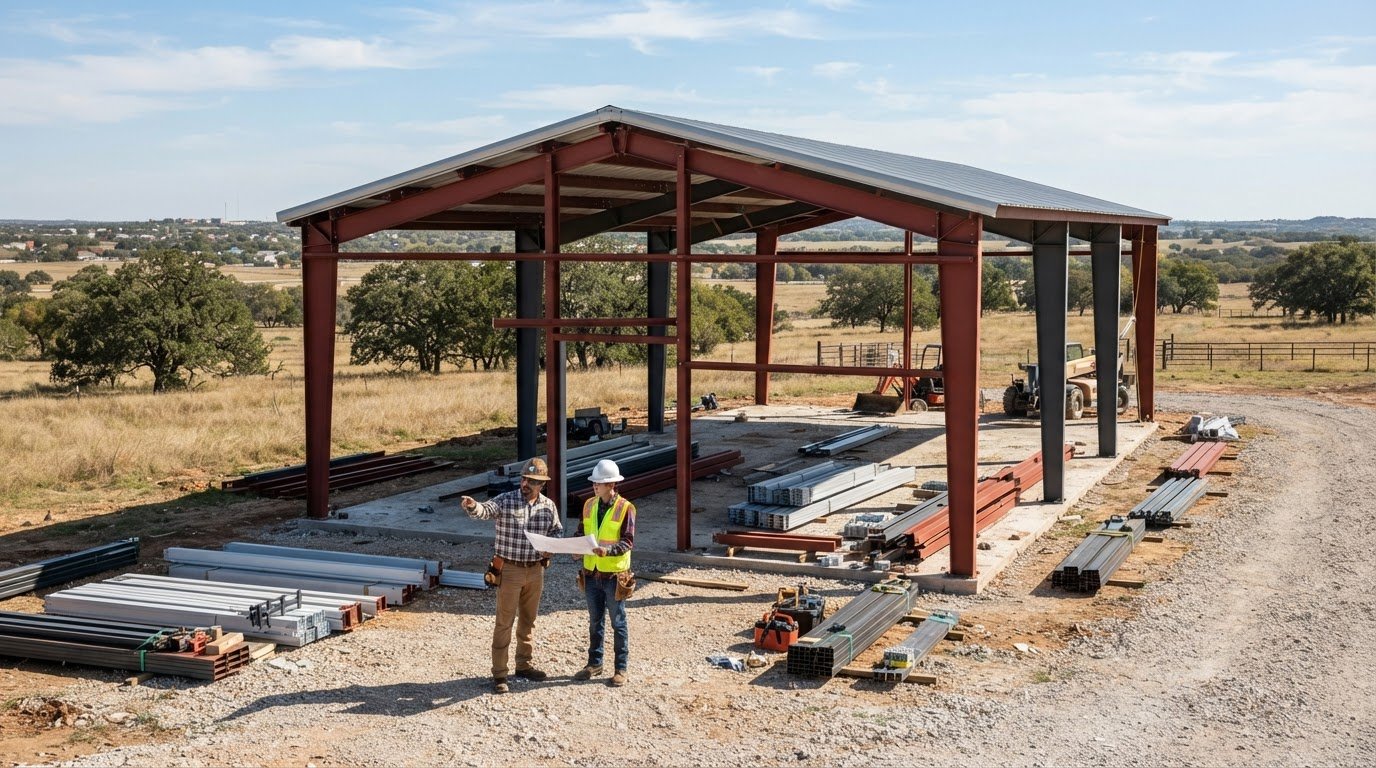
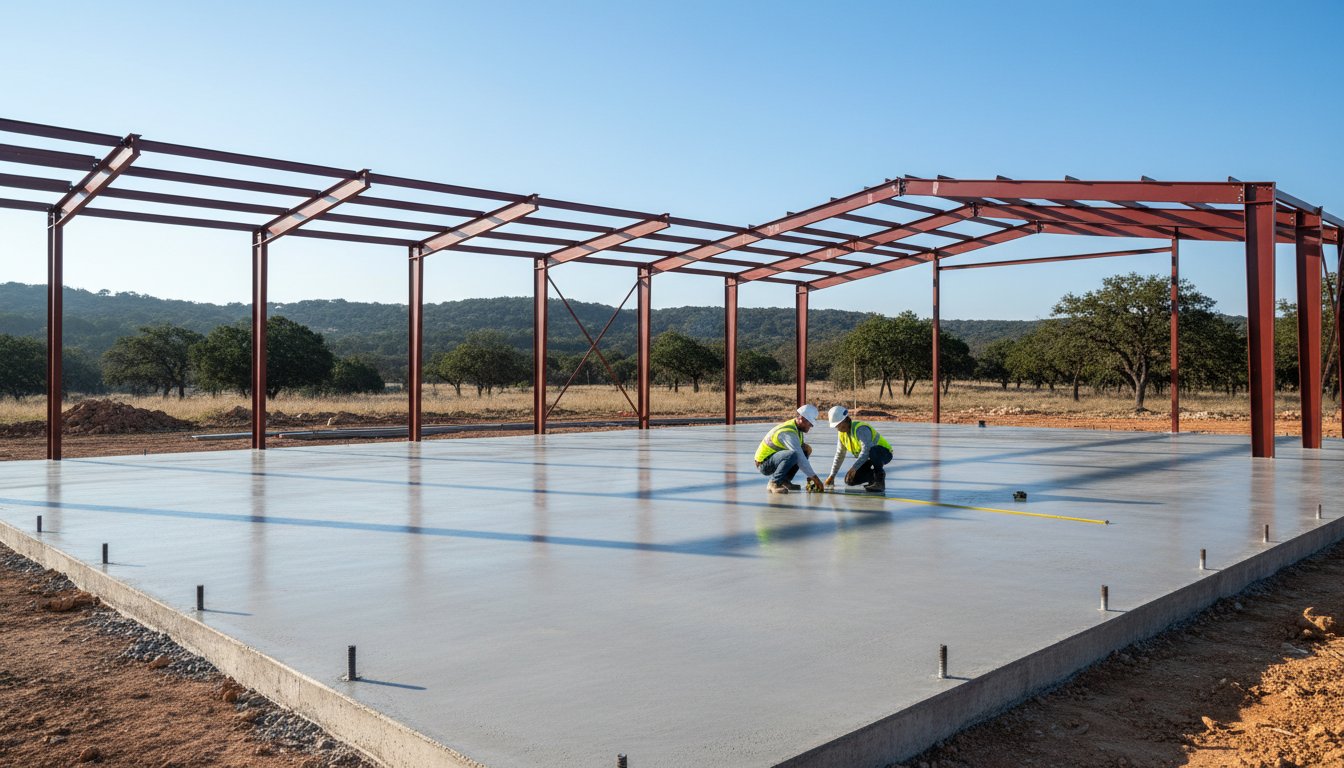
A steel building is only as strong as the ground it stands on. You likely understand that Central Texas soil is notorious for shifting and expanding. This movement creates a constant challenge for any heavy structure, as local clay can expand by as much as 10 percent when saturated with water. Choosing the correct metal building foundation is a common concern for folks in Dublin who want to protect their investment from foundation cracks or structural lean. Nobody wants to see a new shop or barn compromised by the very earth it sits on.
This guide will teach you how to select and prepare the right base to ensure long-term structural integrity in our local clay. At Bradberry Steel, we draw on over 25 years of experience in the Texas steel industry to help you avoid the costly mistakes that lead to shifting slabs. We’ll walk through the essential roadmap for site preparation and compare the most durable foundation options for our regional climate. By the end, you’ll have the technical clarity needed to move your project forward with total confidence.
Key Takeaways
- Understand why proper site leveling is the first step to ensuring your steel frame remains square and stable.
- Learn to select the correct concrete thickness and reinforcement based on whether you are building a home or a heavy equipment shop.
- Discover the essential role anchor bolts play in securing your structure to its metal building foundation for long-term integrity.
- See how Bradberry Steel provides the precise engineering drawings and anchor bolt plans required by your local concrete professional.
Why Your Metal Building Foundation Matters in Central Texas
Every durable steel structure starts in the dirt. A metal building foundation serves as the structural backbone for your entire project. It’s the critical interface between the Texas soil and your steel frame. Without a level and stable base, even the highest quality steel will eventually face issues. A solid foundation ensures the steel frame stays square and prevents uneven settling over time. When a building settles unevenly, doors stick, windows leak, and the structural integrity of the entire system is compromised.
Central Texas weather is notoriously tough on construction. We experience extreme heat and long droughts followed by sudden, heavy rainfall. These cycles cause the ground to shift rapidly. A well-built base protects your investment from these environmental stresses. Bradberry Steel provides the precision-engineered building materials, but your foundation is the first and most important step in the construction process. Understanding Foundation engineering principles is vital for anyone planning a permanent structure that needs to last 40 or 50 years.
The Challenge of Central Texas Expansive Clay
Dublin and Stephenville areas often deal with expansive clay soils. This type of soil behaves like a sponge. It swells significantly when wet and shrinks during the dry summer months. This constant movement can exert thousands of pounds of pressure on concrete slabs. Soil movement is the primary cause of concrete cracking in Erath County. If the foundation is not properly engineered to account for these shifts, the metal building foundation can fail within the first few years.
A soil test is the smartest initial investment for any local building project. It provides the data needed to determine how deep your footings should go or if you need a specific type of reinforced slab. Skipping this step often leads to expensive repairs later. Professional builders in the Brazos Valley know that the ground beneath the building is just as important as the steel above it.
Foundation Responsibility and Project Scope
Clarity on project roles saves time and money. At Bradberry Steel, we specialize in the fabrication and supply of high-quality steel packages. However, foundation work is typically handled by a local concrete contractor. It’s essential to hire a professional who understands the specific building codes in Erath County and the surrounding areas. They’ll ensure the site is graded correctly and the concrete meets the necessary load-bearing requirements.
The foundation design must match the specific engineering of your pre-engineered steel buildings kit. Precision is non-negotiable here. If the anchor bolts are off by even half an inch, the steel columns will not align correctly. This leads to significant delays and increased labor costs during the erection phase. A professional contractor will use the anchor bolt templates provided with your building kit to ensure every connection point is exactly where it needs to be. This disciplined approach ensures a smooth build and a structure that stands the test of time.
Ready to start planning your next project? Use our 3D design tool to visualize your building and get the process moving.
Common Foundation Types for Steel Structures in the Dublin Area
Selecting a metal building foundation requires careful consideration of the land and the intended use of the structure. In Dublin and the surrounding Erath County area, soil composition often dictates the best path forward. Concrete stands as the industry standard for durability because it provides a rigid base that resists the shifting Texas ground. Different structures require specific load-bearing strategies to remain stable for 50 years or more. Bradberry Steel provides the high-quality components designed to integrate with these bases. A structural engineer can verify that your plan meets local wind load requirements, which often reach 115 mph in this region. This step ensures your base remains anchored during severe weather.
Floating Slabs and Monolithic Pours
Most workshops and garages in Central Texas utilize a monolithic slab. This design pours the floor and the footing as a single, continuous piece of concrete. The thickened edge is a critical feature of this design. It supports the heavy perimeter loads where the steel columns distribute the weight of the roof and walls. Owners benefit from a smooth, level surface that makes vehicle storage and equipment maintenance much easier. It is a cost-effective and efficient solution for buildings that don’t require deep footings. This method is the primary choice for 90 percent of small to mid-sized utility buildings in the region.
Pier and Beam Foundations
If your site has uneven terrain or highly unstable soil, a pier and beam system is often the best choice. This method uses concrete piers to transfer the building load deep into the stable subsoil or bedrock. This is a common requirement for massive structures like aircraft hangars or heavy industrial facilities where weight is concentrated. By anchoring the building deep underground, you ensure the frame remains plumb even if the surface soil expands or contracts during a dry Texas summer. It provides the heavy-duty support needed for high-clearance structures that must withstand significant uplift forces.
Perimeter Walls and Trench Foundations
A continuous perimeter wall provides a high level of support for the building exterior. This method is frequently chosen for steel framed homes and barndominiums. It offers a permanent and highly stable base that protects the interior from moisture and pests. This foundation type balances the need for a solid structural base with the practical requirements of a residential living space. While the initial investment might be higher than a slab, the long-term stability for a primary residence is essential. It allows for better insulation and plumbing access, which are vital for modern Texas homes.
Choosing the right base is the first step in a successful build. You can start planning your layout today by using the 3D design tool to visualize your project requirements.
Selecting the Right Foundation for Your Specific Steel Building Use
Every project starts with a specific purpose. A residential steel home in Dublin requires a far more robust foundation than a simple tractor shed in Erath County. You must match the structural support to the weight and activity happening inside the walls. Heavier equipment demands concrete with a higher PSI rating and specific rebar reinforcement patterns to prevent cracking under pressure. Your intended use determines whether you need a full monolithic slab or if simple column footings will suffice for your project. Before finalizing your foundation plan, it helps to understand your full range of sourcing options — our guide to metal buildings near me in Dublin and Central Texas covers how to find a reliable local steel supplier and avoid hidden costs from out-of-state brokers. Review our resources on steel buildings to help plan your overall project strategy.
Foundations for Workshops and Garages
For a standard hobby shop or a garage for passenger vehicles, a 4 inch slab is usually sufficient. It provides a clean, stable surface for light work and daily drivers. If you plan to store heavy dually trucks, tractors, or industrial machinery, move to a 6 inch concrete slab. This extra thickness prevents the concrete from buckling under concentrated weight. Always include a vapor barrier beneath the pour. This simple layer stops ground moisture from rising through the slab. It protects your expensive tools from rust and keeps the interior dry during humid Texas summers. Once your slab is set, pairing it with the right building insulation for your Texas metal structure will keep your workshop comfortable and energy-efficient year-round.
Agricultural and Livestock Building Bases
Agricultural buildings often face different stressors than residential ones. Cost efficiency drives many of these projects. Some hay barns or equipment sheds use gravel pads or concrete pier footings instead of a full slab. This saves money while providing the necessary support for the steel columns. For cattle barns, dirt floors are often preferred for animal comfort and natural drainage. However, concrete is far easier to sanitize and maintain over time. If you choose a dirt floor, ensure the perimeter has professional drainage. This prevents soil erosion around the columns and keeps the structure stable during heavy Central Texas rainstorms.
Commercial and Industrial Storage Needs
Commercial projects require high performance and precision. For u-store-it facilities or warehouses, the foundation must handle constant forklift traffic and high point loads from red iron steel columns. Stacking heavy inventory changes the load-bearing calculations significantly. Engineers often specify 4,000 PSI concrete for these high-traffic areas to ensure durability. A well designed metal building foundation ensures the slab won’t sink or shift under the massive weight of industrial equipment. This precision keeps your roll-up doors aligned and your investment secure for decades.
Critical Preparation Steps and Anchor Bolt Placement
Success on a job site depends on the work done before the concrete truck ever shows up. Many folks focus on the thickness of the slab while overlooking the ground beneath it. Site leveling is the most frequently ignored part of the process; yet, it dictates the entire lifespan of your structure. A precise metal building foundation requires a surface that is perfectly flat and stable to support the heavy loads of a steel frame. If the ground is not prepared correctly, the rest of the project will suffer from start to finish.
Site Leveling and Drainage
A level site ensures that weight distributes evenly across the concrete. If the pad is uneven, the steel columns will not sit flush; this creates structural tension that can lead to wall panels buckling or doors failing to close. Proper drainage is equally vital. You must grade the surrounding area to direct water away from the slab. Standing water near the base leads to rust on the steel base plates and can eventually compromise the integrity of the anchor points. Using high-quality, compacted fill dirt creates a solid pad that prevents the foundation from shifting during the wet seasons common in Central Texas.
The Importance of Anchor Bolt Precision
Anchor bolts serve as the physical link between your concrete and your steel building. These bolts must be set exactly according to the engineered drawings provided with your Bradberry Steel kit. Even a minor deviation of a quarter inch can cause significant delays during the 12 to 14 hour workdays typical of a building raise. Misplaced bolts often require expensive modifications or the use of epoxy anchors; which can inflate your budget quickly. Precision here is not optional.
- Always use a template, typically made of plywood or steel, to hold bolts in place during the pour.
- Verify the bolt height to ensure enough thread remains for the heavy-duty nuts after the base plate is set.
- Check that every bolt is perfectly plumb; leaning bolts will not fit through the pre-drilled holes in the column base plates.
Taking these steps ensures a smooth metal building assembly later. When the steel arrives on-site, you want the columns to drop right onto the bolts without resistance. This level of accuracy is what separates a professional project from a frustrating one. For help planning your next project, you can start designing your building online today.
Coordinating Your Foundation with a Bradberry Steel Building Package
Bradberry Steel focuses on delivering the highest quality steel components for your Dublin or Central Texas project. We understand that a successful build requires a seamless connection between the ground and the steel frame. Our team provides the specific anchor bolt plans and engineering drawings your concrete contractor requires to pour a precise metal building foundation. We help you navigate the technical specifications so your site is ready for delivery. You can use our steel building design tool to start your layout and visualize your structure before fabrication begins.
Our commitment to excellence means we don’t just sell you a kit; we provide the roadmap for a stable structure. We ensure that every hole, bolt, and beam aligns perfectly with the foundation plans provided. This level of detailing reduces the risk of delays during the erection phase. By working with a supplier that prioritizes precision, you protect your investment and ensure the longevity of your shop, barn, or commercial facility.
The Transition from Foundation to Fabrication
Our pre-engineered steel buildings are designed for a precision fit that leaves no room for guesswork. This accuracy depends entirely on the foundation matching the engineering shop drawings. Sharing your foundation plans with us early in the process prevents costly field errors that occur when the concrete doesn’t match the steel. We are a local supplier that understands Central Texas building standards and the unique soil conditions found in the Brazos Valley. This local knowledge ensures your metal building foundation meets the demands of the Texas climate and terrain. We focus on structural integrity so your building remains level and secure for decades. If you want to understand all your options before committing to a design, our complete overview of prefabricated steel buildings in Dublin, TX walks through every stage of the process from bolt-up packages to final delivery.
Getting Your Project Started Right
A successful project begins with a disciplined approach to site preparation. Before you pour your concrete slab or set your piers, follow a final checklist to ensure everything is in order. Verify that your anchor bolts are the correct diameter and are placed exactly as shown on the Bradberry engineering prints. Check that the slab is level and that the concrete has sufficient time to cure before the steel arrives. These steps are vital for a smooth assembly process on delivery day.
Position your project for success by combining durable steel with a rock-solid foundation. When you are ready to move forward, reach out to the Bradberry team for a quote request on your building kit. We take pride in being a dependable partner for ranchers, contractors, and homeowners across the region. Let us help you build something that lasts.
Secure Your Investment with a Solid Base
Getting your metal building foundation right is the most critical step for any project in Dublin or the surrounding Brazos Valley. Central Texas soil demands a specific approach to ensure your structure remains level and secure for decades. By choosing the correct foundation type and prioritizing precise anchor bolt placement, you protect your investment from the ground up. Bradberry Steel provides the precision-engineered building packages you need to match your specific site requirements perfectly.
Our team brings over 25 years of steel expertise to every project we support. As a family-owned business, we operate with Texas integrity and a commitment to durable, low-maintenance results. While we don’t handle the concrete pouring or site preparation, we provide the high-quality materials and technical detailing that make the process straightforward for your local contractor. You deserve a structure that stands the test of time and handles the local climate with ease. Pairing a solid foundation with effective building insulation designed for Texas metal structures ensures your investment stays protected from both ground movement and the intense Central Texas heat.
Ready to start planning your next project? You can design your steel building today with our 3D tool to visualize your structure before the first bolt is set. We look forward to providing the reliable steel solutions your Texas property needs.
Frequently Asked Questions
Does Bradberry Steel provide foundation services or pour concrete?
Bradberry Steel does not provide foundation services or pour concrete. We specialize in the design and supply of high-quality steel building packages and structural components for projects across Central Texas. Our team provides the precision-engineered materials you need, but you’ll need to hire a local concrete contractor to handle your site preparation and foundation work.
What is the best type of foundation for a metal building in Texas?
A reinforced concrete slab-on-grade with thickened edges is the most reliable metal building foundation for Central Texas soil. This design handles the expansive clay found in 80 percent of the region by distributing the structural load evenly. It provides a stable base that prevents shifting during the extreme heat of a Texas summer or sudden heavy rainfall.
Can I build a metal building on a gravel foundation?
You shouldn’t build a permanent steel structure on a gravel foundation. While gravel works for temporary carports or small sheds, a heavy-duty steel building requires a concrete foundation to secure anchor bolts. Without a solid concrete base, your structure lacks the necessary wind resistance to withstand 90 mile per hour gusts common in Dublin and the surrounding areas.
How thick should a concrete slab be for a 40×60 metal shop?
A standard 40×60 metal shop typically requires a concrete slab at least 4 inches thick. If you plan to store heavy machinery or 10,000-pound tractors, you should increase that thickness to 6 inches. Most builders use 3,000 PSI concrete reinforced with number 3 or number 4 rebar spaced every 12 to 18 inches to ensure long-term durability.
Do I need a structural engineer for my steel building foundation?
You should hire a structural engineer to design your foundation. Texas soil is notorious for movement, and an engineer ensures your slab can support the specific weight and tension of your steel frame. Most local building codes in Central Texas require an engineered foundation plan before they’ll issue a construction permit for a residential or commercial project.
What happens if my anchor bolts are set incorrectly in the concrete?
Incorrectly set anchor bolts prevent the steel columns from aligning with the foundation. If the bolts are off by even 1 inch, the entire frame will be out of square, which compromises the structural integrity of the building. Fixing this mistake often requires expensive core drilling and epoxy-setting new bolts, which can delay your project by several weeks.
How long should I wait for concrete to cure before erecting the steel building?
You should wait at least 7 days for concrete to reach 70 percent of its structural strength before erecting the steel. While concrete continues to harden for 28 days, most contractors begin assembly after one week of curing. Proper hydration during the first 72 hours is critical in the Texas heat to prevent surface cracking and ensure a solid base.
Is a soil test really necessary for a residential barndominium?
A professional soil test is necessary because it identifies the Plasticity Index of your specific lot. In Central Texas, soil can expand and contract significantly, which can crack a foundation that isn’t designed for those conditions. Spending the money on a geotechnical report now can save you from 20,000 dollars in foundation repairs 5 years down the road.
If you’re ready to start your next project in Dublin or Central Texas, Bradberry Steel is here to help. You can use our 3D design tool to visualize your structure or contact our team to request a quote for your steel building package today.
Disclaimer
Bradberry Steel is a steel supply and metal building package company based in Dublin, Texas. We do not provide installation, site preparation, foundation work, or general contracting services. All building projects should be reviewed by a qualified local contractor and may require permits depending on your county or municipality. Contact Bradberry Steel for product guidance and material quotes.