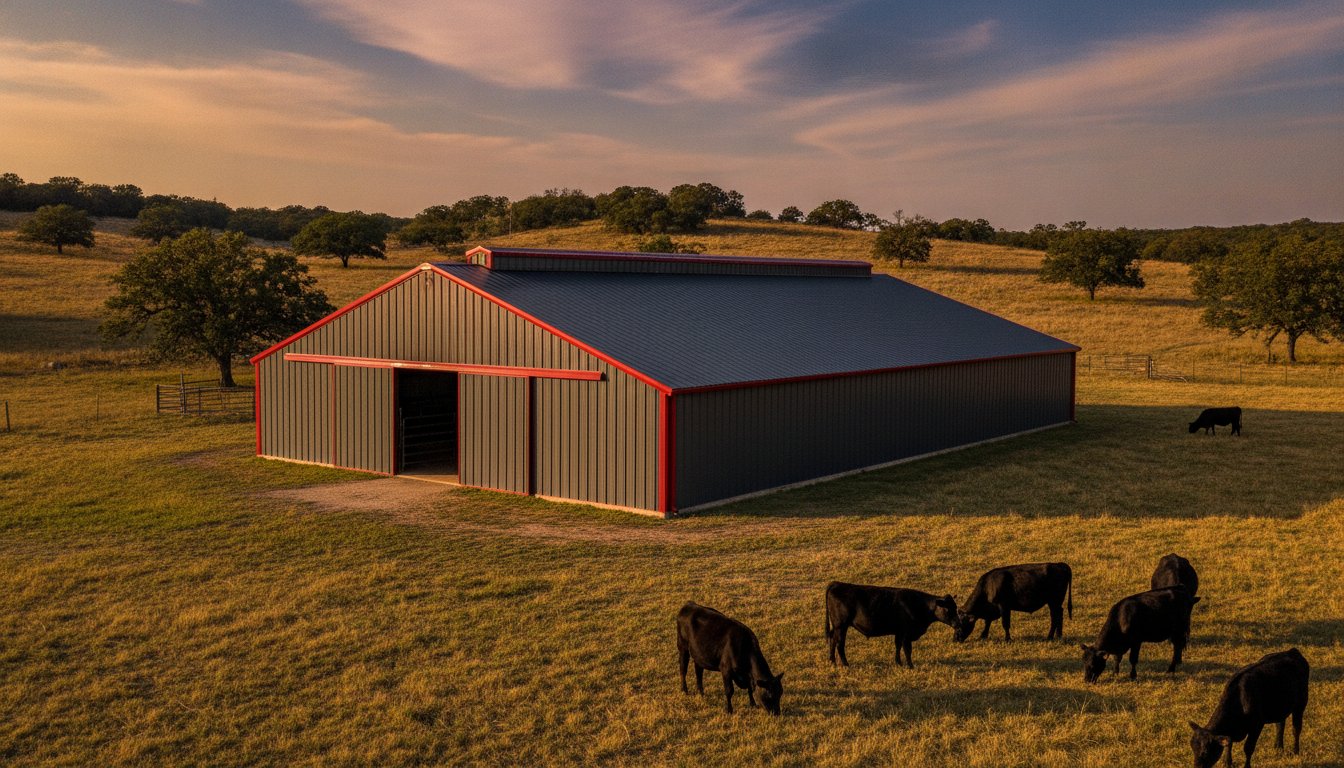
The lower initial price tag of a traditional wood structure often feels like a win for the bottom line, but that savings can vanish the moment the Texas sun and shifting clay soil take hold. When you evaluate a pole barn vs steel building for livestock, you are really choosing between a temporary fix and a permanent asset. Most Central Texas ranchers understand that a building is only as good as its ability to protect the herd and withstand the elements without constant intervention. This choice impacts everything from your daily chores to your property value for the next several decades.
You want a structure that remains level and keeps your animals safe from fire and extreme heat. This guide explains why steel buildings offer superior durability, enhanced animal safety, and better long-term value for your operation. We will examine how metal structures eliminate common pains like wood rot and pests while potentially lowering your insurance premiums by up to 30% due to fire resistance. At Bradberry Steel, we focus on providing the technical guidance and building packages necessary to ensure your livestock has a ventilated, secure home that lasts fifty years or more. You will also discover how pre-engineered steel helps manage the unique challenges of our regional climate and soil.
Key Takeaways
- Compare construction methods for a pole barn vs steel building for livestock to see how foundation choice impacts the long-term stability of your ranch.
- Understand how Central Texas clay causes wood posts to shift and why steel frames remain level despite changing soil conditions.
- Learn the biosecurity advantages of non-porous steel surfaces that resist bacteria and allow for easy sanitation to keep your herd healthy.
- Evaluate the financial benefits of fire-resistant steel, which can reduce insurance premiums by up to 30 percent compared to wood-frame structures.
- Identify the differences between pre-engineered and weld-up steel packages to find the most efficient solution for your specific livestock operation.
Defining the Difference: Pole Barns vs. Steel Buildings
Choosing the right shelter for your herd requires looking past the exterior metal skin. Many ranchers and landowners in Central Texas see a building with metal siding and assume it is a steel building. However, the critical difference lies in the structural skeleton hidden underneath. When you compare a pole barn vs steel building for livestock, you are comparing two fundamentally different engineering philosophies.
A pole barn is a wood-framed structure that uses post-frame construction. This method involves burying large wooden posts directly into the ground to serve as the primary vertical support. In contrast, a steel building features a frame made entirely of heavy-duty red iron or galvanized steel. These structures are bolted to a reinforced concrete foundation rather than being anchored in the dirt. This distinction determines how the building handles the weight of the roof, the force of the wind, and the movement of the Texas soil.
Post-Frame Construction Basics
This traditional method, often referred to as pole building framing, relies on the pressure and friction of the soil to keep the building upright. The wood columns act as the main vertical supports for the entire roof load. Horizontal wood girts are then nailed to these columns to provide the secondary framing for the exterior skin. While this method is historically popular for its lower upfront material costs, it leaves the primary support system vulnerable to ground moisture and biological decay.
Steel Building Engineering
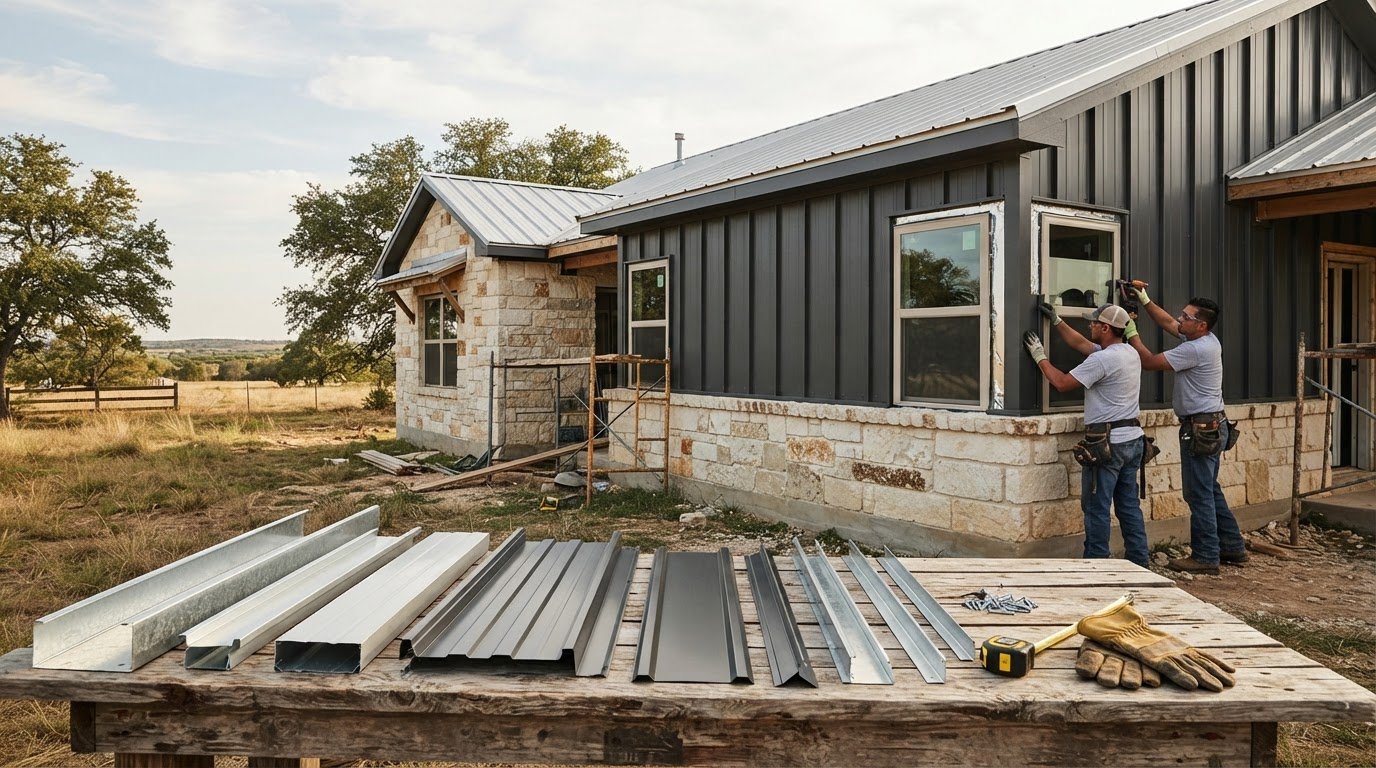
Steel buildings utilize high-strength components that are precision-engineered to meet specific local requirements for wind and snow loads. Whether you choose pre-engineered steel buildings or a custom weld-up design, the structural load is handled by rigid steel frames. These components are joined by high-strength bolts or heavy-duty welds, creating a level of stability that wood fasteners simply cannot match. Bradberry Steel provides these robust packages as a reliable resource for ranchers who need a structure that won’t compromise over time.
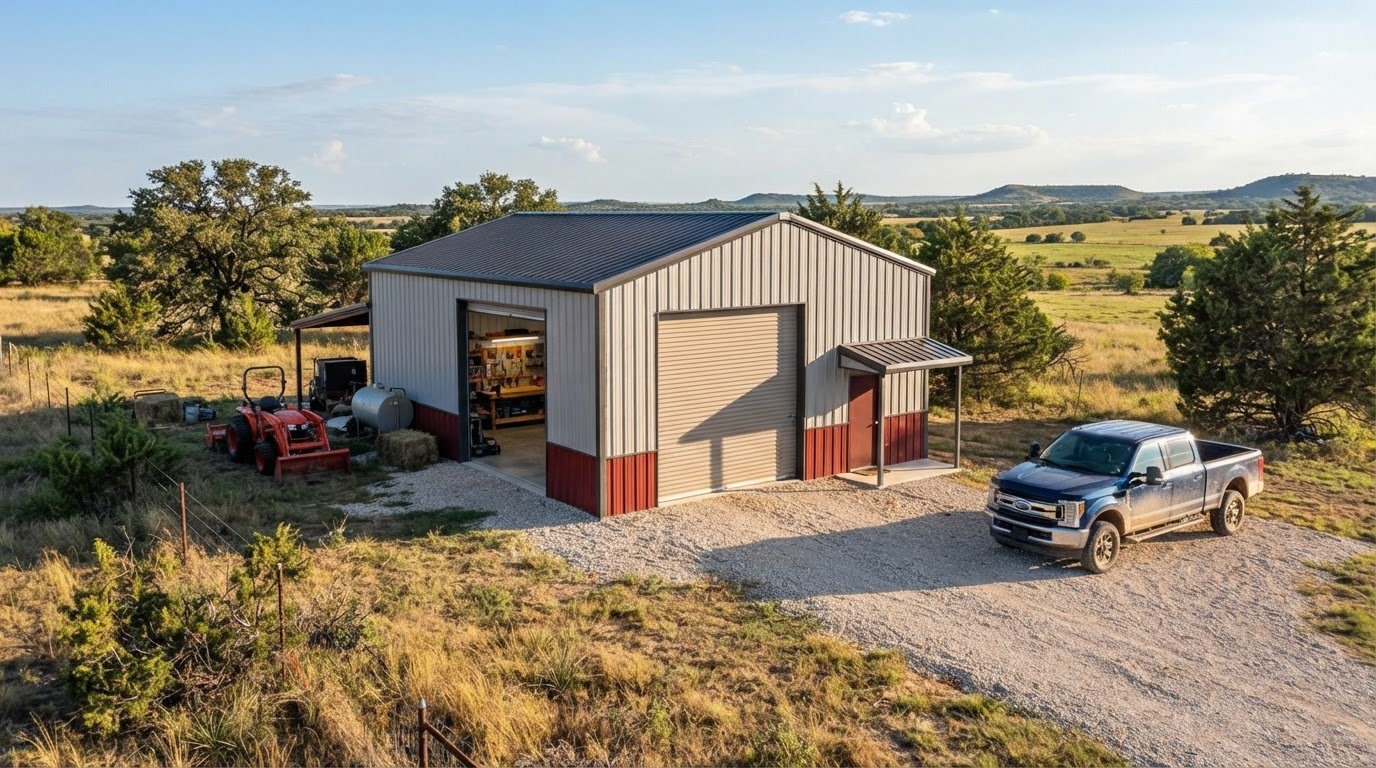
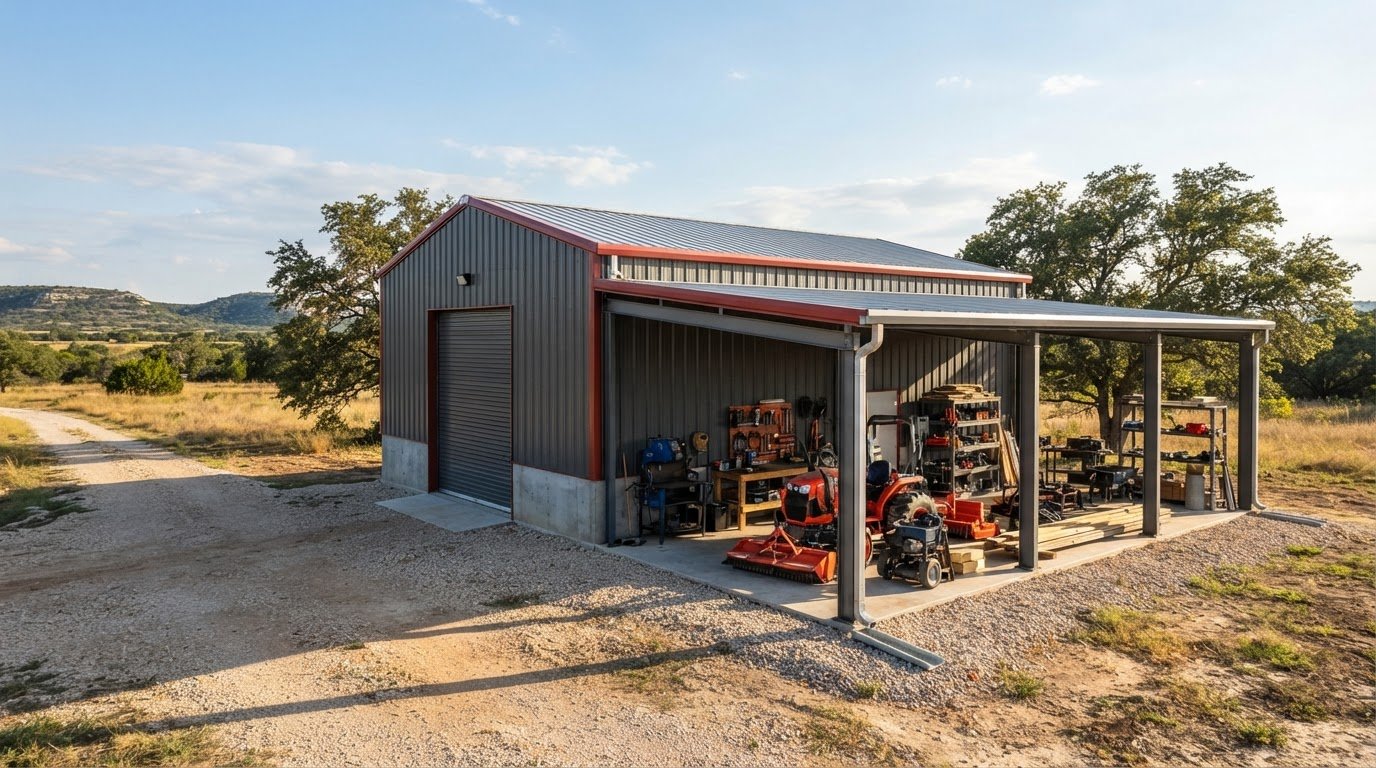
One of the most practical benefits of choosing a steel building for livestock is the clear-span interior. Because the steel frame is strong enough to support the roof without middle supports, you get an open floor plan. You won’t have to navigate tractors, trailers, or spooked cattle around interior poles. This creates a safer, more efficient workspace for daily ranch operations. If you are ready to see how a clear-span layout fits your property, you can utilize the 3D design tool at Bradberry Steel to visualize your project.
Structural Integrity in Central Texas Soil
Central Texas ranchers deal with some of the most challenging soil in the country. The expansive clay found throughout the Dublin and Stephenville areas acts like a sponge. It swells during wet seasons and shrinks during droughts. This constant movement exerts immense pressure on anything buried in the ground. When evaluating a pole barn vs steel building for livestock, you must consider how your foundation will handle this cycle over the next few decades.
The Problem with Buried Wood Posts
A pole barn relies on wooden posts buried several feet deep. Even if the wood is pressure-treated, it isn’t invincible. The acidity and moisture in Texas soil eventually break down the fibers. Subterranean termites, which are highly active in our region, often find their way into these supports. Once a structural post begins to rot or is hollowed out by pests, the entire building is at risk. Replacing a rotted structural post is a complex and expensive repair process that often requires heavy machinery and temporary bracing.
Because the posts are the main support, any shifting causes a domino effect. You might notice your doors won’t latch or the roofline starts to sag. These gaps also create drafts and moisture issues. Proper structural design is the first step in effective Environmental Control for Confinement Livestock Housing, as it prevents gaps and misalignments that compromise ventilation and animal health. Without a square frame, maintaining a healthy environment for your herd becomes an uphill battle.
The Advantage of a Concrete Foundation
Steel buildings take a different approach to stability. Instead of fighting the soil, they are engineered to sit on a stable concrete foundation. This usually involves deep concrete piers or a heavy-duty slab designed to distribute the weight of the building. The steel frame is then bolted directly to this foundation. This creates a rigid structure that resists the natural shifting of the earth and keeps the building square for its entire lifespan.
A concrete foundation offers several benefits for livestock management:
- Structural Alignment: Your building stays square. Doors and gates continue to function perfectly for years without sticking.
- Pest Resistance: Termites cannot eat through steel or concrete. This removes a major threat to your investment and your animals’ safety.
- Improved Sanitation: A concrete floor allows for better drainage and easier cleaning of stalls and alleyways.
Building on a firm base ensures your agricultural buildings remain a long-term asset rather than a maintenance burden. You can start planning a foundation that holds firm by using our 3D design tool to map out your project and visualize how it sits on your land.
Livestock Health, Safety, and Biosecurity
The well-being of your herd depends on the environment you provide. When choosing between a pole barn vs steel building for livestock, ranchers must look beyond structural strength and consider biological safety. Wood is a living material that never truly stops reacting to its surroundings. In a livestock setting, this means it acts like a sponge for everything you want to keep away from your animals.
Hygiene and Disease Control
Wood is naturally porous. It absorbs animal waste, moisture, and the bacteria that follow. Over time, wood stalls can harbor parasites, fungi, and pathogens that are nearly impossible to eradicate. Even with heavy cleaning, bacteria can hide deep within the grain of a wooden post. Steel is non-porous. You can sanitize the entire interior of a metal building with a power washer and a mild disinfectant. This ability to maintain a sterile environment is a cornerstone of modern biosecurity.
Steel components also eliminate the risk of splinters. Horses and cattle often rub against or chew on framing; steel won’t break off and cause injury. Additionally, the lack of wood framing removes the nesting sites that rodents and wood-boring insects require to thrive. By removing these habitats, you reduce the presence of pests that carry diseases into your facility.
Fire Resistance for Peace of Mind
Fire is a constant threat in agricultural settings. Barns are full of dry hay, bedding, and dust. While you cannot eliminate every fire risk, you can choose a structure that won’t contribute to the blaze. Steel is non-combustible. Unlike a wood-frame pole barn, a steel building provides no fuel for a fire. This gives you critical extra minutes to evacuate animals if an accident occurs.
This safety translates into financial savings. Because steel buildings are fire-resistant, many insurance providers offer premiums that are up to 30% lower than those for wood-frame structures. This recurring saving adds significant long-term value to your operation while protecting your most important assets. Protecting your livelihood starts with a structure that doesn’t burn.
Managing heat is also vital during Central Texas summers. Ammonia buildup from waste can damage animal lungs if air doesn’t move. Steel buildings offer superior ventilation options. Their engineering allows for larger door openings and specialized ridge vents that move air more efficiently than traditional pole barns. This keeps the interior cooler and the air fresher for your livestock.
Bradberry Steel offers agricultural buildings designed with these health factors in mind. You can explore different layouts and ventilation setups using the 3D design tool to ensure your new facility meets your biosecurity standards and provides a safe home for your animals.
Analyzing the Long-Term Financial Value
Investing in a ranch building requires a look at the total cost of ownership rather than just the initial bid. While many believe the entry price for a pole barn is significantly lower, the reality of the current market shows the gap is often quite narrow when you compare equivalent features like professional engineering and quality siding. When you weigh a pole barn vs steel building for livestock, the long-term financial trajectory of each structure looks very different. A steel building is a capital improvement that holds its value, while a wood structure begins to depreciate the moment the first post is set in the ground.
Maintenance Costs Over 25 Years
Maintaining a wood building in Central Texas is a recurring expense that many owners overlook. Wood siding and structural posts typically require significant attention every 10 to 15 years to combat the effects of ground moisture and the intense sun. Replacing a single structural post in a pole barn isn’t just about the cost of the lumber. It involves shoring up the roof, excavating the old post, and resetting a new one while trying to keep the building square. Over 25 years, these repairs accumulate into a financial burden that steel owners never face.
Steel panels used in modern agricultural buildings feature high-quality coatings that resist fading and chalking in the harsh Texas climate. This durability is the same reason why homeowners choose residential metal roofs for their long-term performance. You won’t spend your weekends painting or treating your barn to keep it from falling apart. Steel remains steady, allowing you to focus your time and capital on your livestock rather than structural repairs.
Insurance and Appraisal Benefits
Appraisers and lenders view these buildings through different lenses. A steel building is classified as a permanent improvement because it is anchored to a reinforced concrete foundation. This status adds more value to your property appraisal compared to a pole barn, which is often viewed as a temporary outbuilding. For a Texas rancher, a steel building is a generational asset that serves the family for decades without losing its structural worth.
Insurance adjusters also favor steel due to its resistance to fire and wind damage. Verified data shows that insurance premiums for steel buildings can be up to 30% lower than those for wood-frame options. Lower risk of total loss makes steel the preferred choice for agricultural insurance providers. These savings add up over the life of the building, making the total cost of a steel structure much more attractive than a cheaper wood alternative.
If you are ready to build a structure that pays for itself through durability and lower overhead, request a quote from Bradberry Steel today.
Choosing the Right Steel Solution for Your Ranch
Selecting the right structure involves more than just picking a size. When you settle the debate of a pole barn vs steel building for livestock, you must then decide which type of steel construction fits your specific operation. Bradberry Steel provides engineered packages tailored for the environmental demands of the Dublin area. We understand how the local climate and soil impact your building choice. Whether you need a massive cattle barn, a private horse arena, or secure hay storage, the right design ensures your investment serves your ranch for decades. To stay connected to the local culture while managing your property, you can learn more about Texas Country Music Radio and the artists who represent the heart of Texas.
Pre-Engineered vs. Weld-Up for Agriculture
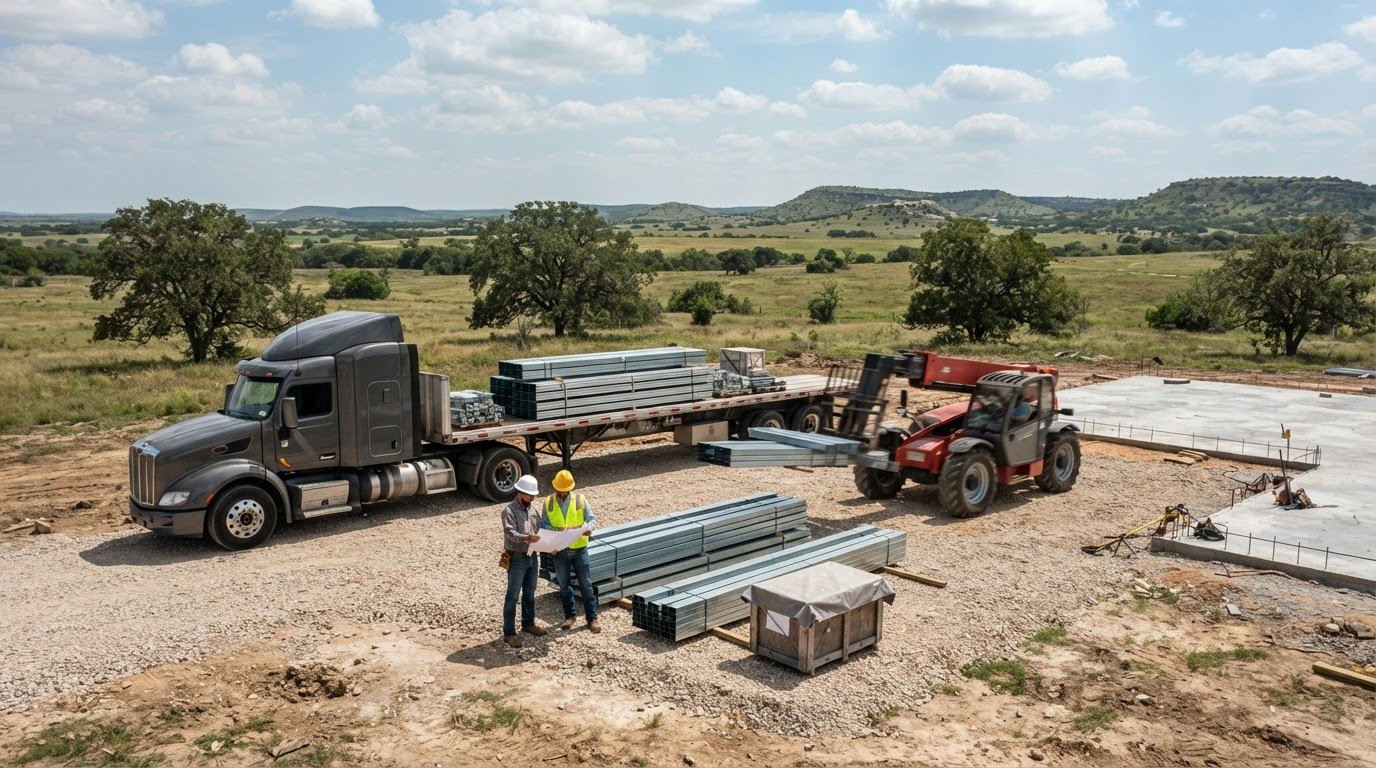
Agriculture requires flexibility. Pre-engineered steel buildings arrive as complete kits with guaranteed structural ratings. They offer fast assembly and precision that is hard to beat for standard layouts. These kits are manufactured to exact specifications, ensuring every bolt hole aligns perfectly. This is often the preferred choice for ranchers who value speed and engineering certainty. Because the components are pre-cut and ready to assemble, you can move from the planning phase to a finished shell quickly.
If your ranch requires unique stall configurations or on-site adjustments, a weld-up building provides total customization. Weld-up structures allow for real-time changes to the frame as the project progresses. This is ideal for complex layouts where you might need to adjust gate placements or interior partitions to fit existing equipment. Both options outperform wood-frame structures by providing a rigid, non-combustible frame that does not warp or rot over time.
Designing Your Building for Texas Weather
Texas weather is relentless. Your building design should work with the environment rather than against it. Incorporating wide bays and high ceilings encourages natural cooling through increased airflow. This is essential for maintaining animal comfort during August heatwaves. High ceilings allow heat to rise and escape through ridge vents, significantly lowering the temperature at the animal level. Proper ventilation prevents the buildup of moisture and ammonia, which is critical for respiratory health.
Choosing light-colored metal roofing also helps by reflecting solar heat away from the building. These reflective coatings can lower cooling costs and keep your livestock calmer during peak sun hours. You can experiment with these features by using our 3D Design Tool to start planning your layout. Visualizing the building on your screen helps you identify potential airflow issues before you order your steel package. Working with a local supplier ensures you get guidance rooted in regional experience. If you are ready to secure your ranch’s future with a structure built to last, reach out to Bradberry Steel to discuss your project or request a quote.
Securing Your Ranch’s Future with Steel
Bradberry Steel is locally owned and operated in Dublin, Texas. We bring over 25 years of Texas steel expertise to every project, providing the rugged red iron durability your ranch deserves. Our team is here to guide you toward the right metal building package for your specific goals. You can design your custom livestock building today with our 3D tool to see exactly how your new facility will look. Take the first step toward a building that stands as a lasting legacy on your land.
Frequently Asked Questions
Is a steel building hotter than a wood pole barn for livestock?
A steel building is not naturally hotter than a wood pole barn if you utilize proper ventilation and reflective coatings. Light-colored metal roofing reflects solar heat rather than absorbing it into the structure. When paired with ridge vents and high ceilings, these buildings maintain excellent airflow to keep livestock cool during Central Texas summers. Proper engineering ensures the environment remains comfortable even in extreme heat.
How much more does a steel building cost compared to a pole barn in Texas?
The initial investment for a steel building often starts higher than a basic pole barn, but the price gap narrows as you add equivalent features like professional engineering. When you evaluate a pole barn vs steel building for livestock, you must account for long-term savings. Steel owners avoid the recurring costs of wood rot repairs and frequent painting that wood structures require.
Can I install a steel building kit myself?
Many ranchers and contractors successfully install pre-engineered steel building kits using their own crews and equipment. These kits arrive with detailed instructions and precision-cut components that bolt together. While Bradberry Steel provides the building packages and guidance, you will need to coordinate your own labor and heavy machinery for the assembly process. This allows for a flexible timeline on your ranch.
Do steel buildings rust when used for housing animals?
Modern steel buildings feature galvanized coatings and high-performance paints that resist corrosion from animal waste and moisture. While bare steel would be a concern, the protective layers used on our agricultural buildings are designed for these specific environments. Regular cleaning with a power washer helps maintain the integrity of the finish over decades of use without the risk of rot or decay.
What kind of foundation is required for a steel livestock building?
Steel buildings require a reinforced concrete foundation, typically consisting of deep piers or a heavy-duty slab. This foundation provides the rigid base necessary to anchor the steel frame and resist the shifting expansive clay soil of Central Texas. Unlike pole barns that rely on buried wood, a concrete foundation ensures your building remains square and level for its entire lifespan regardless of soil moisture.
How long does it take to get a steel building kit delivered in Central Texas?
Delivery timelines for a steel building kit depend on the complexity of your design and current market demand. Most standard pre-engineered packages can be delivered to your site in Central Texas within a matter of weeks. Custom weld-up steel supplies are often available even faster. You should check current lead times with Bradberry Steel when you begin the planning phase of your project.
Can I add insulation to a steel livestock building later?
You can add insulation to a steel livestock building at any time after the initial construction is complete. Retrofitting insulation is a straightforward process that helps with both temperature control and condensation management. Many owners choose to start with a basic shell and add interior finishes as their budget or operational needs change over the years. This flexibility makes steel a practical choice.
Are steel buildings noisy for animals during Texas thunderstorms?
Steel buildings do produce sound during heavy rain or hail, but most livestock acclimate quickly to these natural noises. If noise is a primary concern for sensitive animals, adding a layer of insulation significantly dampens the sound of a Texas thunderstorm. The structural security of a steel frame often provides a calmer environment during high-wind events compared to the creaking of wood structures.
Disclaimer
Bradberry Steel is a steel supply and metal building package company based in Dublin, Texas. We do not provide installation, site preparation, foundation work, or general contracting services. All building projects should be reviewed by a qualified local contractor and may require permits depending on your county or municipality. Contact Bradberry Steel for product guidance and material quotes.