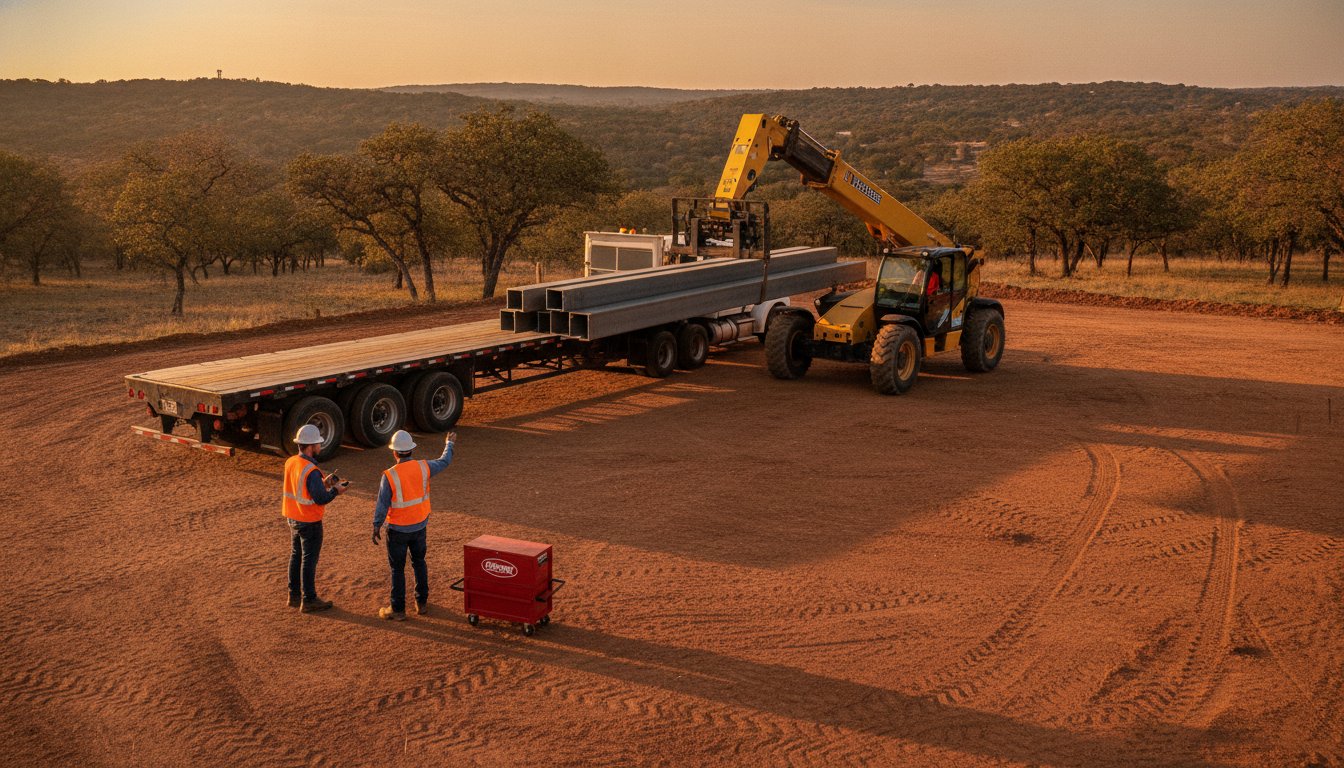
A precision-engineered steel building is only as reliable as the ground it stands on. You’ve made the investment in a high-quality structure, but the real work begins before the first truck pulls onto your property. Many Central Texas landowners feel the pressure of coordinating heavy deliveries and managing concrete schedules. Knowing exactly what to do before your steel building kit arrives is the difference between a seamless build and a project stalled by avoidable logistics.
At Bradberry Steel, we provide the blueprints and materials you need to build a legacy, but your site preparation sets the stage for success. This guide will walk you through the essential steps to master your site prep and logistical planning. You’ll learn how to prepare a level foundation that accounts for Texas soil, how to manage concrete curing times, and how to organize an efficient unloading zone. By following these steps, you can avoid surprise equipment rental fees and ensure your project starts with the steady confidence of a professional operation.
Key Takeaways
- Prepare a level foundation and stabilize Central Texas soil to prevent structural shifting over time.
- Master what to do before your steel building kit arrives by ensuring your site access can support heavy delivery vehicles.
- Secure all required local permits and schedule a telehandler for unloading to avoid expensive project delays.
- Use the provided packing list to verify every component during delivery and report any shipping damage immediately.
- Rely on Bradberry Steel for engineered drawings that provide the exact specifications your concrete contractor needs.
Foundation and Soil Preparation for Texas Steel Buildings
Proper site preparation starts with a clean slate. You must clear all debris, brush, and topsoil from the footprint of your structure before the first delivery truck arrives. A perfectly level pad is not a suggestion; it is a requirement for structural integrity. If the foundation is off by even a fraction of an inch, the wall panels and roof sheets will not align properly. This is one of the most critical steps when planning what to do before your steel building kit arrives. A disciplined approach to the ground work ensures the rest of the project moves forward without expensive corrections.
Addressing Local Soil Conditions
Central Texas landscapes present unique challenges that require local expertise. Many sites in Erath County and the surrounding region sit on expansive clay. This soil swells when wet and shrinks when dry, creating a moving target for any foundation. Such movement can heave concrete and cause long-term alignment issues for a prefabricated steel building. In rural areas, many builders utilize a caliche base to provide superior drainage and a stable platform. You should consult with a local concrete professional who understands the specific water table and soil composition of your property. Proper stabilization often involves lime treatment or the use of select fill to ensure the ground remains stationary under heavy steel loads.
Concrete Curing and Anchor Bolt Accuracy
Timing determines the strength of your build. Your foundation must be fully cured before the steel frame is anchored to the bolts. We recommend allowing at least seven to ten days for the concrete to reach its initial strength before your materials arrive on site. In the humid conditions often found across Central Texas, this window is necessary to ensure the material has set properly. While the concrete is being poured, precision in anchor bolt placement is the single most important factor for a smooth assembly. You must double check your bolt patterns against the drawings for pre-engineered steel buildings provided by Bradberry Steel. A square foundation is the only way to ensure every vertical column and horizontal beam aligns exactly as designed. Knowing exactly what to do before your steel building kit arrives saves you from the frustration of redrilling concrete or shimmying heavy beams into place. Precision in the early stages pays dividends during the final bolt-up.
Navigating Permits and Logistical Site Access
Securing your property for a heavy delivery is as much about legal clearance as it is about physical space. While your foundation cures, you must finalize the paperwork and prepare the path for the delivery crew. Understanding what to do before your steel building kit arrives includes a deep dive into local regulations and physical route planning. A failure to prepare the site for a 53 foot tractor trailer can lead to delivery delays or added freight costs. You are responsible for ensuring the truck can reach its destination and depart without getting stuck or damaging property.
Permitting in Erath and Surrounding Counties
Permitting in Central Texas varies significantly by location. If you are building within the city limits of Dublin or Stephenville, you must check with local authorities to understand specific zoning laws and Texas building permit requirements. Rural areas in Erath County may have fewer restrictions; however, you should always verify setback requirements and drainage easements. A single mistake in setback measurements can result in the forced relocation of your foundation. Keep a physical copy of your engineered plans on the job site for building inspectors to review. If you haven’t finalized your layout, use our 3D design tool to visualize your building before the permit process begins.
Preparing for the Delivery Truck
A 53 foot tractor trailer is a massive piece of equipment that requires a rugged, stable path. Your driveway must be able to support tens of thousands of pounds without crumbling or sinking. Walk your entire delivery route and look up. Low hanging power lines or heavy tree branches must be cleared to a height of at least 14 feet. If the driver cannot safely navigate the path, they may be forced to offload at the nearest public road, leaving you to transport the steel the rest of the way.
Logistics also involve your neighbors and the local environment. Notify anyone sharing an access road that a large truck will be on site. This prevents blocked driveways and maintains good community relations. Most importantly, monitor the weather. Central Texas rain can turn a solid pasture into a mud pit overnight. Ensure the staging area and the path to it are dry enough to prevent heavy trucks from getting stuck. Designate a staging area that is flat and accessible for your unloading equipment. This area should be close to the foundation but far enough away to allow the truck to turn around and exit the property safely. Taking these steps ensures that when the driver arrives, the focus stays on a safe and efficient delivery.
Securing the Right Equipment and Labor
Handling heavy steel requires more than just physical strength; it requires the right mechanical advantage. The components of a steel building arrive in bundles and crates that can exceed several thousand pounds. Planning your equipment and labor strategy is a vital part of what to do before your steel building kit arrives. You must decide early if you will manage the assembly yourself or hire a professional crew. Bradberry Steel provides the engineering plans, but the physical labor and equipment are your responsibility to coordinate. Regardless of who turns the wrenches, you need a plan for moving the materials from the trailer to your staging area without causing damage or injury.
Most projects require a telehandler or a heavy-duty forklift. A standard warehouse forklift often lacks the reach and off-road capability needed for a construction site. You should confirm the lifting capacity of your equipment by reviewing the estimated weights provided in your project documents. If the heaviest crate in your kit weighs 5,000 pounds, your machine must be rated for that load at its full extension. Understanding what to do before your steel building kit arrives ensures you aren’t left scrambling for a forklift while a delivery driver is waiting on the clock. Schedule your unloading crew and reserve your equipment at least two weeks before your delivery date to ensure availability.
Equipment Rental Essentials
For most standard building heights, you should rent a telehandler with a reach of at least 19 feet. This allows the operator to lift bundles over obstacles and place them exactly where they are needed. When selecting your machinery, look for these specific features:
- All-terrain tires: Necessary for navigating the uneven ground of a Central Texas job site.
- Lifting capacity: Must exceed the weight of your heaviest steel bundle by at least 20 percent for a safety margin.
- Fork length: Minimum of 48 inches, though 72-inch extensions are preferred for handling wide roof panel bundles.
To save on delivery fees, look for rental houses in nearby hubs like Brownwood or Granbury. Choosing a local provider also makes it easier to swap equipment if a mechanical issue arises on site.
Vetting Your Assembly Crew
If you choose to hire help, ensure your erector has specific experience with pre-engineered steel buildings. These structures rely on precise bolt-up connections that differ from traditional wood framing. Ask for references from recent projects in Central Texas and verify that the crew follows OSHA safety standards during the build. Your contract should clearly state who is providing the unloading equipment to avoid confusion on delivery day. If you are still in the planning phase, you can request a quote to get a better sense of the material weights and requirements for your specific project.
Delivery Day: Unloading and Inventory Management
Delivery day is the final test of your logistical planning. When the truck arrives, your focus shifts from site preparation to material management. Knowing what to do before your steel building kit arrives includes having your inventory tools ready. You should have a clipboard, a camera, and your packing list in hand before the driver opens the trailer. This is a high stakes moment where organization prevents long term headaches. Unloading is not just about moving weight; it is about verifying precision. As each bundle comes off the truck, check it against the bill of lading. If a crate is missing or a structural member is bent, you must document it immediately. Most drivers will wait while you perform a visual inspection. This is your only window to report transit damage before the driver leaves the site.
Systematic Inventory Check
A thorough check ensures you have every bolt and beam needed for a successful build. Group your primary frames together in one area and keep secondary members, such as purlins and girts, in a separate stack. This separation makes it easier to find parts when the assembly begins. If you notice any damaged panels, photograph them immediately from multiple angles. Clear documentation is essential for insurance claims and replacement orders. Knowing what to do before your steel building kit arrives means understanding that once the driver leaves, the responsibility for the inventory rests on your shoulders.
Staging Materials for Efficiency
Strategic placement of your materials will save your crew hours of labor. Place the heavy structural steel closest to your foundation to minimize the distance your telehandler must travel. You should store roof and wall panels on wooden blocks to keep them off the ground. This prevents moisture from trapping between sheets, which can lead to premature rust or finish damage in the Texas humidity. Hardware boxes and insulation require even more care. Keep these items in a locked trailer or a dry garage to protect them from both the elements and potential theft.
A well organized job site is a safer and more productive environment. If you are ready to start your project with a kit designed for the specific wind loads of Erath County, request a quote from Bradberry Steel today. Our team provides the detailed packing lists and engineering drawings you need to manage your delivery with confidence.
Coordinating with Bradberry Steel for a Successful Build
A successful building project is more than just a transaction; it is a partnership built on decades of local expertise. At Bradberry Steel, we leverage over 25 years of Texas steel experience to ensure your structure is ready for the unique demands of our region. We provide the engineering intelligence that allows your project to move from a concept to a completed facility. Understanding exactly what to do before your steel building kit arrives involves a careful review of the technical guidance we provide. Our precision kits are designed to minimize the need for field modifications, which reduces extra labor costs and keeps your timeline on track. By coordinating with our team, you gain a dependable resource for navigating the complexities of steel construction in Central Texas.
Utilizing Engineered Plans
The engineered plans we supply serve as the master blueprint for your entire site. Before the delivery date, you should review the structural steel components with your assembly crew to ensure everyone understands the scope of the work. Every stakeholder, including your concrete contractor and equipment operator, must have the latest version of these building plans. These drawings are essential for verifying that your foundation meets the specific load-bearing requirements of a heavy steel structure. Precision in anchor bolt placement is the most critical factor for a smooth assembly; our plans provide the exact specifications your concrete team needs to achieve that accuracy. A disciplined review of these documents prevents the frustration of parts not fitting during the critical phases of construction.
Final Preparation Steps
Communication is the final piece of the preparation puzzle. You must confirm your color choices and trim options using our color guide before the kit is finalized for shipment. This step ensures that the final product matches your aesthetic goals and complements existing structures on your property. If you have questions regarding the delivery schedule or site access requirements, reach out to our Dublin office. We are a local partner, not a faceless corporation; we take immense pride in supporting the ranchers and business owners of Erath County.
Steel remains the most durable and cost-effective solution for the Texas climate, and proper preparation ensures your investment lasts for generations. This guide has outlined what to do before your steel building kit arrives to ensure a seamless transition from delivery to assembly. Once your site is ready and your plans are in hand, you can move forward with the quiet confidence that your project is built on a foundation of professional integrity.
Build Your Legacy on a Solid Foundation
Preparation is the bridge between a blueprint and a finished structure. By mastering the details of soil stabilization and ensuring your anchor bolts are perfectly square, you eliminate the delays that often stall lesser projects. Coordinating your equipment rentals and verifying your local permits early allows you to focus on the physical build rather than the paperwork. Understanding what to do before your steel building kit arrives ensures that delivery day is a milestone of progress rather than a source of stress.
Bradberry Steel brings over 25 years of Texas steel expertise to every project. We are locally owned and operated in Dublin, providing precision-engineered building kits designed specifically for the local wind loads and climate. While we supply the high-quality materials and engineering plans, your disciplined site preparation ensures the final result is as durable and dependable as the steel itself. You now have the knowledge to start your project with the steady confidence of a professional.
Design your custom steel building and get a quote today to see how our expertise can support your next build.
Frequently Asked Questions
How long does it take for a steel building kit to arrive after ordering?
Typical delivery timelines vary based on the complexity of your design and the current fabrication schedule. Most standard kits arrive within six to twelve weeks after the final engineering drawings are approved. We will coordinate a specific delivery window with you as the production process nears completion. This timeframe allows you enough time to finalize what to do before your steel building kit arrives, including site leveling and foundation pouring.
Do I need to be present on the property when the truck arrives?
You or a designated representative must be present on site when the delivery truck arrives. This is essential for conducting a thorough inventory check and signing the bill of lading to confirm receipt of all materials. Being present allows you to inspect for any visible shipping damage immediately. If you cannot be there, your assembly crew lead should handle the unloading and verification process on your behalf.
What is the most common mistake people make before their kit arrives?
The most frequent error is failing to ensure precise anchor bolt placement and a perfectly level foundation. If the bolts are off by even half an inch, the primary frames will not align, leading to expensive field modifications. Another common issue is inadequate site access for the delivery vehicle. Ensuring your site is ready is a critical part of what to do before your steel building kit arrives to avoid costly delays.
How much space does a 53 foot delivery truck need to maneuver?
A 53 foot tractor trailer requires a minimum clear path width of 14 feet and an overhead clearance of at least 14 feet. To turn around, these trucks typically need a radius of 50 to 60 feet depending on the specific trailer type. If your property cannot accommodate this maneuver, you must designate an alternative offloading zone near a public road and arrange for secondary transport to your building site.
Can I store my steel building kit outside for several months before building?
You can store materials outdoors temporarily, but long term exposure can lead to issues. Roof and wall panels are particularly sensitive to moisture trapped between the sheets, which causes white rust or finish damage. If you must store the kit for more than a few weeks, keep all bundles off the ground on blocks. Cover them with a high quality tarp that allows for airflow to prevent condensation buildup.
Does Bradberry Steel provide the equipment needed for unloading?
Bradberry Steel does not provide unloading equipment or labor. We supply the materials and the engineering plans, but you are responsible for having a telehandler or heavy duty forklift ready on delivery day. You should confirm your equipment rental at least two weeks in advance. Ensure the machine has the reach and lifting capacity required for the heaviest bundles listed in your project documents.
What happens if I find missing parts after the delivery driver has left?
Reporting missing or damaged parts is much more difficult once the driver has departed. You must use the provided packing list to verify every item as it comes off the trailer. If you find discrepancies later, contact our Dublin office immediately with your project number and photos of the inventory. While we strive for 100 percent accuracy, immediate documentation is the best way to resolve any shipping errors.
Is a 4 inch concrete slab thick enough for a standard steel workshop?
Slab thickness depends entirely on the intended use and the weight of the structure. While a 4 inch slab is common for light residential use, many workshops and agricultural buildings require a 6 inch pour or thickened edges to support the primary steel columns. You should always consult the engineered drawings provided by Bradberry Steel. These plans specify the exact foundation requirements needed to maintain structural integrity.
Disclaimer
Bradberry Steel is a steel supply and metal building package company based in Dublin, Texas. We do not provide installation, site preparation, foundation work, or general contracting services. All building projects should be reviewed by a qualified local contractor and may require permits depending on your county or municipality. Contact Bradberry Steel for product guidance and material quotes.