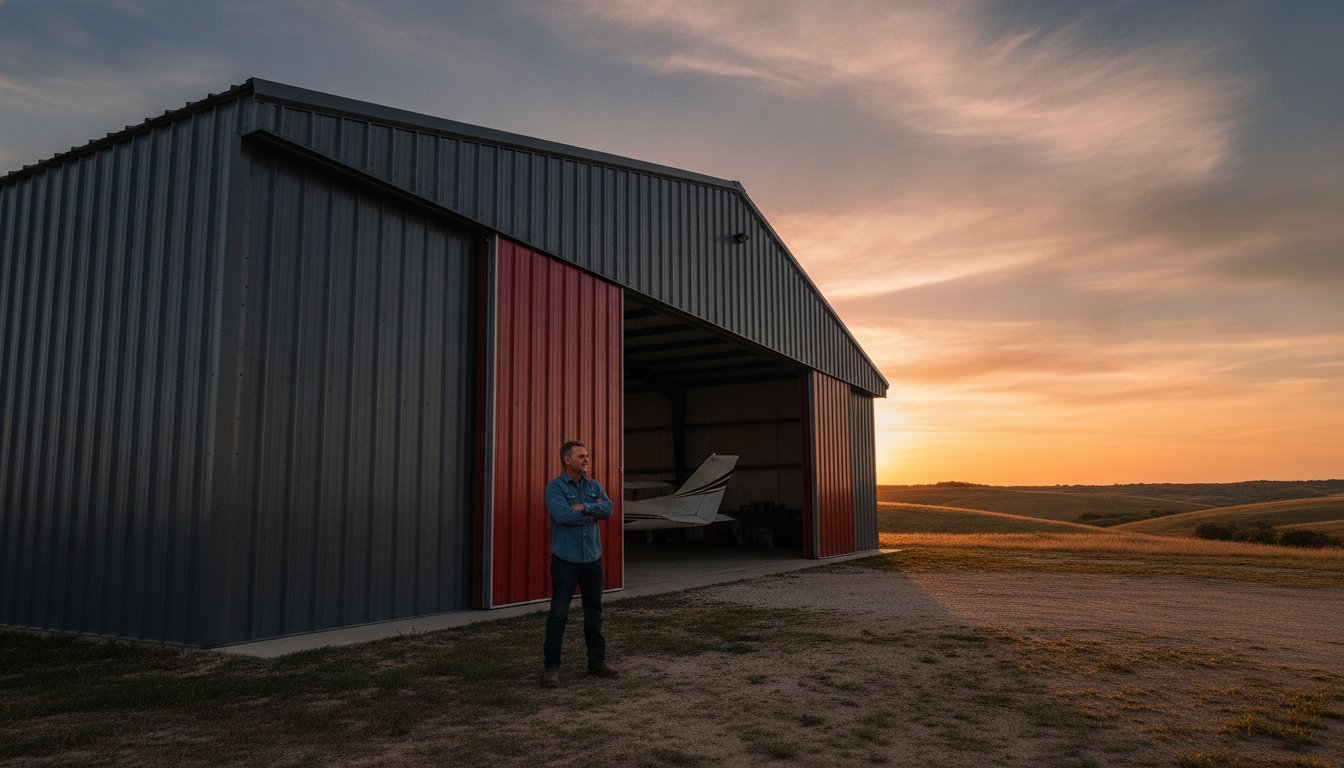
Every Texas pilot knows the sinking feeling of watching a line of dark clouds move across the horizon while their plane sits in a rented hangar with a leaking roof. You’ve invested significant capital into your aircraft. It’s a precision machine that deserves better than a drafty, expensive rental space. Choosing high-quality private aircraft hangar kits allows you to move away from rising monthly fees and into a secure, clear-span environment you actually own. It’s about protecting your investment with the strength of Texas steel.
We understand the frustration of coordinating complex designs or worrying about whether a structure meets the 2026 windstorm building codes. This guide will teach you how to select, size, and customize a steel aircraft hangar kit designed specifically for the Texas elements. You’ll learn how to plan for maintenance space and ensure your building adds long-term value to your property. Bradberry Steel serves as your primary resource for these metal building packages, providing the materials and technical expertise to make your project straightforward and dependable.
Key Takeaways
- Understand how private aircraft hangar kits provide a complete structural package designed to protect your plane from severe Texas hail and high winds.
- Learn the proper way to calculate hangar dimensions by measuring your aircraft wingspan and tail height while adding necessary safety clearances.
- Discover how to customize your steel building with specific gauges and engineering to meet local wind load requirements in areas like Erath County.
- Evaluate different hangar door mechanisms and access points to create a space that is both secure and easy to use for daily maintenance.
- See how to use the Bradberry Steel 3D design tool to visualize your project and refine your material requirements before the build begins.
The Essentials of Private Aircraft Hangar Kits
A private aircraft hangar kit is a complete structural material package designed to provide a secure, climate-resilient environment for your plane. This is not just a pile of metal. It is a coordinated system of columns, rafters, and girts engineered to work as a single unit. For a pilot, this package streamlines the building process by providing all the primary steel components needed to get the structure off the ground. For more context on the history and purpose of these structures, you can review this Aircraft Hangar Overview.
In Texas, the weather is often your aircraft’s biggest enemy. High winds and large hail can cause thousands of dollars in damage in minutes. Choosing private aircraft hangar kits made of high-quality steel is the only viable choice for this climate. Steel provides the impact resistance and structural integrity that wood or fabric simply cannot match. It’s a low-maintenance solution that stands up to the intense heat of the Southern plains without warping or rotting over time.
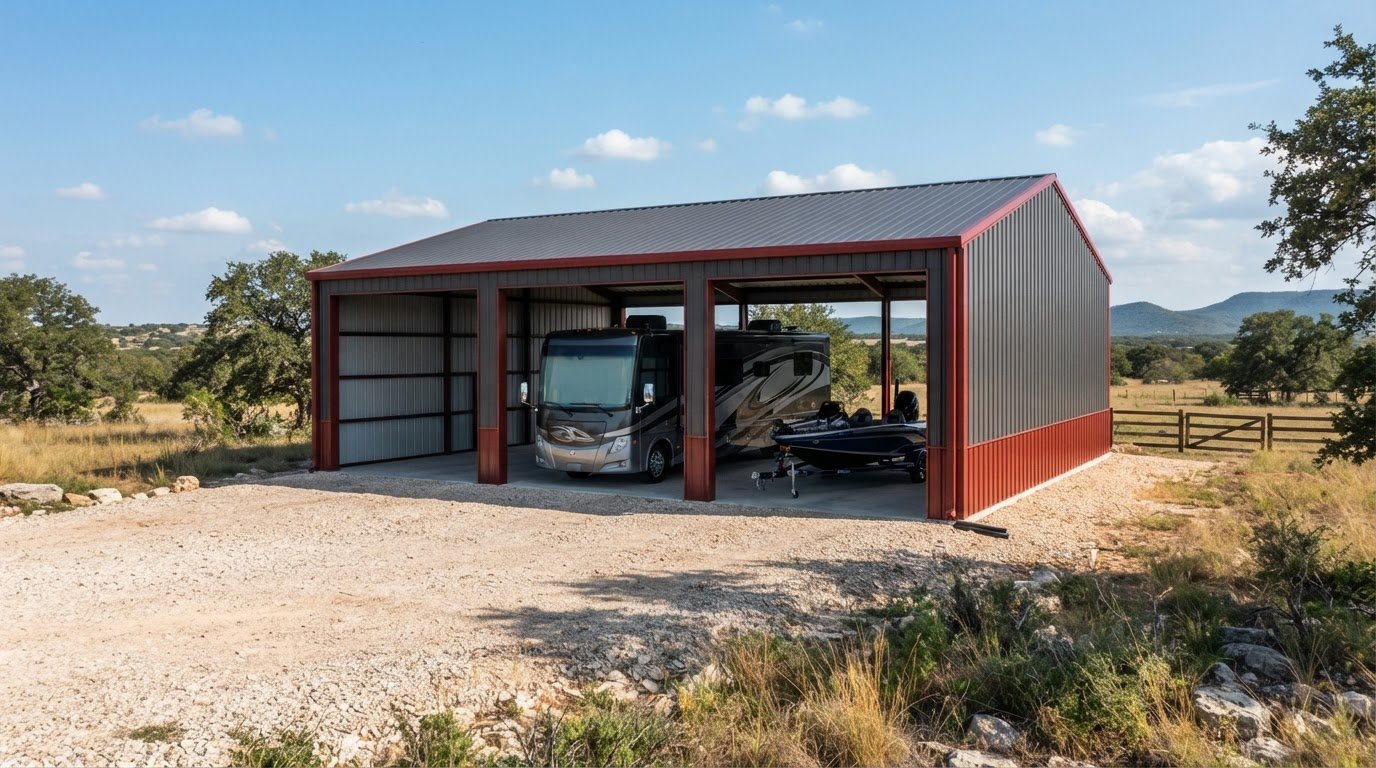
The core requirement for any aviation building is a clear-span design. This engineering approach allows for a wide, unobstructed floor space because the roof is supported by the exterior walls rather than interior columns. You need this open area to move planes safely and perform maintenance without navigating around obstacles. Our kits focus on providing this essential clear-span capability, ensuring your hangar remains functional as your aviation needs grow.
Why Steel is the Standard for Aviation Storage
Steel has a superior strength-to-weight ratio. This characteristic is vital for aviation because it allows for the massive door openings required for wingspans. Beyond strength, steel offers excellent fire resistance. Unlike traditional wood-framed structures, steel won’t fuel a fire, which provides an extra layer of protection for high-value assets. In Central Texas, steel also defeats common problems like termites, carpenter ants, and wood rot that plague other materials.
Pre-Engineered vs Weld-Up Hangar Packages
When choosing between private aircraft hangar kits, you generally have two paths: pre-engineered or weld-up. Pre-engineered steel buildings are designed with extreme precision. Every component is cut and punched at the factory, which leads to a faster assembly on your property. This method is ideal for pilots who want a predictable, bolt-together system. Alternatively, weld-up buildings use raw steel components cut and welded on-site. This offers flexibility for custom adjustments during the build to fit specific terrain.
Procuring the right materials shouldn’t be a headache. For private pilots and ranchers, these kits simplify the logistics by bundling the necessary structural components into one coordinated shipment. You aren’t chasing down individual beams or panels from different vendors. Bradberry Steel acts as your expert coordinator, ensuring every piece of the structural puzzle arrives ready for your project. This organized approach saves time and reduces the risk of material shortages during the construction phase of your hangar.
Planning Your Hangar Size and Layout
Planning the footprint of your new building is the most critical step in the procurement process. You don’t want to realize your tail height is too tall for the door after the steel has already arrived. Start by taking exact measurements of your current aircraft. Use the wingspan and tail height as your baseline. From there, you must add a minimum of five to ten feet of clearance on all sides. This extra space is not just for comfort. It is a safety requirement that prevents accidental damage while moving the aircraft in and out of the bay.
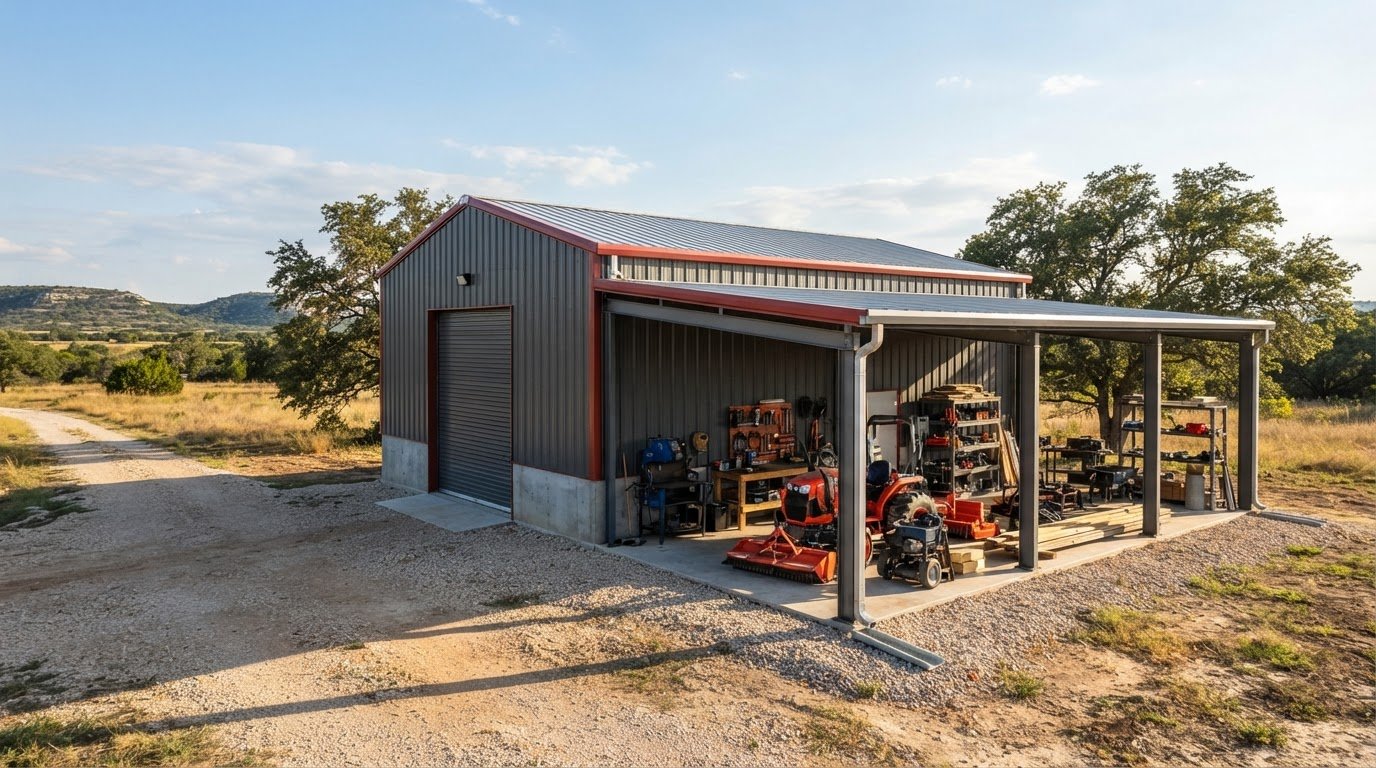
When looking at private aircraft hangar kits, think about how you use the space. If you perform your own maintenance or avionics work, you need dedicated room for benches and tool storage. A building that only fits the plane leaves no room for the pilot to work. It’s also wise to consider your next aircraft. Many pilots upgrade to larger models or add a second plane to their collection. Building for your future needs now is much more cost-effective than trying to expand a steel structure later.
Determining Clear Span Requirements for Your Wingspan
In aviation storage, width is more important than total square footage. The clear-span width determines which aircraft can actually enter the building. This design relies heavily on a massive main header beam that supports the wide opening for the hangar door. Without this engineering, you would need interior columns that make moving a plane impossible. For those looking for technical standards on space planning, the Official Hangar Design Criteria provides a deep dive into professional layout requirements. You must also calculate the interior height carefully. High-tail aircraft or helicopters require significant vertical clearance that standard workshops don’t provide.
Common Hangar Dimensions for Single and Multi-Aircraft Storage
Most light single-engine aircraft fit well within a 40×40 footprint. This size provides enough room for the plane and a small corner for basic tools. If you operate a twin-engine plane or a small jet, you will likely need to move up to a 60×60 layout or larger. Choosing from standard private aircraft hangar kits often starts with these dimensions because they balance cost with utility.
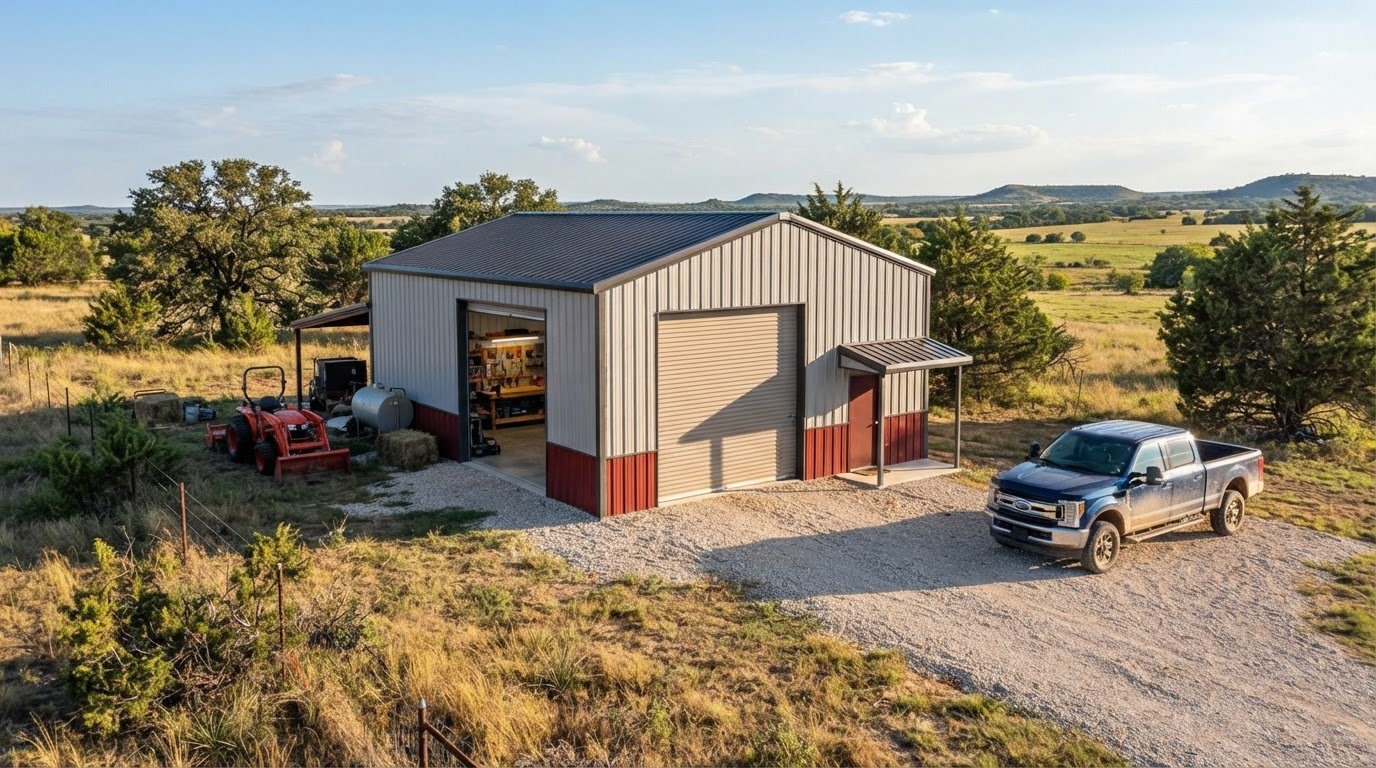
Rectangular box hangars are the most common choice for private property because they offer the most flexible floor plans. While T-hangars are popular at municipal airports to save space, a rectangular design provides better value for a private owner who needs extra storage for a tractor or workshop. Getting these dimensions right is easier when you can see the layout in front of you. You can start by using the 3D design tool to visualize how your aircraft and equipment will fit within different structural footprints.
Customizing Your Hangar for the Texas Climate
Texas weather is notoriously unforgiving. From 100-degree summer afternoons to sudden spring windstorms, your building must be engineered for this specific environment. Generic private aircraft hangar kits often fail to account for the unique pressures of the Southern plains. Protecting a high-value aviation investment requires a structure that handles thermal expansion, resists heavy impact, and stays anchored when the wind picks up across open ranch land.
Wind Load Considerations for Central Texas Pilots
In open areas like Dublin and Stephenville, wind can build significant speed across unobstructed terrain. Your hangar must be designed to meet or exceed local building codes for Erath and surrounding counties. This involves specialized bracing and structural design to prevent uplift. Uplift occurs when wind pressure tries to pull the roof off the frame. If you are building on private property, you should review the FAA Private-Use Facility Guidance to ensure your project aligns with federal safety standards for design and placement. Coordination during the design phase ensures that even partially enclosed hangars remain stable during severe weather events.
Metal Roofing and Siding Options for Heat Reflection
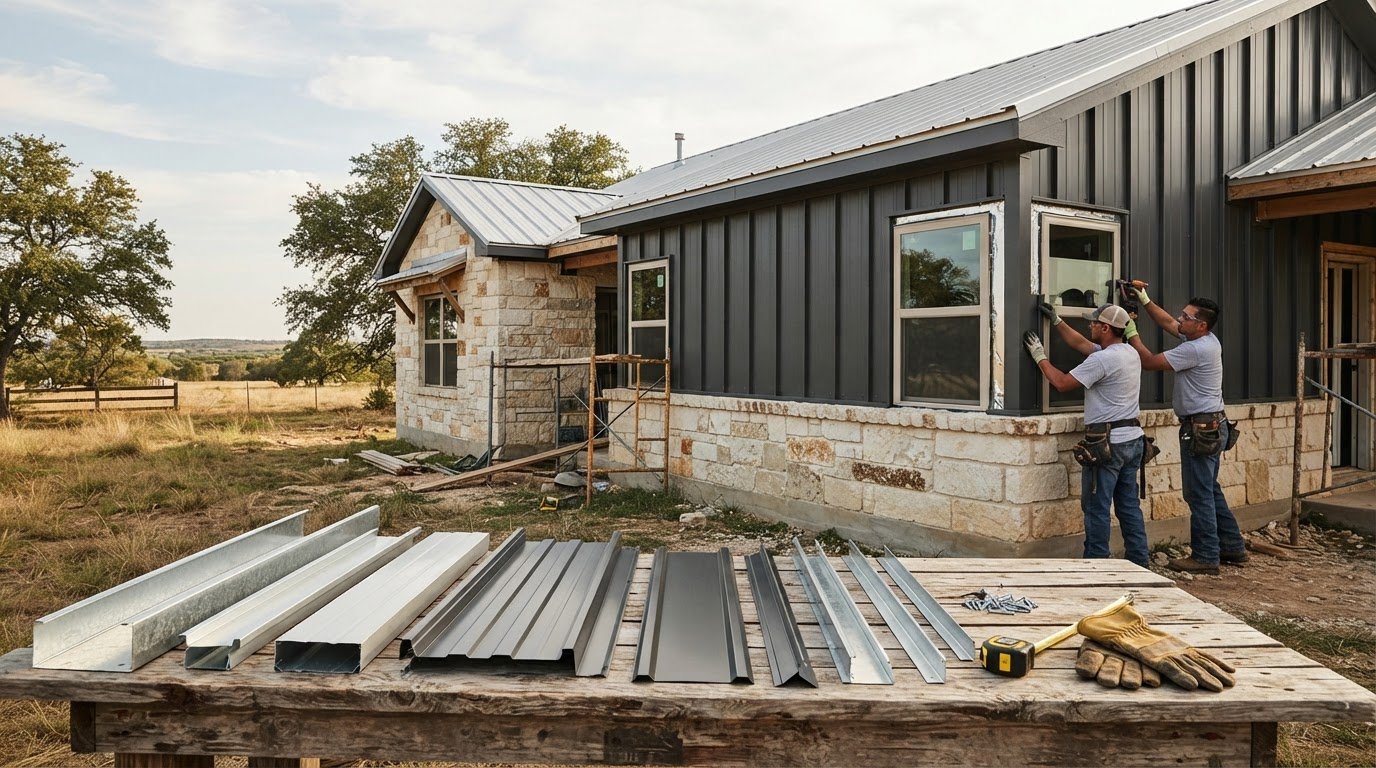
The intense Texas sun can turn a metal building into an oven, which is detrimental to sensitive avionics and fuel systems. We recommend utilizing the same technology found in high-quality residential metal roofs to manage interior temperatures. Selecting light colors like white or light tan can reflect a high percentage of UV rays. This simple choice reduces cooling costs and protects the electronics in your cockpit from heat damage. Additionally, proper insulation is vital to prevent condensation from forming on the interior of the metal panels, keeping your airframe dry and corrosion-free.
Impact resistance is another regional necessity. Large hail is a seasonal reality in Central Texas. Selecting a heavier gauge of steel for your roofing and siding provides the durability needed to survive a storm without major structural damage. Our steel components are also designed to handle the constant thermal expansion and contraction that occurs when temperatures swing 40 degrees in a single day. This prevents fasteners from backing out and maintains a tight seal against the elements.
Finally, you must consider the expansive clay soils common in the region. While Bradberry Steel does not provide foundation work, we ensure your material package is designed to sit on a slab engineered for these conditions. A stable foundation prevents the steel frame from shifting. This keeps your massive hangar doors operating smoothly for decades. You can begin exploring these customization options and visualizing your building by using our 3D design tool to see how different colors and layouts look on your property.
Choosing Hangar Doors and Accessories
The door is the most significant accessory you will select for your structure. It is the moving wall that allows your aircraft to transition from storage to the taxiway. When evaluating private aircraft hangar kits, the door choice dictates much of the structural engineering required for the front of the building. You need a solution that provides security against high winds while remaining easy to operate. Unlike budget options like PVC curtains, which fail to provide adequate protection in a storm, a solid steel door ensures your aircraft remains safe in all conditions.
Bi-Fold vs Hydraulic Hangar Doors
Bi-fold doors are a staple in the aviation industry because of their mechanical simplicity. They fold in half as they rise, which requires more vertical headroom but offers long-term reliability. Hydraulic doors use a single-piece design that swings outward. This creates a porch-like canopy when open, providing valuable shade for pre-flight inspections in the Texas heat. Both options put considerable stress on the building frame. Our material packages are engineered to support these heavy door loads, ensuring the header doesn’t sag and the door operates smoothly for decades.
Adding Functional Accessories to Your Steel Kit
Opening a massive hangar door just to grab a tool or check a fuel gauge is inefficient. Including a standard personnel door allows you to enter the building without cycling the main bay. This saves wear on your door motors and keeps the interior temperature more stable. You should also consider natural lighting. Integrating translucent wall panels or skylights provides visibility on the hangar floor during the day without relying on high-wattage electrical lighting. Selecting from high-quality private aircraft hangar kits ensures these accessories are compatible with the structural frame.
Proper ventilation is another regional necessity. Strategies like ridge vents or louvered wall vents maintain airflow and reduce the moisture buildup that leads to corrosion on sensitive airframe components. You can also customize the trim and colors of your building to match your existing ranch property or residential home. Planning for future electrical and plumbing runs within the steel frame now will save you from expensive modifications later. If you are ready to start planning these details, you can request a quote for your aircraft hangar kit from our Dublin team.
The Bradberry Steel Design and Supply Process
Designing a hangar requires precision and a clear understanding of your site requirements. At Bradberry Steel, we’ve refined our process over 25 years to ensure you receive exactly what you need to protect your aircraft. It begins with a digital blueprint and ends with a complete material package delivered directly to your property in Central Texas. This organized approach removes the guesswork from procurement and ensures your steel components are engineered for long-term performance.
Using the 3D Design Tool for Your Aviation Project
The first step for most pilots is using our 3D design tool. This interactive platform allows you to visualize your hangar in a virtual environment before a single bolt is ordered. You can adjust the clear-span dimensions, experiment with door placements, and select colors that complement the local Texas landscape. This tool is essential for ensuring your building fits both your aircraft and your land. Once you’ve finalized your vision, you can submit a quote request to receive a baseline for your material costs. This is a far more accurate approach than the generic estimates provided by national suppliers who don’t understand our regional weather patterns.
What to Expect in Your Hangar Material Package
When you choose one of our private aircraft hangar kits, you are investing in a complete structural system. We provide everything from the heavy-duty red iron primary framing to the secondary girts, purlins, and even the last bolt. Our packages include high-quality metal siding and roofing panels designed for maximum durability against Texas hail and heat. It is important to remember that Bradberry Steel is a material supplier. We provide the expert coordination and high-grade steel you need, while you remain responsible for managing the build, including site preparation, concrete work, and assembly.
Our Dublin-based team is here to consult with you throughout this phase. We help refine your structural requirements based on local wind loads and your specific aviation needs. Once the design is finalized, we coordinate the delivery of your materials to your site in Stephenville, Brownwood, Granbury, or the surrounding areas. This hands-on, regional approach ensures that your private aircraft hangar kits arrive organized and ready for your project. We take pride in being a dependable partner for pilots who value technical mastery and regional integrity.
Securing Your Aviation Legacy in Texas
Building a dedicated home for your aircraft is a commitment to the longevity of your investment. You now understand how high-quality private aircraft hangar kits provide the structural integrity needed to withstand Texas hail and wind while offering the clear-span space essential for safe maintenance. By measuring precisely and choosing the right door mechanisms, you create a workspace that serves your needs today and scales for your next aircraft.
Bradberry Steel brings over 25 years of Texas steel expertise to every project. As a family-owned operation based in Dublin, we specialize in supplying rugged red iron kits built specifically for our regional climate. We coordinate the complex materials so you can focus on managing the build. Your plane deserves a secure, permanent structure that adds real value to your property. It’s about more than just storage; it’s about peace of mind during the next storm season.
Take the first step by using our interactive platform to see your vision come to life. You can design your custom hangar with our 3D tool today. We look forward to being your dependable partner in steel.
Frequently Asked Questions
What is the most common size for a private aircraft hangar kit?
The 40×40 footprint is the most frequent choice for single-engine light aircraft. This size provides enough room for the plane and basic workspace. For owners of twin-engine aircraft or those needing multi-plane storage, 60×60 is a common upgrade. When selecting private aircraft hangar kits, the clear-span width is the most important factor to ensure your wingspan fits comfortably with at least five feet of safety clearance on each side.
Can I customize the height of my steel hangar for a helicopter?
You can absolutely customize the interior height of your steel structure. Helicopters often require significant vertical clearance compared to standard fixed-wing aircraft. Our engineering process allows us to adjust the eave height and door header to accommodate high-rotor clearances. This flexibility is a primary benefit of using steel for aviation storage. It ensures your specific aircraft has the room it needs for safe entry and exit without compromising structural integrity.
Do your aircraft hangar kits include the doors and windows?
Our material packages are comprehensive and can include structural openings for doors and windows. We coordinate the supply of the steel framing, siding, and roofing along with the specific hangar door mechanisms you select. While we provide these high-quality components, please remember that Bradberry Steel is a material supplier only. You will need to coordinate the actual assembly and installation of these accessories with your own chosen contractor or build team.
How do steel hangar kits perform in high wind areas of Texas?
Steel is the most resilient material for the high wind loads found in Central Texas. Our private aircraft hangar kits are engineered to meet specific local building codes in Erath and surrounding counties. The structural design focuses on preventing uplift during severe storms, which is a common cause of failure in lighter wood or fabric buildings. Heavy-duty red iron framing provides a stable anchor that protects your aviation investment from the elements.
Does Bradberry Steel offer installation for these hangar kits?
Bradberry Steel does not provide installation, construction labor, or site preparation. We are a dedicated steel material supplier based in Dublin, Texas. Our role is to provide the expert coordination and high-grade steel components you need for your project. You will be responsible for hiring a contractor, obtaining permits, and managing the build on your property. This allows us to focus entirely on delivering precision-engineered material packages to our partners.
What is the difference between a pre-engineered and a weld-up hangar?
Pre-engineered hangars are factory-cut and punched for a precise bolt-together assembly. This method is often faster and offers high predictability in the field. Weld-up hangars use raw steel components that are cut and welded together on your site. This offers more flexibility for custom field adjustments but requires a skilled welder. Both options provide the durability of Texas steel, though pre-engineered kits are the standard for most modern aviation projects.
How long does it take to receive a hangar kit after ordering?
Lead times for a pre-engineered steel kit typically range from 8 to 14 weeks. This timeline allows for the precise engineering and manufacturing of your structural components. Because each hangar is tailored to specific wind loads and dimensions, this period ensures your materials meet all safety standards. We recommend starting your planning early so your site preparation and foundation work are complete by the time your coordinated material package arrives for assembly.
Are there specific foundation requirements for an airplane hangar?
Airplane hangars require a reinforced concrete slab designed to handle the weight of the aircraft and support equipment. The foundation must also be engineered for the expansive clay soils common in Central Texas. A level floor is critical for the proper operation of large bi-fold or hydraulic doors. While we do not provide foundation work, we ensure your steel kit is designed to sit securely on a slab that meets these technical requirements.
Disclaimer
Bradberry Steel is a steel supply and metal building package company based in Dublin, Texas. We do not provide installation, site preparation, foundation work, or general contracting services. All building projects should be reviewed by a qualified local contractor and may require permits depending on your county or municipality. Contact Bradberry Steel for product guidance and material quotes.