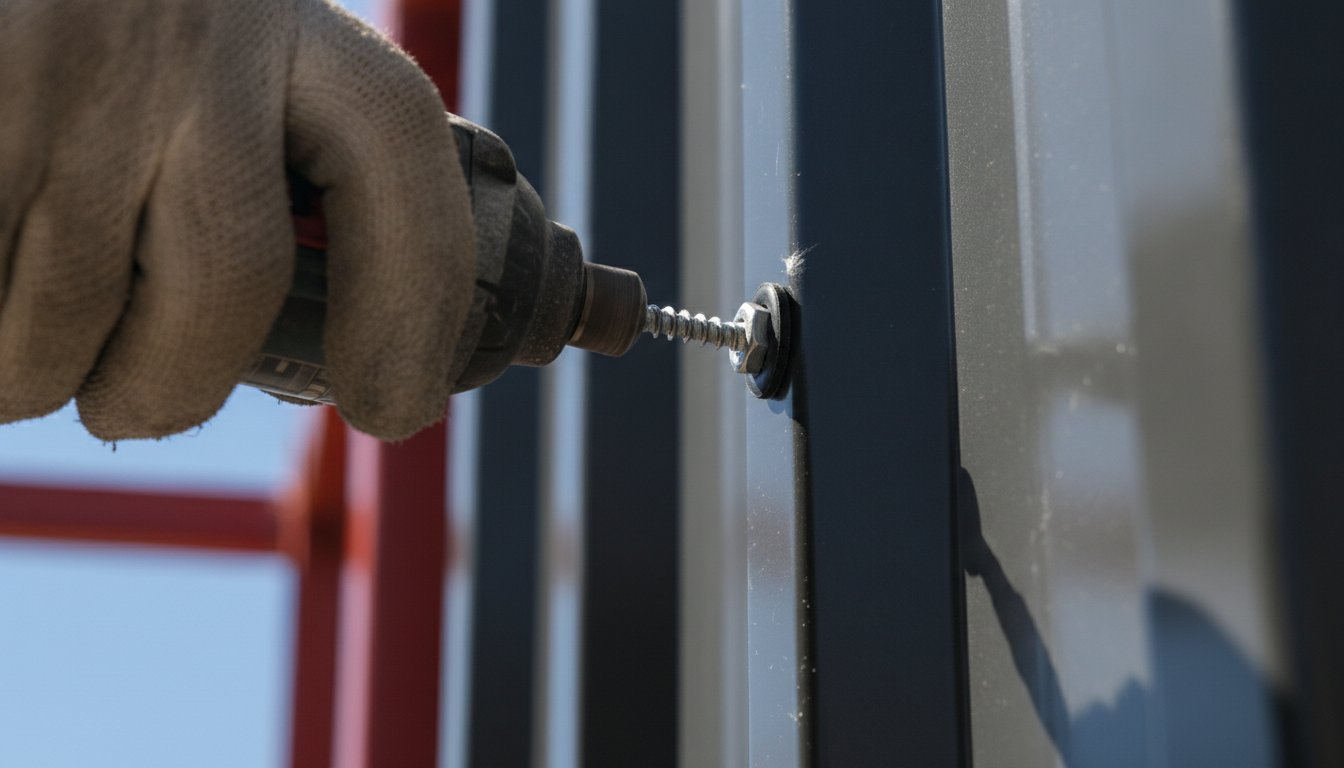
A single failed screw can compromise a thousand-square-foot workshop during a heavy Central Texas thunderstorm. You’ve likely spent weeks planning your building layout and choosing the right steel grade. It’s natural to feel frustrated when technical jargon like TCP3 or the choice between different steel building fasteners stalls your progress. Nobody wants to invest in a legacy project only to deal with rust spots or roof leaks caused by inferior washer quality.
We understand that precision matters as much in the small details as it does in the main frame. This guide will help you identify the correct fasteners for your roofing, siding, and framing needs to ensure maximum structural integrity. You’ll learn how to prevent corrosion in the Texas humidity and ensure your project meets all structural requirements. At Bradberry Steel, we provide the high-spec components and expert guidance you need to build a durable, low-maintenance structure that lasts for generations. We’ll cover the specific fastener types that stop leaks before they start and explain why choosing the right coating is non-negotiable for Texas durability.
Key Takeaways
- Learn why these small components are the most stressed parts of any metal building and how they maintain structural integrity.
- Identify the correct steel building fasteners for every application, including self-drilling Tek screws for siding and structural bolts for framing.
- Understand how EPDM washers create a watertight seal that resists the harsh UV exposure common across the Texas landscape.
- Master proper installation techniques to prevent common issues like over-driving and stripping the steel substrate.
- Discover the benefits of choosing a complete building package that includes hardware specifically selected for the local climate.
The Role of Precision Fasteners in Steel Building Integrity
Steel building fasteners serve as the critical hardware that transfers structural loads from the exterior panels to the heavy structural frame. While the red iron beams provide the skeleton, these fasteners act as the connective tissue holding everything together against the elements. They are often the most stressed components in any metal building system. Every time the wind blows or the sun beats down, these small points of contact bear the brunt of the pressure.
Engineers categorize these components into structural fasteners and secondary attachment screws. Structural bolts join the primary frame, while secondary screws secure the siding and roofing. In Central Texas, where straight-line winds and sudden storms are common, we focus heavily on shear strength and pull-out resistance. Shear strength prevents a screw from snapping when the wind pushes against the wall. Pull-out resistance ensures the fastener stays anchored in the purlin when suction forces try to lift the roof. Using the correct types of fasteners is the difference between a building that stands for fifty years and one that fails during its first major storm.
Why Quality Matters More Than Quantity
Cutting corners on hardware is a mistake that eventually costs more in repairs. A single failed fastener can create a weak point that leads to a chain reaction of structural issues across a panel. Over time, cheap screws often result in unsightly rust streaks or persistent roof leaks that can damage your interior equipment or livestock. Fastener fatigue is the gradual weakening of the metal caused by the repetitive stress of thermal expansion and contraction during our hot Texas summers.
Fasteners for Pre-Engineered vs. Weld-Up Buildings
The hardware requirements change based on how your structure is designed. Pre-engineered steel buildings rely on bolt-together kits where every hole is factory-punched to accept precision-matched hardware. This ensures a tight, engineered fit that handles loads exactly as intended. Weld-up frames often require more field-drilling and a different mix of self-tapping screws to secure the components. At Bradberry Steel, we’ve seen a major transition in residential steel projects where owners prefer mechanical fastening over traditional welding. This shift offers more predictable results and significantly faster assembly times for local landowners and contractors.
Primary Types of Fasteners Used in Metal Construction
Selecting the right steel building fasteners is about matching the hardware to the specific job it performs. Each component has a role, from holding the roof panels against the wind to securing the entire frame to the concrete slab. Self-drilling screws, commonly known as Tek screws, are the workhorses for metal-to-metal applications. They allow for fast, efficient panel attachment. For the heavy red iron framing, you’ll rely on structural bolts and nuts. Foundation connections require expansion or wedge anchors, while stitch screws are used specifically for joining metal panels together at the side and end laps.
Self-Drilling vs. Self-Tapping Screws
The technical difference between these two comes down to the tip of the screw. Self-drilling screws feature a drill point that cuts through the steel and removes material as it enters. Self-tapping screws have a tapping thread but no drill point; they require a pilot hole to be drilled first. Self-drilling screws are the industry standard for structural steel components because they eliminate the extra step of pre-drilling. You must choose the right point size for the thickness of your steel. A #3 point works well for standard panels, but you’ll need a #5 point to pierce through thick structural purlins or heavy plate steel.
Structural Bolts for Red Iron Framing
Heavy red iron framing requires A325 or heavy hex bolts for primary connections. These bolts provide significantly higher load-bearing capacity than standard screws. They work by clamping the steel flanges together with immense pressure. Washers play a vital role here by distributing that pressure across the steel surface, which prevents the bolt head from digging into the material. It’s important to follow OSHA installation requirements for framework security during the assembly of these heavy components. This ensures the structure remains safe and stable before the panels are attached.
Stitch screws are another essential part of the steel building fasteners kit. These are shorter screws designed to pull two layers of thin metal together at the laps. They don’t anchor into the structural frame. Instead, they create a tight, weather-resistant seam between the panels themselves. Using the wrong screw in a lap joint can lead to gaps that invite leaks. To ensure your project has every piece of hardware needed for a successful build, you can request a quote for a complete building package tailored to your needs. This takes the guesswork out of sizing your anchors and bolts.
Weatherproofing and Corrosion Resistance in Central Texas
Central Texas weather is notoriously hard on construction materials. High humidity in the mornings followed by blistering afternoon heat creates a cycle of expansion and contraction that tests every joint. For anyone building in Dublin or Erath County, weatherproofing starts with the quality of your steel building fasteners. These components are the frontline defense against the moisture and heat that characterize our local climate.
A primary concern for any structure is a watertight seal. This is especially true for metal roofs, where thousands of penetrations create potential entry points for water. Standard rubber washers often fail within a few years because they cannot handle the intense Texas UV exposure. We specify high-quality EPDM washers because they remain flexible and resilient under the sun. To ensure structural reliability, we look to the International Building Code for steel, which sets the standards for how these materials should perform under environmental stress.
The Science of EPDM Washers
EPDM (Ethylene Propylene Diene Monomer) is a synthetic rubber designed for extreme temperature fluctuations. Unlike neoprene, it doesn’t become brittle when the temperature swings sixty degrees in a single day. When you drive the screw, the washer should compress slightly to create a gasket-like seal against the metal panel. However, you must avoid over-tightening. If the washer “mushrooms” out from under the screw head, the seal is compromised. This over-compression leads to premature cracking and eventual leaks.
Combating Galvanic Corrosion
Galvanic corrosion occurs when two dissimilar metals meet in a humid environment. This chemical reaction can cause the fastener to eat through the metal panel, leading to structural failure. It’s a common issue when builders use the wrong screw material for the specific panel coating. For superior rust protection, galvanized coatings are standard, but stainless steel fasteners offer the highest level of durability in high-moisture areas.
Many owners also choose powder-coated fastener heads. These provide an extra layer of protection against the elements while matching the building aesthetics perfectly. At Bradberry Steel, we ensure our building kits include the right steel building fasteners to prevent these chemical reactions. Matching the lifespan of your hardware to the lifespan of your steel is the only way to build a structure that truly lasts. For those looking to apply these high standards to specialized waterfront projects, you can visit Dream Boat Docks to explore expertly constructed piers and boathouses.
Precision during installation is what separates a lifetime structure from a constant maintenance headache. Even the highest quality steel building fasteners can fail if they are installed with poor technique. One of the most frequent errors involves drill speed. Using a high-speed drill can cause tip burning, where the heat destroys the drill point before it can pierce the steel. A steady, moderate speed ensures the fastener cuts through the metal without losing its temper or structural integrity.
Metal shavings are another hidden danger on Texas job sites. As screws are driven, they produce small curls of hot metal. If these shavings are left on the roof or siding, the Dublin humidity will cause them to oxidize quickly. This leads to “pitting” or surface rust that can stain your panels and eventually eat through the protective coating. Always sweep or blow off the metal surfaces at the end of each workday to keep your building clean and rust-free.
Achieving the Perfect Seal
A correctly compressed washer is the only thing standing between your interior and the rain. When driven perpendicular to the surface, the EPDM washer should sit flat and compress slightly until its edge is just visible. Impact drivers are popular for their speed, but they should be used with extreme caution on roof panels. They often provide too much torque, leading to over-driven fasteners that strip the steel substrate or crush the washer. Using a dedicated screw gun with an adjustable clutch is a much safer way to ensure consistent pressure across every joint.
Fastener Spacing and Layout
Your engineered drawings provide a specific pattern for fastener placement that you must follow exactly. This layout is designed to maximize the diaphragm strength of the building, which allows the panels to work with the frame to resist heavy loads. Proper spacing is especially critical for wind uplift ratings on large structures like aircraft hangars. You must also understand the difference between valley fastening and rib fastening. Valley fastening provides the strongest grip into the purlin, while rib fastening is often used for lap joints to prevent water from pooling around the screw head.
Getting the layout right from the start prevents wasted materials and structural weak points. You can use our 3D design tool to visualize your building layout and plan your project with confidence before the first screw is ever driven. This ensures your steel building fasteners are placed exactly where they are needed for maximum durability.
Sourcing Quality Fastener Packages in Dublin, TX
Buying parts from a generic online catalog often leaves you with more questions than answers. When you’re standing in a field in Erath County, you don’t want to realize your bolts are the wrong grade or your screws won’t pierce the structural purlins. Sourcing your steel building fasteners from a local partner ensures that every component is matched to the specific requirements of the Texas climate and building codes. We’ve spent over 25 years understanding what works in this region. We bring that heritage-driven integrity to every project we supply.
Complete Steel Building Solutions
One of the biggest advantages of working with us is our ability to bundle high-quality fasteners with our prefabricated steel buildings. This eliminates the risk of hardware incompatibility. We provide engineered-grade hardware that is specifically selected for the gauge of steel and the expected wind loads of your structure. You won’t have to worry about running out of screws or using a mismatched washer that will fail under the hot sun. Our headquarters in Dublin serves as a central hub for local pickup and support. This gives you a direct line to experts who know the local geography and the physical demands placed on buildings in our region.
Expert Advice for Your Next Project
Whether you’re a rancher tackling a DIY workshop or a contractor managing a large commercial site, we position ourselves as your dependable partner. We provide more than just materials. We offer the technical mastery needed to make complex processes manageable. If you’re performing repairs on an older structure, our team can guide you in selecting the correct replacement steel building fasteners to stop leaks and restore structural integrity. We understand that every project is a legacy. We take pride in helping you build something that lasts for generations.
Estimating your component needs shouldn’t be a guessing game. Our 3D design tool allows you to visualize your project and get a clear picture of the materials required. This tool helps you avoid the common pitfall of under-ordering or choosing the wrong screw lengths for your specific panel profile. Once you’ve finalized your vision, you can easily request a quote to get started. We’re here to provide the straightforward, expert guidance you need to move from a requirement to a solution without unnecessary distraction or marketing hype.
Securing Your Texas Legacy with Precision Hardware
The strength of your structure depends on the smallest components holding it together. Choosing the right steel building fasteners ensures your workshop or barn can withstand the specific pressures of the Central Texas climate. From selecting UV-resistant EPDM washers to following engineered spacing patterns, every detail contributes to a building that remains watertight and rust-free for decades. Quality hardware isn’t just a requirement; it’s an investment in the longevity of your property.
Bradberry Steel brings over 25 years of experience to every project we supply. As a family-owned operation in Dublin, we provide engineered solutions specifically designed for the rugged demands of our home region. Whether you’re planning a new commercial facility or a residential garage, we ensure your package includes the high-spec components needed for a successful build.
Take the guesswork out of your next project and ensure your structure is built to last. Request a custom quote for your Texas steel building project today. We’re ready to help you build something that stands the test of time with quiet confidence and stability.
Frequently Asked Questions
What is the difference between #12 and #14 metal building screws?
The primary difference between #12 and #14 screws is the diameter of the shank. A #14 screw is thicker and offers higher shear strength and pull-out resistance compared to the #12. While #12 screws are common for wall panels, #14 screws are often required for roofing applications where wind uplift forces are greater. Using the correct diameter ensures your building maintains its structural integrity during the high-wind events common in Erath County.
How many fasteners do I need for a standard 30×40 steel building?
A standard 30×40 steel building typically requires between 2,500 and 3,500 fasteners depending on the panel profile and local wind load requirements. This includes screws for the roof, siding, trim, and lap joints. When you purchase a complete building package from Bradberry Steel, we calculate these counts for you. This ensures you have exactly what is needed for the job without making multiple trips to the supply house for extra hardware.
Do I need different fasteners for a coastal Texas environment vs. Central Texas?
Coastal environments require 304 or 316-grade stainless steel fasteners to resist the corrosive salt air. In Central Texas locations like Dublin or Stephenville, galvanized steel fasteners with EPDM washers are typically sufficient for long-term durability. However, if your building will house corrosive materials like livestock waste or certain chemicals, you might still consider upgraded coatings. We can help you determine the best hardware based on your specific location and the building’s intended use.
Why are my metal building screws backing out over time?
Screws typically back out due to the constant thermal expansion and contraction of the metal panels in the Texas heat. As the steel grows and shrinks, it can slowly loosen the grip of the threads if they weren’t seated properly. Vibration from wind can also play a role. Using high-quality steel building fasteners with superior thread engagement helps prevent this issue. It’s also vital to ensure that screws are driven perpendicular to the steel substrate.
Can I use wood screws for a metal building project?
You should never use wood screws for a metal building project. Wood screws lack the self-drilling tip and specific thread pitch required to cut through and grip structural steel or metal panels. They will either snap during installation or fail to provide the necessary pull-out resistance. Our steel building fasteners are specifically engineered for metal-to-metal or metal-to-concrete connections, ensuring your structure remains secure against the elements for the long term.
How do I know if I have over-tightened my roofing screws?
You can tell a roofing screw is over-tightened if the EPDM washer is visibly mushrooming or bulging out from under the metal cap. If the washer is crushed so thin that it begins to crack, it can no longer create a watertight seal. Conversely, if the washer can still spin, it is too loose. A correctly installed fastener shows a slightly compressed washer that remains flat against the metal surface to prevent leaks.
What is a stitch screw and where is it used in steel construction?
A stitch screw is a short fastener designed specifically to join two metal panels together at the laps or seams. Unlike standard screws, stitch screws do not anchor into the structural frame or purlins. They have a specific thread design that pulls the thin metal sheets together to create a tight, weather-resistant seal. These are essential for preventing leaks at the side laps of your roofing and siding panels in Central Texas.
Do colored screw heads fade in the Texas sun?
High-quality powder-coated screw heads are designed to resist fading even under the intense Texas sun. While cheap painted screws may peel or lose color within a few years, professional-grade coatings use UV-stable pigments that match your building panels for the long haul. We provide fasteners that are color-matched to our metal building packages. This ensures your structure looks as good after ten years as it did the day it was finished.
Disclaimer
Bradberry Steel is a steel supply and metal building package company based in Dublin, Texas. We do not provide installation, site preparation, foundation work, or general contracting services. All building projects should be reviewed by a qualified local contractor and may require permits depending on your county or municipality. Contact Bradberry Steel for product guidance and material quotes.