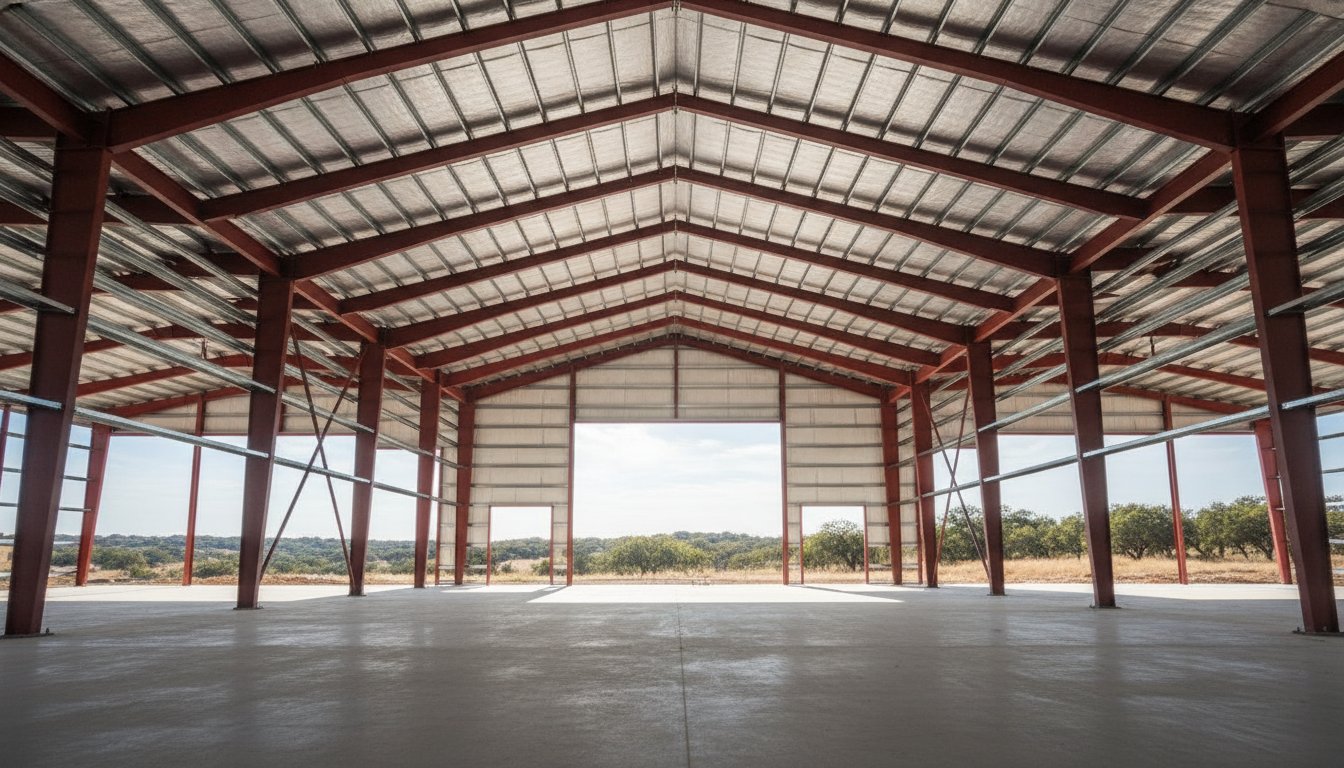
If you have ever stepped inside a metal workshop in July, you know that without the right planning, a steel structure feels less like a workspace and more like an industrial oven. The Texas sun is unforgiving, and the humidity can turn a solid investment into a moisture trap if you aren’t careful. Understanding the right Texas steel building specifications is the difference between a building that stands for decades and one that costs a fortune to maintain.
We agree that a building should work for you, not against you. At Bradberry Steel, we have spent over 25 years helping folks in Central Texas design structures that handle everything from coastal winds to intense summer heat. This guide provides the structural and insulation specifications you need to keep your assets safe and your interior comfortable. You will learn how to prevent condensation, meet local energy codes, and choose a design that protects your gear.
We will break down the essential R-values for walls and ceilings while explaining how to navigate the “home-rule” code landscape in our state. From windstorm requirements to moisture barriers, this overview ensures your project starts with the right technical details.
Key Takeaways
- Learn how International Building Code standards and Texas steel building specifications ensure your structure is safe and corrosion-resistant.
- Discover how to select the right insulation materials to manage extreme heat and reduce monthly cooling costs.
- Understand the difference between conductive R-values and radiant barriers to block intense Texas solar energy from entering your building.
- Identify the specific vapor barrier techniques required to stop condensation from damaging your equipment and causing rust.
- Learn why coordinating your structural design with Bradberry Steel early ensures your insulation fits perfectly between purlins and girts.
Essential Texas Steel Building Specifications and Codes
Every successful project begins with a firm understanding of the rules. In our state, Texas steel building specifications are primarily governed by the International Building Code (IBC) standards. These codes provide a baseline for safety and performance, ensuring that your structure can handle the specific environmental stresses of Central Texas. One of the most important aspects of these specs is the identification and protection of structural steel. We ensure all components are treated to resist corrosion, which is a constant threat in our humid climate.
A professional building package must account for two primary types of weight: dead loads and live loads. Dead loads represent the permanent weight of the structure, including the frame, roof panels, and wall sheets. Live loads account for temporary forces like wind, rain, or maintenance equipment. Getting these numbers right is the only way to guarantee the long-term integrity of your investment. It also makes the later application of building insulation principles much more effective when the frame is stable and square.
Wind and Snow Load Requirements
Central Texas has its own set of environmental demands. While we aren’t known for heavy blizzards, wind load specs are a critical safety factor in areas like Dublin and Stephenville. Most projects in our region require engineering that accounts for wind speeds exceeding 115 mph. Even though snow is rare, we still include snow load specifications to protect the roof from the weight of occasional ice storms. Structural components like Zee purlins are engineered to handle these specific pressures, providing the necessary strength to keep the roof stable under stress.
The Role of Pre-Engineered Design
Utilizing a pre-engineered design is the most efficient way to ensure your project meets all local standards. These systems are designed so that every bolt, beam, and plate fits together with absolute precision. This level of detail helps you meet local Erath County permit requirements without unnecessary delays. It removes the guesswork that often comes with on-site modifications. Bradberry Steel provides the expert guidance and material supply needed to get these technical details right from the start. You can learn more about these systems in our Prefabricated Steel Buildings Guide to understand how they streamline your project and protect your assets.
Thermal Specifications: Choosing Insulation for Texas Heat
Texas summers turn uninsulated metal buildings into heat traps. The primary goal of thermal management is slowing heat transfer while controlling moisture. When reviewing Texas steel building specifications, the R-value is your most important metric. This number measures how well a material resists heat flow. Higher R-values mean better protection. Your choice depends on the building’s purpose. An unconditioned hay barn has different needs than a climate-controlled workshop. Picking the right system early prevents your project from becoming an oven in July.
Designing for efficiency requires following established standards. The MBMA Energy Code Compliance Guide provides a solid foundation for meeting these requirements in steel structures. It helps you understand how different materials perform under the intense solar radiation common in our region. Whether you are storing heavy equipment or building a retail space, thermal specs are non-negotiable for comfort and longevity. Proper planning now saves you from massive electricity bills later.
Fiberglass Blanket Insulation
This is the most common and cost-effective specification for pre-engineered steel buildings. These blankets are designed specifically to fit between the steel panels and the secondary framing. They come with a reinforced vapor barrier facing. This facing is vital because it stops humid air from hitting the cold steel, which prevents sweating. For most Texas shops and garages, standard thicknesses range from three to six inches. It is a reliable, straightforward solution that fits the budget of most ranchers and contractors. It provides a dependable barrier that stands up to the elements without requiring complex adjustments to the frame.
Spray Foam and Rigid Board Options
If you are planning a steel framed home or a professional office, you might need more advanced thermal resistance. Closed-cell spray foam is a top-tier choice. It provides a high R-value per inch and creates a complete air seal. This helps lower energy costs significantly in cooled spaces. Rigid board insulation is another alternative. It offers consistent thermal performance across the entire wall surface. These options ensure that your interior stays comfortable even when the sun is beating down on the roof. Before you settle on a material, you can use our 3D design tool to visualize how these components fit into your overall building plan.
Radiant Barriers vs. Traditional R-Value Specifications
Texas heat hits your building in different ways. Most folks focus on R-value, which measures how well insulation slows heat moving through a material. This is known as conductive heat. However, the biggest challenge in our region is radiant heat from the sun. Standard fiberglass can struggle because solar energy warms the metal panels directly. When you are looking at Texas steel building specifications, you must account for this “oven effect.” A radiant barrier is a thin layer of reflective material that stops heat before it ever enters the insulation layer. It acts as a shield rather than a sponge.
A high-quality radiant barrier can reflect up to 97 percent of radiant heat away from your roof. By combining this with traditional R-value insulation, you create a dual-layered defense. The barrier handles the sun, and the insulation handles the air temperature. This combination is the most effective way to keep your interior cool without overworking your cooling systems. It protects your stored assets from the extreme temperature swings that are common in Central Texas. This approach ensures your building remains functional and efficient regardless of the season.
When to Prioritize Radiant Barriers
If you are designing an unconditioned space like an aircraft hangar or an agricultural barn, a radiant barrier should be your top priority. In these buildings, you aren’t trying to maintain a precise thermostat setting. You are trying to keep the space from becoming dangerously hot. Installing a reflective barrier is often the most affordable way to make a large workshop usable during a Texas summer. It keeps the surface temperature of your equipment lower and prevents heat from radiating down onto your shoulders while you work. It is a practical solution for structures where traditional climate control isn’t feasible.
The Impact of Roof Color on Specifications
Your insulation doesn’t work alone. The color of your steel panels plays a massive role in how much heat your building absorbs. Dark colors soak up solar energy, while light-colored roofs reflect it. This is why cool-rated colors are a critical part of a high-performance building spec. By choosing a reflective finish, you reduce the total thermal load on your insulation. This simple choice can significantly lower the temperature of the metal skin itself. You can review the Bradberry Steel Color Guide to see which reflective options best fit your aesthetic and performance needs. Selecting the right color early in the design phase is a smart way to maximize your building’s longevity.
Choosing the right combination of materials is easier when you have the right tools. At Bradberry Steel, we provide the guidance you need to make these decisions with confidence. If you are ready to see how your choices come together, utilize our 3D design tool to start planning your project today.
Moisture Control Specs: Preventing Condensation and Rust
Condensation is a silent threat to any metal structure in Central Texas. It happens when warm, humid air makes contact with the cold surface of your steel panels. This process, often called “sweating,” creates standing water that eventually leads to rust and corrosion on your structural components. To protect your investment, your Texas steel building specifications must prioritize moisture management. A building that stays dry is a building that lasts for generations. It also ensures that the equipment and assets you store inside remain in peak condition.
The primary defense against this moisture is a continuous vapor barrier. This isn’t just about placing a layer of material between the frame and the panels. It requires a meticulous approach to sealing. Every seam in your insulation must be closed with high-quality tape to prevent air from bypassing the barrier. If the seal is broken, the moisture will find its way to the steel. This is why we emphasize precision in the design phase. You want a system where every component works together to keep the interior environment stable and dry.
Vapor Retarder Specifications
A vapor retarder is specifically designed to stop water vapor from migrating through your insulation. In our region, this barrier is typically installed on the warm side of the wall. This placement prevents humid outside air from reaching the cooler interior steel during the long summer months. Heavy-duty vinyl facings are the standard for most professional shops. These facings are durable enough to resist tears during installation and provide a clean, finished look for your interior walls. They serve as both a functional moisture shield and an aesthetic upgrade for your workspace. Using a high-quality retarder is a fundamental step in preventing long-term structural decay.
Ventilation Design for Texas Buildings
Proper airflow is the second half of the moisture control equation. Ventilation reduces the temperature differential between the inside and outside of your building. This helps prevent the conditions that lead to sweating in the first place. Ridge vents and wall louvers are essential components that allow trapped heat and humidity to escape. Without these, your building becomes a closed system where moisture has nowhere to go. This buildup can damage not just the steel, but also any wood or electrical components housed inside.
You should plan your ventilation layout during the early stages of your project. It’s much easier to account for these openings before the steel is on-site. You can plan your ventilation during the design phase using our 3D design tool. This allows you to see where vents and louvers will be most effective based on your building’s orientation and use. Adequate airflow is essential for the long-term health of your structural steel. If you are ready to build a structure that stands up to the Texas humidity, start by getting your technical details right. You can request a quote for a precision-engineered building package today.
Coordinating Your Specs with Bradberry Steel
The physical frame of your structure dictates every other technical choice you make. When you select your building package, you aren’t just buying steel; you are setting the stage for your thermal and moisture control systems. One common oversight in Texas steel building specifications is failing to match the secondary framing to the insulation width. Purlins and girts provide the mounting surface for your blankets or boards. If your spacing is inconsistent or doesn’t align with standard insulation rolls, the installation becomes far more difficult for your crew. This often leads to gaps in the thermal barrier that let heat and moisture inside.
Bradberry Steel focuses on providing precision components that eliminate this guesswork. We ensure that your structural design is coordinated with your intended insulation method from day one. This proactive approach saves time on the job site and prevents wasted materials. When every beam and bolt is designed to work together, the final structure is tighter, more efficient, and better equipped to handle the Central Texas climate. Planning these details early ensures a smoother construction process for your contractor and a better result for you.
Pre-Engineered vs. Weld-Up Specifications
The type of building you choose impacts how you handle your specifications. Pre-engineered steel buildings use standardized designs where every component is pre-punched and ready for assembly. This makes installing blanket insulation straightforward because the dimensions are predictable. Weld-up buildings offer more flexibility for custom structural changes on the fly. This allows you to adapt your insulation methods if your project needs change during the build. You can see the full breakdown of these differences in our Weld-Up vs. Pre-Engineered Guide.
Starting Your Central Texas Project
Every project starts with a clear purpose. A retail space in Stephenville requires different thermal specs than a hay barn in Dublin. Identifying the primary use of your building early allows us to help you determine the necessary R-values and moisture barriers. We recommend consulting with our team during the design phase to ensure your material package meets your long-term goals. This ensures you aren’t overspending on unnecessary materials or underspecifying a building that will struggle in the heat.
Our 25 years of experience in the Texas steel industry means we understand the local challenges and the technical solutions that actually work. We provide the expert coordination you need to turn a complex technical project into a straightforward success. If you are ready to build a structure that stands up to the elements, request a quote for your steel building package today. We are here to help you get the details right from the very beginning.
Build for the Long Haul in Central Texas
Designing a structure that lasts requires more than just heavy beams. It demands a balance between structural strength and thermal management. By following the right Texas steel building specifications, you protect your equipment from rust and your workspace from the summer sun. You now understand how wind loads, R-values, and vapor barriers work together to create a high-performance environment. This technical foundation is what keeps a building efficient and durable for decades.
Bradberry Steel is a family-owned and operated business in Dublin, TX, with over 25 years of local expertise. We specialize in precision design coordination to ensure every component of your building package meets your exact needs. Getting these details right during the planning phase prevents costly errors and ensures your investment stands the test of time. Our team is dedicated to providing the straightforward guidance you need to succeed.
If you are ready to move from planning to action, we are here to help. You can Request a Quote for Your Texas Steel Building Package today to get started. We look forward to helping you build something solid.
Frequently Asked Questions
What are the standard wind load specifications for Central Texas?
Standard wind load specs in Central Texas typically start at 115 mph. In areas like Erath County, your building must be engineered to withstand these pressures to ensure safety and longevity. Every component, from the primary frames to the secondary Zee purlins, is designed to meet these local requirements. We coordinate these structural details during the design phase to make sure your package is ready for our regional weather patterns.
Does a metal building in Texas always need insulation?
While a building remains standing without it, insulation is practically essential for any structure used for storage or work. Without it, the Texas sun creates an intense oven effect that can damage equipment and make the interior unbearable. Even unconditioned buildings like hay barns or aircraft hangars benefit from a radiant barrier to reflect solar energy. It is the most effective way to protect your stored assets and maintain a stable internal environment.
How do I stop my steel building from sweating in the humidity?
Stopping condensation requires a dual approach of a continuous vapor barrier and adequate ventilation. Sweating happens when warm, humid air touches cold steel panels. By installing a heavy-duty vinyl facing and sealing every seam with high-quality tape, you block moisture from reaching the metal. Adding ridge vents and wall louvers also helps by reducing the temperature differential. These measures are critical for preventing rust and protecting your structural steel over the long term.
What R-value is recommended for a Texas workshop?
Recommended R-values vary by your specific location within the state. For most Central Texas workshops in Climate Zones 2 and 3, current Texas steel building specifications suggest R-13 to R-15 for walls and R-38 for ceilings. If you are further north in the Panhandle, ceiling requirements can jump to R-49. Meeting these standards ensures your building is energy efficient and stays comfortable even during the most extreme summer heat waves.
Is spray foam better than fiberglass for metal buildings?
Neither material is universally better, as the choice depends on your budget and building use. Closed-cell spray foam offers a superior air seal and higher R-value per inch, making it ideal for climate-controlled offices or homes. Fiberglass blanket insulation is the more cost-effective choice for most shops and agricultural buildings. It is designed to fit perfectly within pre-engineered frames and provides a dependable moisture barrier when installed with the correct vinyl facing.
Do I need a permit for a steel building in Erath County?
Permitting requirements depend entirely on your specific location because Texas is a home-rule state. While Erath County or the cities of Dublin and Stephenville have their own sets of rules, most significant structures will require a permit. You should always consult with your local Authority Having Jurisdiction before starting any site work. Our pre-engineered designs are coordinated to meet these local codes, which often simplifies the process when you submit your plans.
How does roof color affect building temperature?
Roof color is a major factor in how much solar heat your building absorbs. Light-colored or cool-rated finishes reflect a high percentage of sunlight, keeping the metal skin much cooler than dark shades. This reflection reduces the thermal load on your insulation, allowing it to work more efficiently. Choosing a reflective color from our guide is one of the simplest ways to lower your energy costs and improve the comfort of your interior space.
Does Bradberry Steel provide the insulation with the building kit?
Bradberry Steel specializes in the supply of precision-engineered steel building packages and structural components. We do not sell insulation as a standalone product. However, we act as your expert coordinator to ensure your building design matches the insulation you plan to use. We coordinate the purlin and girt spacing so that standard insulation widths fit perfectly. This prevents installation gaps and ensures your project meets the necessary thermal and moisture specifications.
Disclaimer
Bradberry Steel is a steel supply and metal building package company based in Dublin, Texas. We do not provide installation, site preparation, foundation work, or general contracting services. All building projects should be reviewed by a qualified local contractor and may require permits depending on your county or municipality. Contact Bradberry Steel for product guidance and material quotes.